How to Brush Your Cat’s Teeth
A patient training plan for daily dental care — the single best habit for preventing painful feline dental disease.
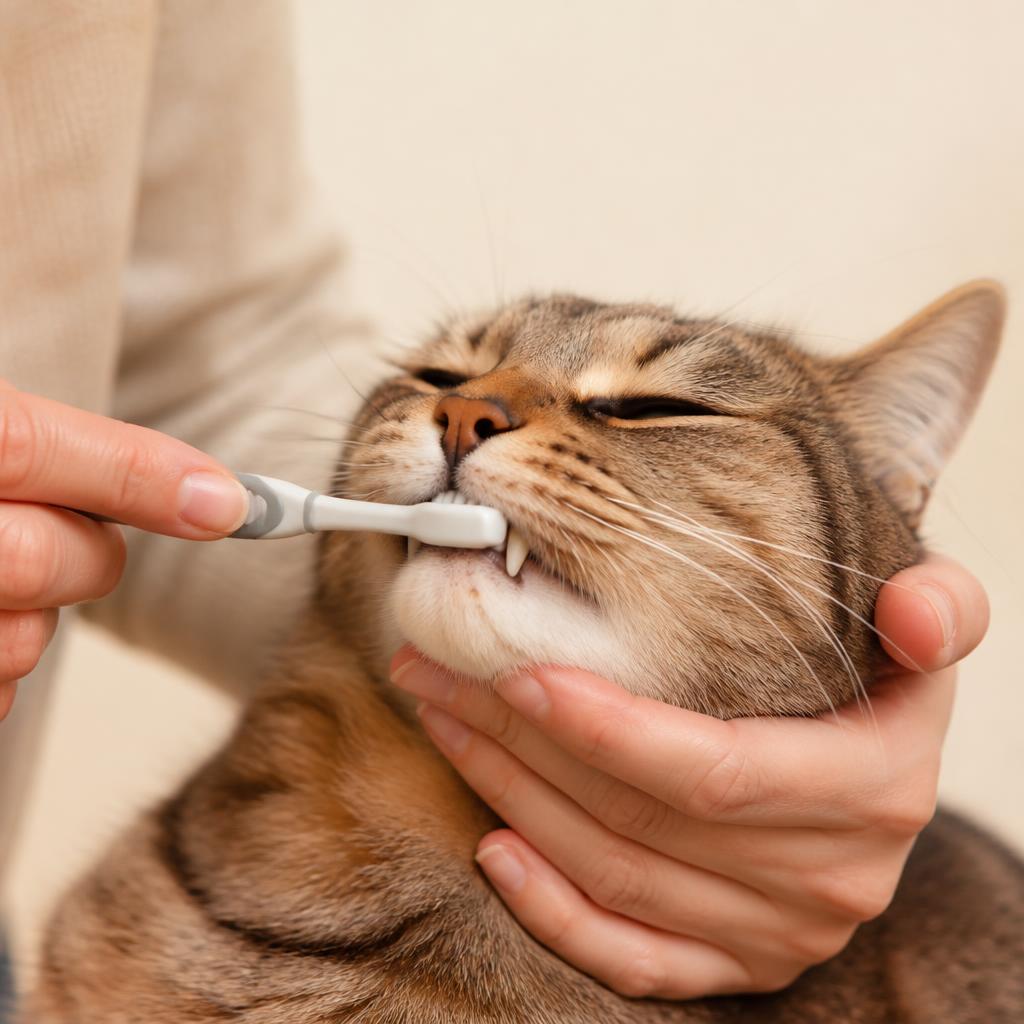
A calm, safety-first approachThis guide provides general education. Contact your veterinarian when symptoms are painful, persistent, or unusual.
- 1
Start with taste and touch
Let your cat lick pet-safe toothpaste off your finger for a few days. Never use human toothpaste — fluoride and xylitol are dangerous for cats.
- Cat-specific enzymatic toothpaste
- A finger brush or small cat toothbrush
- A consistent time, like before dinner
- 2
Lift the lip gently
Once the toothpaste is a treat, practice lifting your cat’s lip for a second, then reward. Build up to touching the gums and teeth with your finger over several sessions.
- 3
Introduce the brush
Put toothpaste on the brush and let your cat lick it. Then brush just the large canine teeth for a few seconds, using small circles along the gumline.
- 4
Build to a full session
Add a few teeth each day, focusing on the outer surfaces where plaque builds. Most cats accept a 30-second brushing of the whole mouth within two to three weeks.
Good to know: Bad breath, drooling, or dropping food can signal dental disease — see your vet before starting a brushing routine.



Ask about this guide
Leave a comment or a question about your own pet and the Pawlito assistant replies right away with practical next steps.