How to Care for a Senior Cat at Home
Help your senior cat stay comfortable at home with practical routines for feeding, grooming, gentle activity and spotting changes early.
A calm, safety-first approachThis guide provides general education. Contact your veterinarian when symptoms are painful, persistent, or unusual.
- 1
1. Arrange a health review and establish a baseline
Book a veterinary review when you begin adapting your cat’s care for their senior years, even if they seem comfortable and active. Ask your vet how often they should be checked, as many older cats benefit from appointments around every six months, with the schedule tailored to their needs. Before the visit, record a week of normal eating, drinking, toileting, grooming and activity so you can describe any changes accurately. Bring details of their food, treats, supplements and prescribed treatments, plus short videos of unusual walking, jumping or behaviour if you can capture these without disturbing them. Ask the vet to assess their weight, body condition, mouth and mobility, and discuss whether any additional checks are appropriate. Keep the practice number, out-of-hours contact and a secure, accessible carrier ready so seeking help does not depend on finding equipment in a hurry.
- Book a senior health review
- Record normal daily habits
- List food and current treatments
- Save daytime and emergency vet numbers
Good to know: Leave the carrier open with familiar bedding inside so it becomes a resting place rather than a signal that something stressful is about to happen.
- 2
2. Make essential spaces easy to reach
Set up a quiet resting area on a level your cat can reach without climbing stairs, with food, water and a litter tray nearby but clearly separated. Provide a supportive, washable bed in a draught-free spot, and keep another resting option available so they can move somewhere cooler. Add stable, shallow steps or a non-slip ramp to favourite raised places rather than expecting them to make a large jump. Lay secure rugs or non-slip runners across slippery routes, checking that edges cannot curl up and trip them. Keep furniture and essential resources in consistent positions, especially if your cat seems less confident navigating the home. Use a dim night light along the route to the litter tray, and prevent access to open windows, unguarded balconies or other places where a misjudged jump could cause a fall.
- Accessible beds with washable covers
- Stable steps or a non-slip ramp
- Secure runners on slippery floors
- Clear routes between essential resources
Good to know: Watch your cat travel from their bed to the litter tray and change any part of the route where they hesitate, slip or have to jump.
- 3
3. Feed measured meals and track weight
Choose a complete cat food, and ask your vet whether your cat should stay on their current diet or needs a different nutritional approach. Do not switch foods simply because the packaging says senior, as age alone does not determine an individual cat’s dietary needs. Measure their daily allowance with kitchen scales, include treats in that allowance and divide meals into smaller portions if these suit their appetite. Offer food in a quiet place using a stable, shallow bowl, and feed separately from other pets so you can see how much your senior cat actually eats. When a change is advised, introduce the new food gradually over about seven to ten days unless your vet gives a different plan, and seek advice if your cat starts refusing meals. Weigh your cat monthly using the same safe method, such as a pet scale on the floor, record the result and discuss unexplained weight loss or gain with your vet.
- Measure the daily food allowance
- Record how much is actually eaten
- Keep mealtimes calm and separate
- Track weight on a consistent scale
Good to know: For a reluctant eater, try a fresh, small portion of their usual wet food at room temperature, but do not let repeated tempting attempts delay veterinary advice.
- 4
4. Support drinking and comfortable toileting
Place several stable water bowls in quiet, accessible locations away from litter trays, and offer at least one away from the feeding area. Refresh the water daily, wash bowls regularly and clean any fountain according to its instructions rather than relying on the filter alone. If your cat already enjoys a complete wet food, include it in their agreed feeding plan to help provide moisture without forcing a sudden dietary change. Provide at least one litter tray per cat plus one extra, spread across separate locations, with a tray on each floor your senior cat regularly uses. Choose roomy trays with a low entrance and their familiar, preferably unscented litter, then remove waste at least daily and wash trays with a mild, well-rinsed cleaner. Notice changes in drinking, urine clump size, stool consistency or ease of toileting, and contact your vet rather than assuming these changes are part of normal ageing.
- Fresh water in several locations
- Roomy trays with low entrances
- Separate tray locations
- Daily checks of urine and stools
Good to know: In a multi-cat home, make sure another pet cannot block the only doorway or narrow passage leading to your senior cat’s tray.
- 5
5. Help with grooming, claws and cleanliness
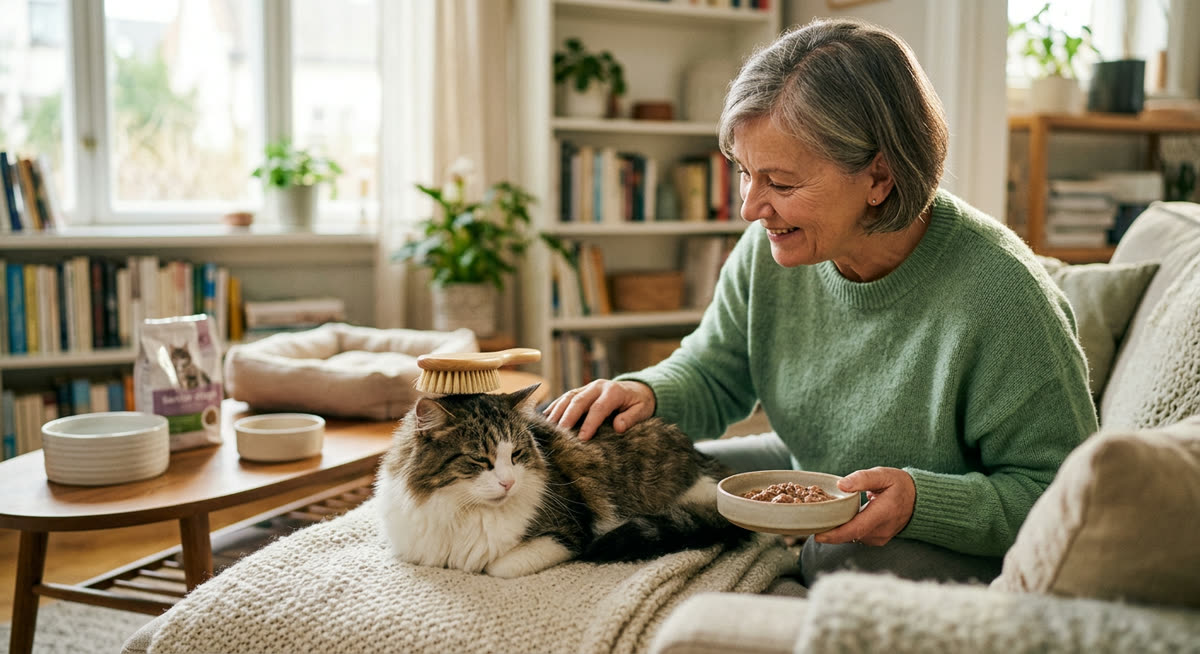
Offer short grooming sessions with a soft brush or suitable comb, starting with areas your cat enjoys and stopping if they tense, turn away or try to leave. Check the coat and skin gently for tangles, sore patches, lumps or areas your cat has stopped keeping clean, and report new findings to your vet. Never cut out a mat with scissors or pull it away from the skin; ask your vet or an experienced cat groomer to arrange safe removal. Inspect claws weekly, including dewclaws, because less active cats may wear them down less effectively and a curled claw can press into a pad. Trim only if your cat tolerates handling and you have been shown how, otherwise arrange professional help, particularly if a claw is overgrown or a pad looks sore. Wipe small amounts of soiling with a soft cloth dampened with lukewarm water, dry the area gently and seek veterinary advice for repeated soiling, drooling, mouth discomfort or difficulty eating.
Good to know: Keep grooming to a minute or two initially and finish while your cat is still comfortable rather than trying to complete their whole coat at once.
- 6
6. Offer gentle activity without pressure
Invite your cat to play once or twice a day for a few minutes, using a wand toy moved slowly along the floor rather than encouraging high jumps. Let them stalk, pause and catch the toy, and stop before they become tired or frustrated. Introduce an easy food puzzle using part of their measured daily ration, checking that it does not become a barrier to eating enough. Provide a stable scratching surface close to a resting area, with a horizontal option if stretching up to a post seems difficult. Make a favourite lookout accessible with secure steps, and supervise garden time in a safely enclosed space if your cat enjoys being outdoors. If they become less willing to move, stop jumping or react when touched, avoid forcing exercise or manipulating their limbs and ask your vet to assess the change.
- Brief, floor-level play
- Easy puzzles using measured food
- Stable horizontal scratching options
- Accessible, secure lookout spots
Good to know: Choose a naturally alert moment for play, such as before a usual meal, rather than waking your cat from deep sleep.
- 7
7. Build a simple daily comfort check
Spend a few quiet minutes each day observing your cat before interacting, noting how they rest, breathe, stand up and walk to their usual resources. Check the amount of food left, refill water and inspect the litter trays so your observations are based on more than whether they come to greet you. Watch for changes such as hiding, restlessness, increased calling, reduced grooming, avoiding company or seeking much more attention than usual. Keep a brief dated log of anything different, including when it began, how often it happens and whether eating or toileting has also changed. Take a short video of intermittent behaviour if it is safe to do so, but never provoke a movement or repeat an activity that appears uncomfortable. Share persistent or recurring changes with your vet promptly, because ageing should not be used to explain away discomfort or a loss of normal function.
Good to know: Use the same three headings each day—food, litter tray and behaviour—to make your notes quick to keep and easy for your vet to review.
- 8
8. Respond safely when problems appear
Contact your vet the same day if your senior cat stops eating, eats much less than usual, vomits repeatedly or seems unusually withdrawn, and seek help sooner if they appear very unwell. Treat straining to urinate, repeated tray visits with little or no urine, or uncertainty about whether urine is passing as an emergency and call a vet immediately. Seek emergency help for open-mouth or laboured breathing, collapse, a seizure, major injury or sudden inability to use a limb, keeping handling and transport as calm as possible. For a new toileting accident, clean the area with a pet-safe enzymatic cleaner according to its label, add an accessible tray and arrange veterinary advice rather than punishing your cat. If they seem unsettled at night, check access to water, a clean tray and a comfortable bed, but arrange a veterinary review for new confusion or repeated calling. Never give human painkillers, leftover animal medicines or unapproved calming products, and do not force-feed or syringe water into a struggling cat.
- Eating stops: contact the vet promptly
- Little or no urine with straining: emergency
- Breathing difficulty or collapse: emergency
- New accidents or night calling: arrange advice
- 9
9. Review the routine and plan ongoing support
After a veterinary visit or a change to your home setup, follow the agreed care plan and note whether eating, movement, grooming and toileting become easier. Make non-urgent household changes one at a time, keeping familiar beds, scents and routines in place while your cat adjusts. Wash bedding regularly with a mild product, dry it fully and check ramps, rugs and trays each week for slipping, damage or awkward access. Prepare written instructions for anyone caring for your cat, including measured meals, normal habits, prescribed care and clear guidance on when to contact the vet. Review their comfort each week by considering whether they can rest peacefully, reach essential resources and enjoy familiar activities without apparent distress. If difficult days become more frequent or their needs exceed what you can manage at home, ask your vet for a comfort and quality-of-life discussion so you can plan appropriate support together.
- Follow up on agreed care changes
- Check equipment and wash bedding
- Keep carer instructions current
- Review comfort and enjoyment weekly
Good to know: Keep a spare clean bedding set and a stocked care kit together so daily care stays manageable when your cat needs extra attention.


Ask about this guide
Leave a comment or a question about your own pet and the Pawlito assistant replies right away with practical next steps.