How to Choose the Right Cat Litter
Compare common litter types and use your cat's preferences to choose a litter they will use happily.
- Written by
- Pawlito Editorial Team · Pet Care Writers
- Professional review
- Not yet reviewed by a veterinarian
- Published
- Last updated
In this guide (6 steps)
Step 1: Start with what your cat prefers
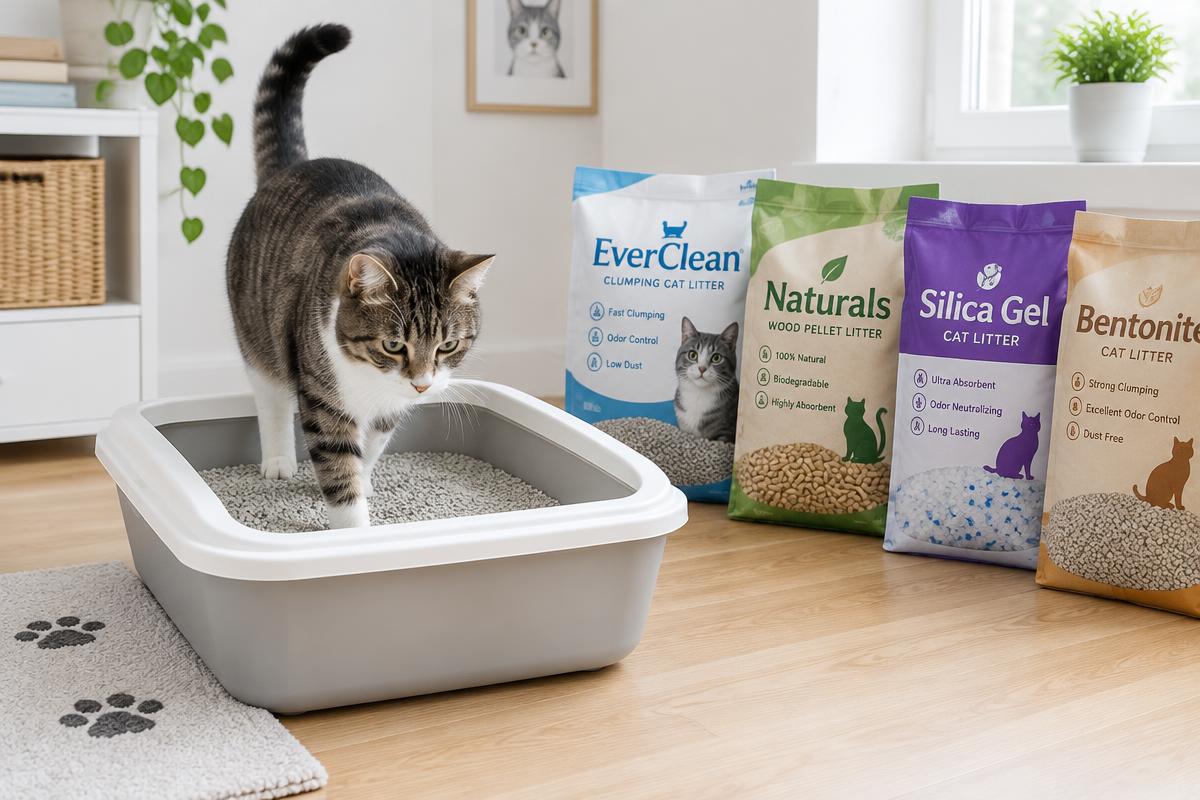
Many cats prefer fine, soft, unscented litter similar to sand. If your cat already uses a litter well, there is often no need to change. Preferences matter more than marketing claims.
Step 2: Understand common types
Clumping clay forms scoopable clumps. Non-clumping clay absorbs liquid but needs full changes more often. Plant-based options such as wood, corn or paper vary in texture. Silica crystals absorb moisture and have a crunchy feel some cats dislike.
Step 3: Consider your cat's needs
Kittens, senior cats and cats recovering from surgery may need softer or specific litter. Paper pellets are sometimes suggested after surgery. Ask your veterinarian if your cat has health needs.
Step 4: Avoid strong scents
Heavily scented litter can put cats off the tray. Control odour by scooping at least once daily and cleaning the tray regularly instead.
Good to know: Fill trays to around 5 cm deep. Many cats dislike very shallow litter.
Step 5: Test with a choice
If you want to switch, offer a second tray with the new litter next to the old one. Watch which one your cat uses. Alternatively, mix increasing amounts of the new litter into the old over a week or two.
Step 6: Watch for problems
Going outside the tray, scratching the floor instead of the litter or rushing out can mean dislike. Toileting changes can also signal health issues, so contact your veterinarian if you notice straining, frequent trips or blood.
This guide was drafted with AI assistance and published by the Pawlito team. It has no formal source list yet. Spotted an error? Tell us and we'll correct it. Read our editorial policy.
Ask about this guide
Leave a comment or a question. Comments are public, so use a first name only and don't include emails, phone numbers or addresses. An automated assistant may reply straight away with general suggestions — it can't diagnose your pet.