How to Clicker Train Your Cat
Teach your cat simple skills with a clicker, tiny rewards, and short sessions that build confidence without pressure.
- Written by
- Pawlito Editorial Team · AI-assisted guide
- Professional review
- Not yet reviewed by a veterinarian
- Published
- Last updated
In this guide (7 steps)
Step 1: Choose a comfortable starting point
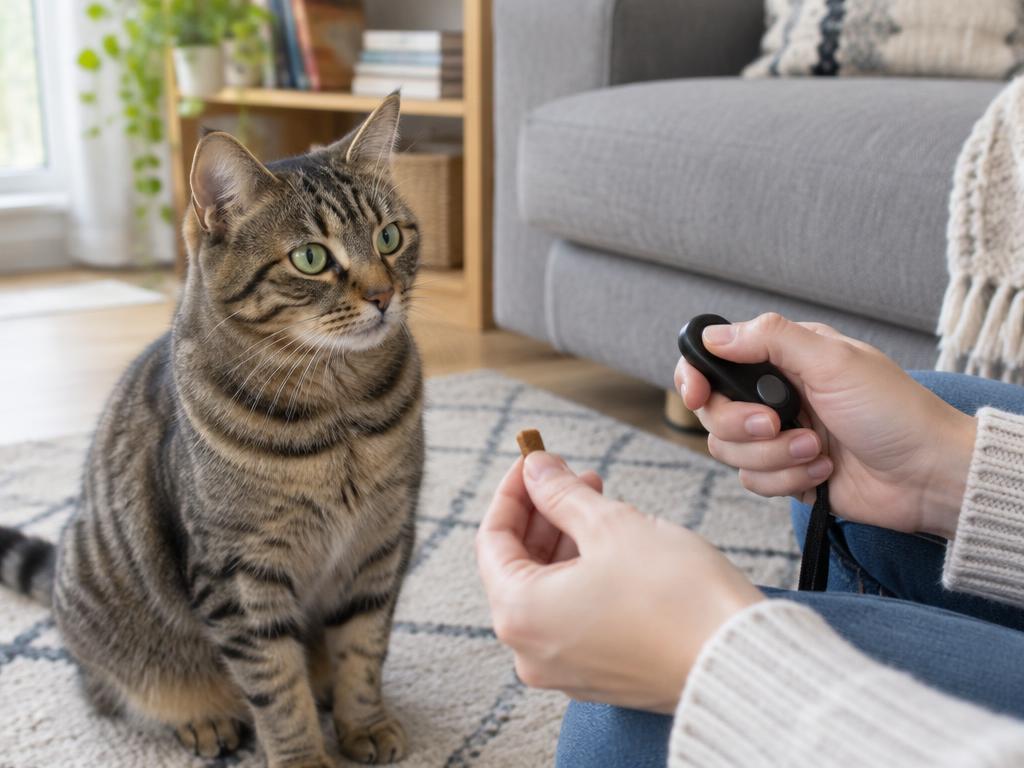
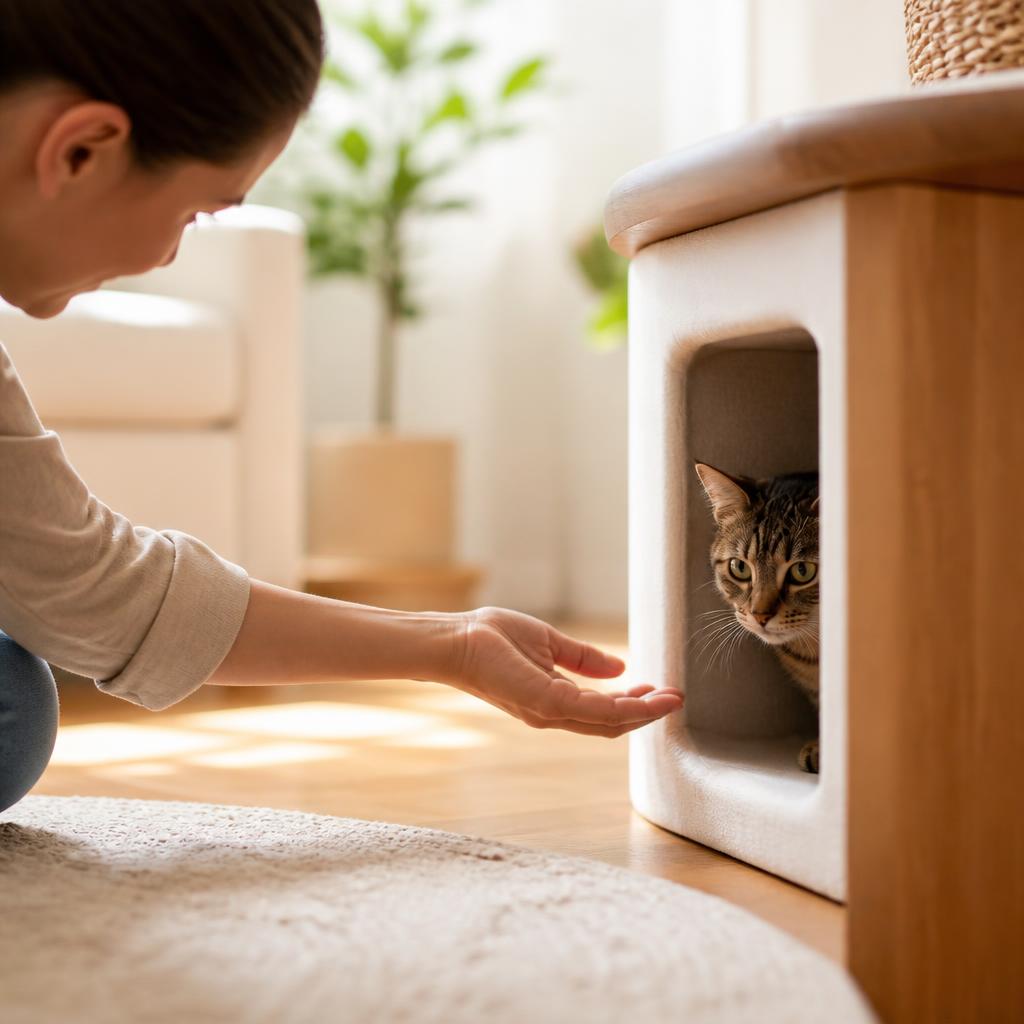
Begin in a familiar quiet room where your cat can leave whenever they choose. Sit sideways rather than leaning over them and keep the clicker away from their face. Pick a moment when your cat is awake and interested, not sleeping, hiding, or eating. Prepare tiny familiar rewards, adapting their size to the food. Count treats toward daily intake and never withhold meals to make training more appealing.
Good to know: For a sound-sensitive cat, try a quieter clicker or a softly spoken marker word.
Step 2: Teach the click and reward connection
Before asking for behavior, teach that the click predicts something pleasant. Click once, then immediately deliver a tiny treat within easy reach. Repeat a few times with brief pauses. Do not ask for eye contact or obedience yet. Keep your hands still until after the click so reaching toward food does not become the main signal. Finish while your cat is still engaged rather than waiting for them to leave.
- Use one click for each marked moment.
- Follow every training click with a reward, including accidental clicks.
Step 3: Capture an easy natural behavior
Choose something your cat already does, such as looking toward you or stepping onto a mat. Click at the instant it happens and offer the reward. Avoid moving their body into position, repeating their name, or waving food continuously. Several successful repetitions help them discover the connection. If nothing happens, simplify: reward looking at a mat before expecting a step onto it.
Good to know: Place rewards where your cat can collect them without stretching or losing balance.
Step 4: Build a gentle nose target
Present a rounded target stick a few inches from your cat's nose and hold it still. Reward a glance or small movement toward it before gradually asking for closer approaches and a nose touch. Deliver the treat away from the target so your cat can reset. Never poke toward the face or follow with the target when your cat turns away. Use short voluntary repetitions rather than restraint.
Step 5: Add a cue after predictable success
Once the action happens reliably, introduce a short cue such as touch or mat just before presenting the familiar opportunity. Click completion and reward. Keep the cue consistent. If your cat does not respond, pause and simplify rather than repeating louder. Change one feature at a time, such as target position, keeping other conditions familiar so the task remains understandable.
- Introduce distance only after close practice is comfortable.
- Return to easier repetitions after repeated missed attempts.
Step 6: Keep sessions brief and voluntary
Aim for one to three minutes or less if interest fades sooner. Finish after an easy success, put equipment away, and allow rest or exploration. Turning away, tense posture, flattened ears, and repeated tail lashing mean you should pause. Leaving is not stubbornness. Consider distractions, reward preference, or task difficulty and try another time rather than pursuing your cat.
Good to know: A few enjoyable repetitions are more useful than a long frustrating session.
Step 7: Apply skills to everyday care
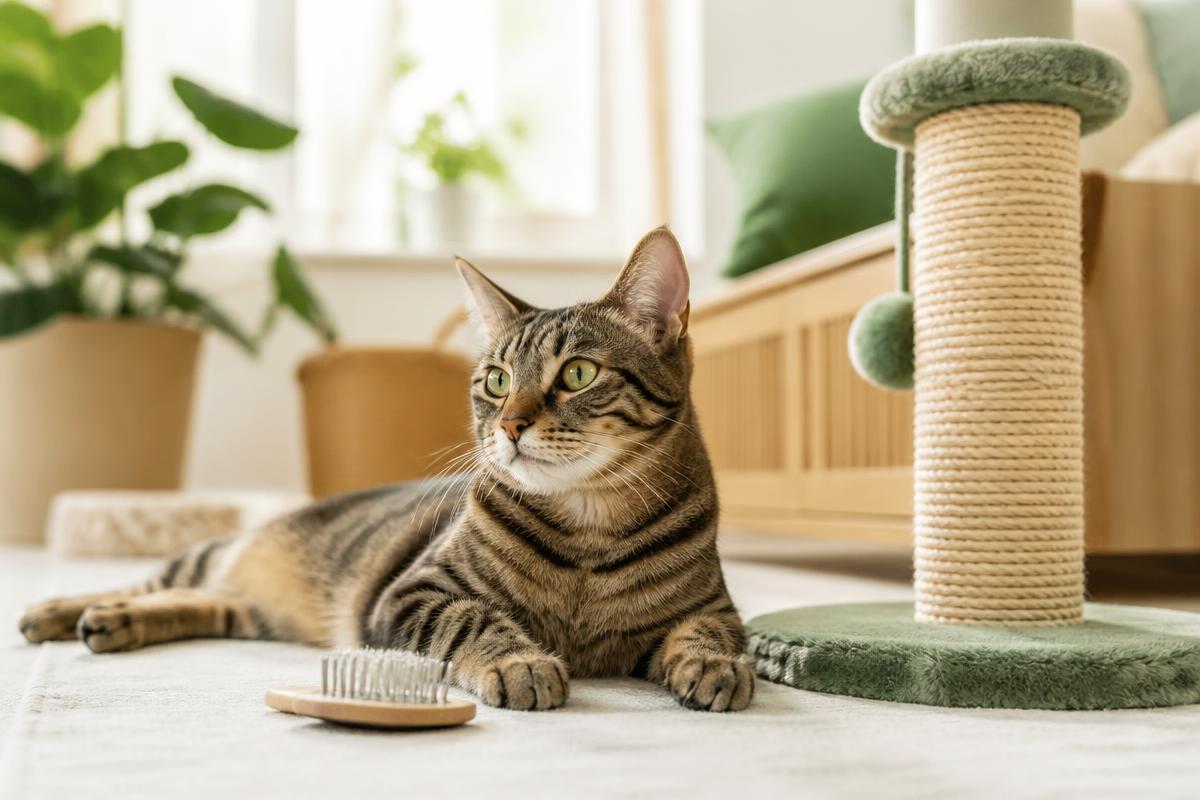
Use training for useful low-pressure routines such as approaching a grooming station or stepping onto a carrier mat. Break each routine into small pieces and reward calm participation. A target can guide movement but must not lure your cat into an unpleasant surprise. Keep carrier practice separate from unavoidable travel when possible. If handling suggests pain or distress, stop and seek veterinary guidance rather than training through discomfort.
This guide was drafted with AI assistance and published by the Pawlito team. It has no formal source list yet. Spotted an error? Tell us and we'll correct it. Read our editorial policy.
Ask about this guide
Leave a comment or a question. Comments are public, so use a first name only and don't include emails, phone numbers or addresses. An automated assistant may reply straight away with general suggestions — it can't diagnose your pet.