How to Create a Quiet Retreat for Your Cat During Guests’ Visits
Set up a calm, comfortable retreat where your cat can avoid visitor noise, reach essentials, and choose when to socialize.
- Written by
- Pawlito Editorial Team · AI-assisted guide
- Professional review
- Not yet reviewed by a veterinarian
- Published
- Last updated
In this guide (7 steps)
Step 1: Choose a familiar low-traffic room
Select a comfortable familiar room away from entrances and gathering spaces, not a noisy unfamiliar utility area. Secure windows and screens and remove toxic plants, cords, and swallowable objects. Prevent trapping behind furniture or inside reclining chairs. Check ventilation and temperature. A retreat must be genuinely comfortable, not simply a closed door between your cat and visitors, and should be prepared before the busy event.
Good to know: Prepare several days ahead so the retreat becomes part of ordinary life.
Step 2: Provide separated essential resources
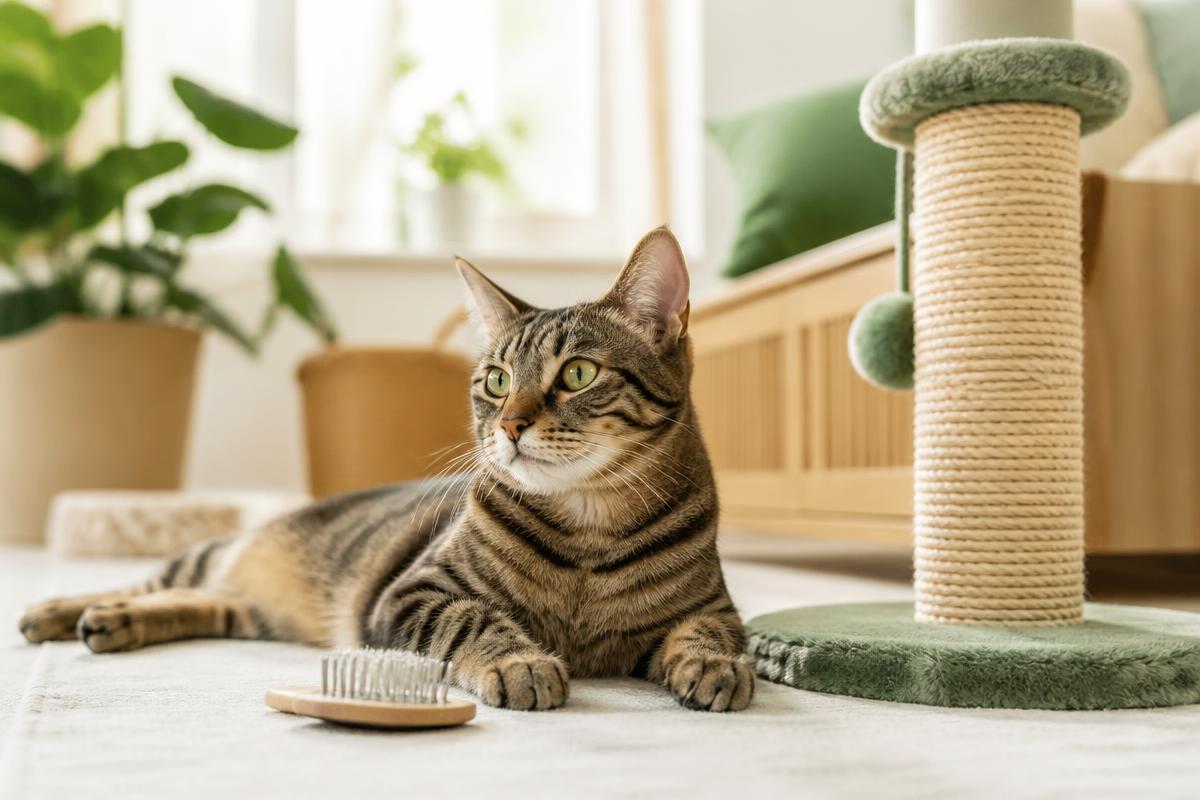
Offer water, familiar bedding, scratching options, and a clean litter tray with accessible routes. Keep meals and water away from litter and avoid crowding everything in one corner. Follow usual feeding and prescribed care schedules. During long gatherings, check discreetly rather than entering repeatedly to see whether your cat is hiding. The retreat must meet practical needs as well as reduce stimulation.
- Use familiar bowls, litter, and bedding.
- Leave routes between resting spots and litter unobstructed.
Step 3: Offer hiding and elevated choices
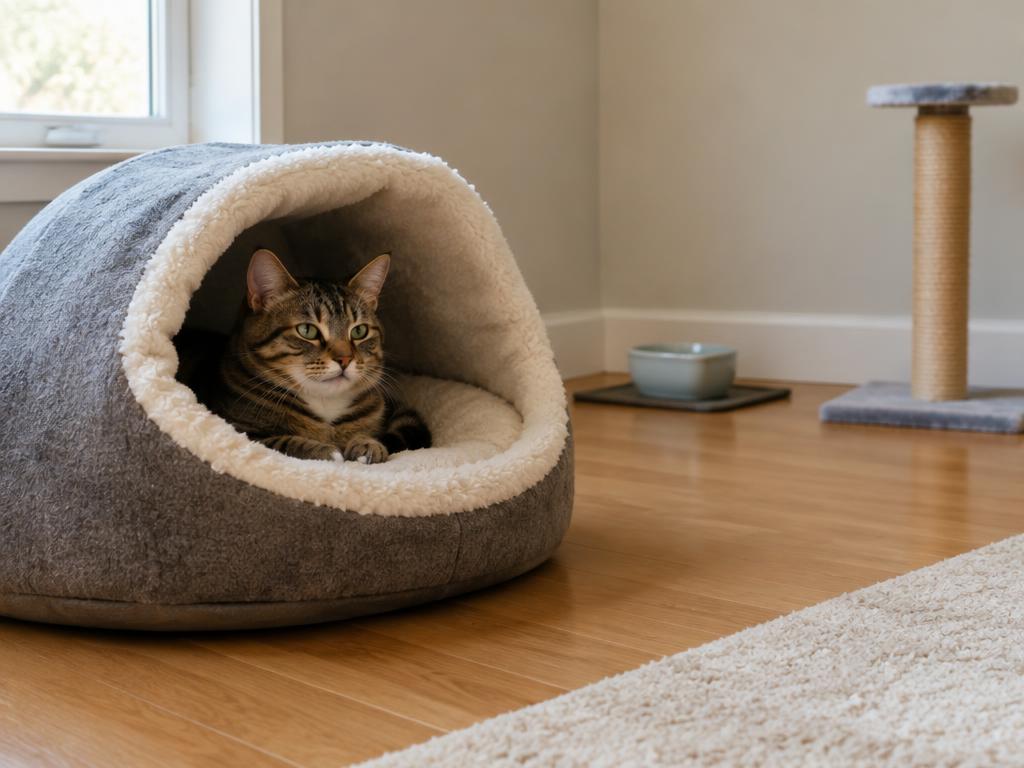
Provide an enclosed option such as an open carrier with familiar bedding or a sturdy box on its side. Add a stable existing perch if your cat enjoys height, with easy access up and down. Check shelves for wobbling or tipping. Never pull your cat out to demonstrate the setup. Allow voluntary exploration and leave chosen hiding places undisturbed once occupied.
Good to know: An everyday open carrier can become a retreat rather than only a travel signal.
Step 4: Reduce noise and disturbance
Close curtains if outdoor movement unsettles your cat while maintaining airflow. Keep speakers away from shared walls. Familiar low steady background sound may soften sudden noises, but avoid introducing loud audio or unfamiliar devices during the event. Do not use scented sprays or essential oil diffusers. Listen near resting level for rattles and intrusive sound before deciding that the room is quiet.
- Move portable speakers away where practical.
- Keep loose cables and fan blades inaccessible.
Step 5: Plan doors and visitor boundaries
Tell guests that your cat's private space is not for introductions and that following or picking up is unwelcome. Supervise children appropriately. Decide whether escape prevention requires a closed door or safe voluntary movement can remain available. If enclosed, establish comfort there beforehand. Assign one household member to monitor access so well-meaning visitors do not repeatedly open the room.
Good to know: A simple door notice helps prevent accidental entry by guests looking for a bathroom.
Step 6: Settle before the busy period
Offer the usual meal or brief play if your cat is interested before guests arrive. Invite toward the retreat with a familiar cue or treats rather than chasing or carrying against resistance. Allow exploration before doorbells begin. If a closed door causes sustained distress, reassess rather than forcing the unchanged plan. Some cats need a larger familiar area away from exterior doors.
Step 7: Respect choice during and afterward
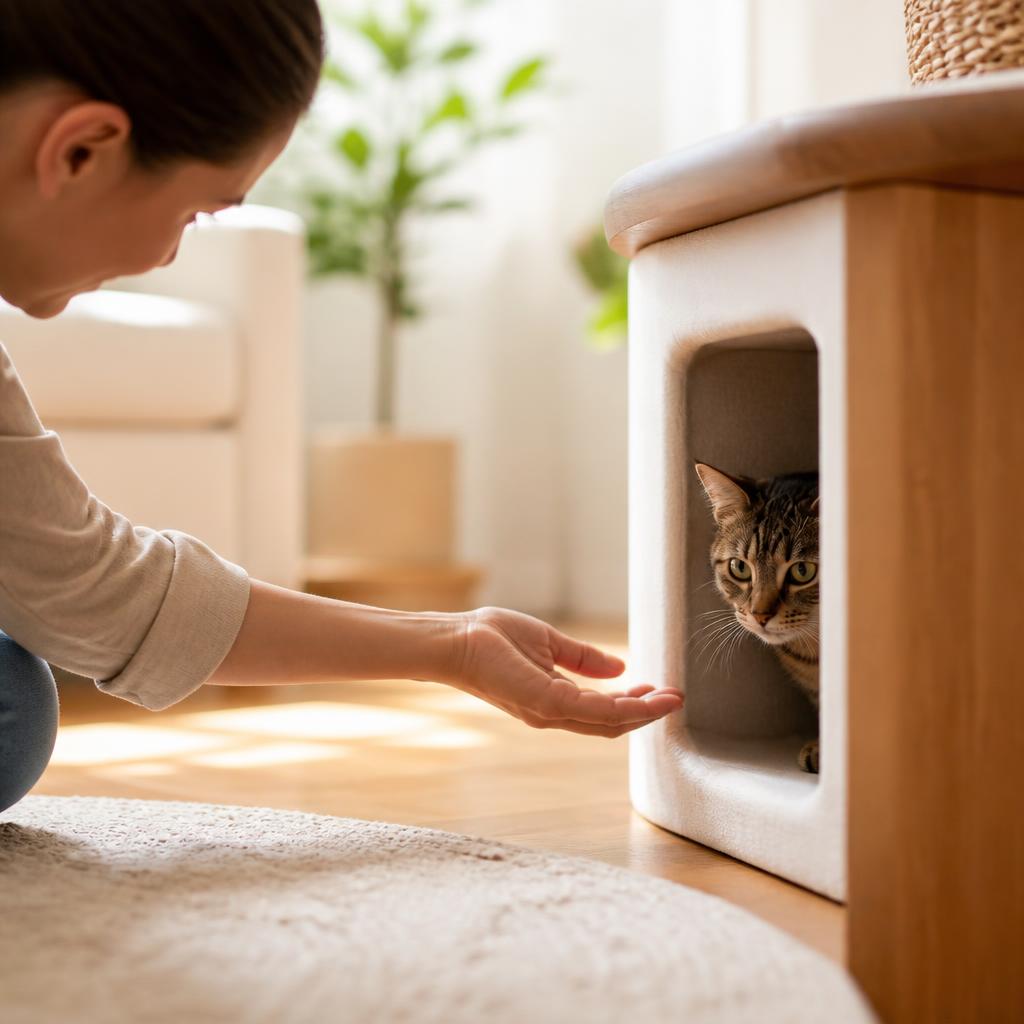
Quietly check comfort and essential access without reaching repeatedly into hiding spots. If safe emergence is chosen, ask guests to ignore your cat initially and keep contact optional. Maintain a clear route back to privacy instead of pursuing. After visitors leave, secure exterior doors, reduce noise, and allow rejoining at your cat's pace. Seek veterinary advice for persistent distress or concerning changes in eating, toileting, or behavior.
This guide was drafted with AI assistance and published by the Pawlito team. It has no formal source list yet. Spotted an error? Tell us and we'll correct it. Read our editorial policy.
Ask about this guide
Leave a comment or a question. Comments are public, so use a first name only and don't include emails, phone numbers or addresses. An automated assistant may reply straight away with general suggestions — it can't diagnose your pet.