How to Get a Cat Into a Carrier Without a Fight
Make cat carrier training calmer with reward-based steps, safe loading techniques, and practical advice for getting to the vet without a fight.
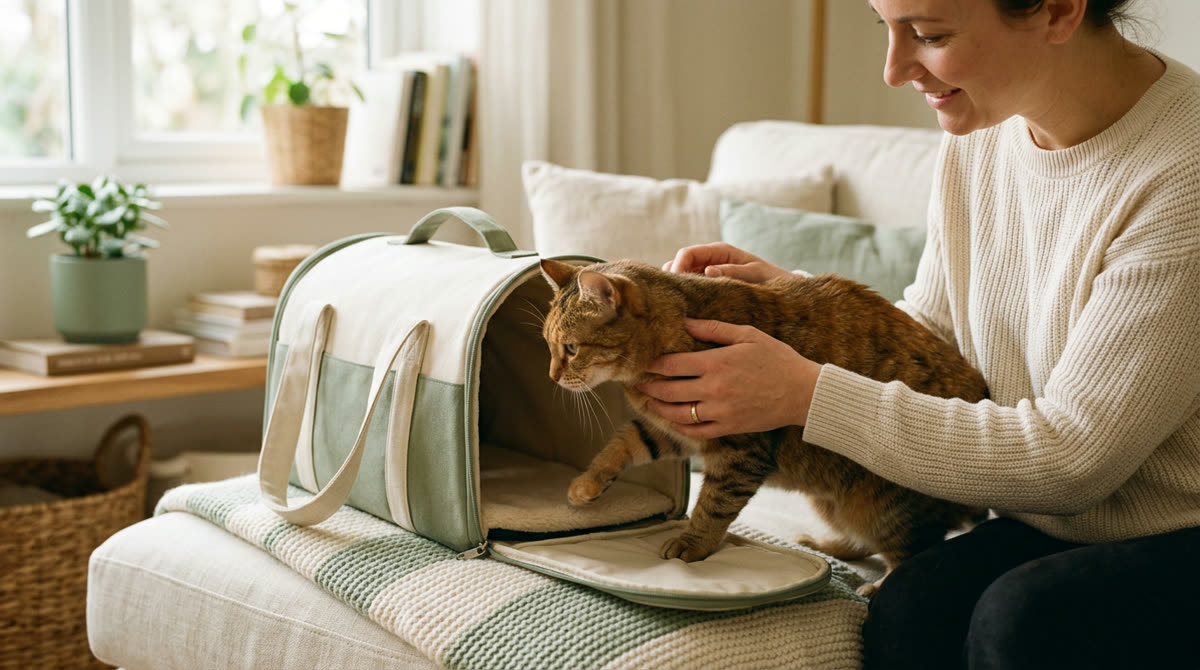
A calm, safety-first approachThis guide provides general education. Contact your veterinarian when symptoms are painful, persistent, or unusual.
- 1
Choose a carrier that makes entry easier
Start cat carrier training with a sturdy, well-ventilated carrier that lets your cat stand naturally, turn around, and lie down comfortably; an oversized carrier is not automatically better because your cat may slide around during transport. A hard-sided model with both a front door and a top opening, or a securely removable top, gives you more loading options than a narrow front-entry carrier. A soft-sided carrier can work for a relaxed traveler, but its floor should stay level when lifted and its zippers must secure against a determined nose or paw. Check every latch, screw, handle, and seam before training, especially if the carrier has been stored or previously escaped from. Line the bottom with an absorbent pad beneath a thin, nonslip towel so the surface feels stable rather than slippery or deeply cushioned. If your cat suddenly resists a carrier they previously accepted, or cries when you lift them, contact your veterinarian before assuming this is simply a training problem because discomfort can change handling tolerance.
- Enough room to stand, turn, and rest
- Secure front door and preferably top access
- Firm base with nonslip bedding
- Intact latches, seams, and fasteners
Good to know: For a cat with limited mobility, choose a low entry threshold and ask your veterinary team about the least uncomfortable loading method.
- 2
Make the carrier part of everyday life
Place the carrier in a quiet room where your cat already relaxes, rather than bringing it out only before veterinary visits. Set it on the floor against a wall, away from noisy appliances, busy doorways, and other pets that might block the entrance. Secure the door fully open or remove it if the design allows, since a swinging door can startle a cat just as they begin investigating. Add familiar bedding that smells like home, and initially leave the carrier available all day without trying to put your cat inside. For a cat who avoids the complete carrier, remove the top according to the manufacturer's instructions and begin with the lower half as an ordinary resting bed. Allow several days or longer for this stage if needed, and avoid pulling your cat out of another hiding place to introduce the carrier because that can make both places feel less safe.
Good to know: If you use a feline pheromone spray, follow its label, apply it only to the indicated surfaces, and let the carrier air out for the specified time before your cat enters; never spray your cat.
- 3
Reward calm approaches without setting a trap
Begin with one or two sessions a day lasting about 1–3 minutes, ideally when your cat is awake, relaxed, and interested in a small food reward. Sit beside the carrier rather than directly in front of its entrance, and place a pea-sized treat at whatever distance your cat can approach comfortably, whether that is 6 inches or several feet away. Mark a glance, sniff, or step toward the carrier with a quiet word such as 'yes,' then immediately offer a reward so your cat learns which action earned it. Move treats closer only while your cat remains loose-bodied and willing to participate; crouching, freezing, flattened ears, tail lashing, or retreating mean the task needs to become easier. Use tiny portions of a favorite treat or part of the normal food allowance, keeping treats within roughly 10% of daily calories unless your veterinarian recommends otherwise. End while your cat is still comfortable, and never withhold necessary meals or use hunger to push a frightened cat past their limits.
- Keep sessions to about 1–3 minutes
- Reward looking, sniffing, and approaching
- Advance only with relaxed body language
- Stop before your cat becomes frustrated
Good to know: A cat who normally loves treats but refuses them near the carrier may be too stressed to learn there; increase the distance instead of offering increasingly tempting food.
- 4
Teach your cat to walk all the way inside
Once your cat approaches freely, place a treat just inside the entrance, then gradually farther back across several successful repetitions rather than moving it to the rear immediately. Reward small milestones such as a nose inside, two front paws inside, and finally all four paws resting on the carrier floor. Let your cat back out whenever they choose during this stage, because being able to retreat helps prevent the entrance from feeling like a trap. When full entry becomes predictable, say a simple cue such as 'carrier' once just before your cat steps in, then deliver the reward inside. Build from a brief pause to about 5–10 seconds of relaxed time inside, using several tiny rewards or a little lickable cat treat offered safely through an opening. If you started with the carrier base alone, reattach the top with your cat elsewhere, secure the door open, and temporarily return to easier rewards near the entrance because the enclosed shape may feel unfamiliar. Do not shut the door on the first successful entry unless transport is genuinely necessary, since a surprise confinement can undo the trust you have just built.
Good to know: Some cats prefer following a familiar target or wand toy toward the carrier; remove loose strings and toys before closing the door so nothing can snag or be swallowed.
- 5
Practice closing, lifting, and moving gradually
When your cat can remain comfortably inside, touch the door, reward, and stop before progressing to moving it slightly toward the closed position. Next, close and latch it for about 1 second, reward through a safe opening, and reopen it before your cat becomes worried. Across separate repetitions, extend comfortable closures to 3, 5, 10, and then 30 seconds, treating these as examples rather than deadlines your cat must meet. After your cat can rest behind the closed door, lift the carrier just 1–2 inches for a second, keeping a hand beneath the base, then set it down smoothly and reward. Progress to carrying it a few steps, walking to the front door, and sitting briefly in a safely parked car with the engine off, changing only one difficulty at a time. If your cat scrambles, repeatedly pushes at the door, or becomes intensely distressed, return the carrier to a secure room and release them safely rather than prolonging confinement to wait out the reaction. Resume later at the last comfortable stage, remembering that a cat with a frightening carrier history may need weeks of gradual practice rather than a few days.
- Practice door movement before latching
- Increase duration in small increments
- Support the carrier underneath
- Separate lifting practice from car practice
Good to know: Do not leave a cat unattended during closed-door practice, especially in a car; a parked vehicle can become dangerously hot or cold even during a short session.
- 6
Set up a calm departure on appointment day
Allow an extra 20–30 minutes before departure so you can load calmly instead of chasing your cat when the appointment time is approaching. Prepare the carrier, bedding, absorbent pad, and rewards first, and confirm any feeding or fasting instructions directly with the clinic rather than withholding food routinely. Before your cat becomes suspicious of departure activity, calmly bring them into a familiar, comfortably sized room with the carrier, then close windows, exterior doors, and routes to inaccessible hiding spots without cornering them. Keep children and other pets out, lower the noise level, and offer your practiced entry cue once with a small reward inside if food is permitted. After your cat walks fully in, close and latch the door gently, then check every opening before lifting the carrier with its base supported. If one or two calm invitations do not work, pause rather than repeatedly pushing treats farther inside or pursuing your cat around the room. For a nonurgent appointment that cannot be managed safely, call the clinic about rescheduling and a handling plan; if your cat needs urgent care, call immediately for transport guidance instead of waiting to complete training.
- Have the carrier ready before approaching
- Follow the clinic's feeding instructions
- Use a quiet room with secure exits
- Check all closures before lifting
Good to know: Avoid wearing thick, unfamiliar handling gloves as a substitute for a plan; they can reduce your dexterity and do not make it safe to restrain a panicking cat.
- 7
Use gentle top loading only when necessary
If voluntary entry is not possible and your cat normally tolerates being picked up, a top-opening carrier can offer a brief, controlled alternative without pushing their face through a front door. Place the carrier securely on the floor, open the top fully, and position yourself close enough to lower your cat without stretching or holding them high above it. Support the chest behind the front legs with one hand and the hindquarters with the other, keep your cat close to your body, and lower them feet-first onto the bedding in one smooth movement. If a second calm adult is available, they can manage the lid while you keep fingers, paws, and the tail clear of its edges before securing it. A familiar towel placed loosely around the shoulders and body may reduce visual stimulation for a towel-tolerant cat, but never wrap tightly, cover the nose, compress the chest, or leave fabric where it prevents the latch from closing. Do not scruff, pin down, shove, shake, or repeatedly attempt to load a cat who is thrashing, biting, or struggling hard; stop and contact the veterinary team for an individualized plan. Open-mouth breathing, collapse, marked weakness, or obvious breathing difficulty warrant immediate veterinary contact, and you should not continue a restraint attempt while seeking urgent instructions.
Good to know: This is a backup for a handleable cat, not a way to overpower a frightened one; cats who cannot be safely touched may need a veterinary or experienced humane-handling team's help.
- 8
Keep the carrier stable during the journey
Carry the closed carrier level with support underneath rather than letting it swing from the handle, since unpredictable movement can make future loading harder. In the vehicle, position and secure it according to the carrier and vehicle manufacturers' instructions, avoiding active airbags and any location where it could tip or slide. Do not assume threading a seat belt around any carrier provides crash protection, because restraint arrangements and tested designs vary. A light towel over part of the carrier may reduce visual stress, but keep ventilation openings clear and remove the covering if it traps heat or your cat seems more distressed. Maintain a comfortable cabin temperature, keep music low, and never open the carrier in the car or parking lot even if your cat vocalizes. At the clinic, keep the carrier away from dogs, ask about a quieter waiting location, and tell the team which opening your cat tolerates best so they can plan their approach. Repeated drooling, vomiting, soiling, or severe distress during travel should be discussed with your veterinarian before the next trip, rather than treated with human medication or unapproved calming products.
- Keep the carrier level and supported
- Follow product-specific vehicle instructions
- Preserve airflow under any covering
- Keep all doors and zippers closed outside secure rooms
Good to know: If travel fear remains severe despite gradual training, your veterinarian can discuss an individualized pre-visit plan; never give sedatives, antihistamines, or leftover pet medication without their direction.
- 9
Reset after the trip and troubleshoot setbacks
Once home, set the carrier down in a quiet, secure room, open it, and let your cat come out at their own pace rather than tipping the carrier or pulling them free. Offer access to water, a litter box, and a resting place, follow any veterinary aftercare instructions, and give other household cats space if unfamiliar clinic smells trigger hissing or avoidance. Replace wet or soiled bedding and clean the carrier with a cat-safe product according to its label, rinsing or drying as directed before restoring familiar bedding. Leave the carrier out afterward, and resume brief reward-based practice when your cat has returned to normal behavior instead of making the next appointment their next carrier experience. If your cat enters but bolts when you touch the door, work only on tiny door movements; if they refuse the entrance, move rewards back outside or temporarily return to the open carrier base. Keep a simple log of the task, duration, and body language so you can identify the exact point that becomes difficult and avoid advancing several challenges at once. Contact your veterinarian for persistent distress, new handling sensitivity, or changes in appetite, movement, or litter-box habits, and ask about a qualified feline behavior professional when consistent cat carrier training is not improving comfort.
- Allow a voluntary exit at home
- Clean soiling and restore familiar bedding
- Restart below the point of distress
- Track small improvements between trips
Good to know: Success is not simply getting the door shut: a cat who enters with a loose body, accepts a reward, and settles comfortably is showing the confidence you want to preserve.

Ask about this guide
Leave a comment or a question about your own pet and the Pawlito assistant replies right away with practical next steps.