How to Give a Cat a Pill or Liquid Medicine Calmly
Make giving a cat medicine calmer with safe, step-by-step techniques for pills, liquids, gentle handling, and follow-up.
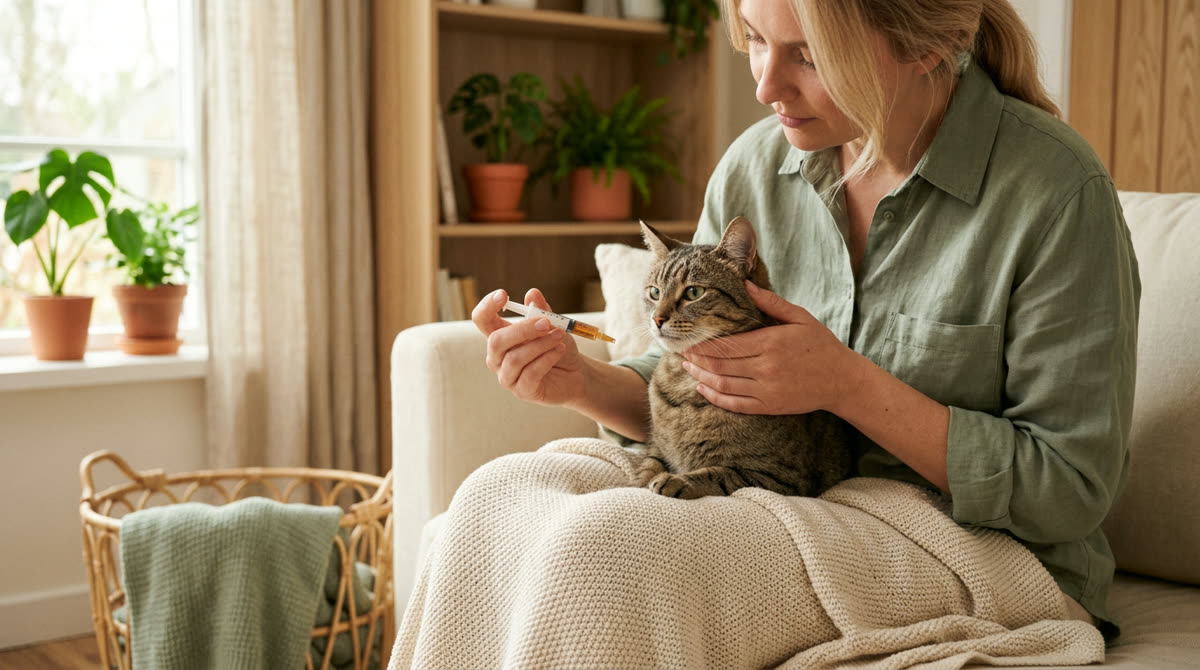
A calm, safety-first approachThis guide provides general education. Contact your veterinarian when symptoms are painful, persistent, or unusual.
- 1
Confirm the medicine instructions before you begin
The safest approach to giving a cat medicine starts with checking the prescription label against your veterinarian’s instructions before you bring your cat into the room. Confirm the cat’s name, medicine name, strength or concentration, amount per dose, route, and schedule, especially if several pets receive treatment. For liquid medicine, distinguish milligrams (mg), which describe the amount of drug, from milliliters (mL), which describe the volume you measure; if the instructions and syringe markings do not clearly match, call the clinic rather than calculating a conversion yourself. Ask whether the medicine must be given with food or on an empty stomach, and whether tablets may be split, crushed, or dissolved or capsules opened, because changing some formulations can affect safety, absorption, or taste. Check storage requirements and the expiration or beyond-use date, and shake a liquid only as directed so each measured dose has the intended consistency. Before the first dose, ask what to do about missed doses, vomiting, or a partly swallowed dose, because these instructions depend on the particular medicine. If your cat is already vomiting repeatedly, struggling to breathe, or having trouble swallowing, stop and contact a veterinarian before attempting oral medication.
- Match the prescription to the correct cat.
- Confirm the dose, concentration, and timing.
- Check food, handling, and storage instructions.
- Get a medicine-specific missed-dose plan.
Good to know: Never substitute a human medicine, another pet’s prescription, or a different liquid concentration without veterinary approval.
- 2
Prepare a quiet dosing station
Choose a small, quiet room away from other pets, and close the door before opening the medicine so you will not need to chase your cat through the house. Work on a nonslip floor mat or a stable, low surface, since a frightened cat can jump unexpectedly from a counter or table. Within arm’s reach, place the prescribed dose, a soft towel, a reward, and any approved food or water you will offer afterward. For liquids, use an oral dosing syringe supplied or approved by the clinic, selecting one with markings fine enough to measure the prescribed volume accurately rather than using a household teaspoon. Draw up the dose at eye level, remove large air bubbles, and follow the syringe’s instructions for which plunger edge aligns with the measurement mark. If your veterinarian recommends a pill giver, inspect its tip for cracks or looseness and ask for a demonstration before using it in your cat’s mouth. Set everything up before handling your cat, because searching for supplies while restraining them extends stress and makes the next dose harder.
- Close doors and remove nearby hiding hazards.
- Lay down a towel or nonslip mat.
- Measure or separate the prescribed dose.
- Keep rewards and cleanup supplies nearby.
Good to know: For a dose such as 0.2 mL, a large syringe may be too imprecise; ask the clinic for an appropriately graduated small oral syringe.
- 3
Settle your cat with minimal restraint
Approach when your cat is awake and relaxed, allowing 1–2 minutes for quiet attention or a brief reward rather than interrupting sleep or starting a chase. If medication is not urgent, rehearse touching the cheeks, lifting the lip, and rewarding cooperation in 30–60-second sessions before the first treatment day. Position your cat sitting or resting chest-down, with their body supported and their back gently against your torso, rather than placing them on their back. If paws interfere, place a towel over the shoulders and loosely wrap the sides around the body, leaving the head exposed and enough room for unrestricted chest movement. A calm helper can support the body and front legs while you deliver the medicine, but neither person should press on the throat, squeeze the chest, or scruff the cat. Watch for escalating distress, including flattened ears, growling, frantic twisting, or repeated attempts to bite, and release restraint before struggling becomes the main event. After one or two brief unsuccessful attempts, put the cat somewhere safe and allow at least 5–10 minutes to settle; if calm handling still is not possible, contact the clinic for another administration plan.
- Keep the body upright or chest-down.
- Use the least restraint that works.
- Leave the nose and mouth unobstructed.
- Stop before struggling escalates.
Good to know: Open-mouth breathing in a cat is a reason to stop immediately and seek urgent veterinary advice, not to tighten the towel and finish the dose.
- 4
Try an approved food-based method first
If the medicine may be given with food, hiding a pill in a small, appealing bite is often the calmest way to medicate a cat. Test a pea-sized piece of feline pill-pocket treat or soft food without medicine first, then use just enough of the same food to enclose the tablet completely. Offer a plain bite, the medicated bite, and another plain bite in quick succession, watching to make sure the medicated portion is actually swallowed rather than chewed apart and abandoned. For liquid medicine that your veterinarian approves mixing with food, stir the measured dose into about 1 teaspoon of a familiar wet food and supervise until the entire portion is eaten before offering the rest of the meal. Never hide a dose in a full bowl or a shared meal, because leftovers and other pets make it impossible to know how much the intended cat received. Do not crush a tablet or open a capsule simply because it will not fit inside a treat, and avoid onion- or garlic-containing foods, bones, and unfamiliar rich foods that could upset the stomach. If your cat refuses the medicated portion or eats only part of it, do not add another dose; set the food aside safely and ask the clinic how to handle the uncertain amount.
- Confirm that food is allowed with this medicine.
- Test the hiding food before adding medicine.
- Use a tiny portion, not the whole meal.
- Watch for a spat-out pill or unfinished food.
Good to know: Avoid hiding a strongly flavored medicine in your cat’s only accepted food or essential prescription diet; a bad experience can make them reject that food afterward.
- 5
Give a pill directly when necessary
When a food-based method is unsuitable or unsuccessful, use direct pilling only if your cat tolerates gentle head handling and your veterinary team has shown you a safe technique. With the cat supported chest-down, cradle the head from above, placing your thumb and fingers along the cheekbones while avoiding pressure on the neck or eyes. Lift the nose slightly, rather than forcing the head sharply backward, and use a finger of your other hand to gently lower the front of the bottom jaw without wedging fingers between the back teeth. Place the pill onto the tongue as far back as you can safely reach without pushing into the throat; if using a veterinarian-approved pill giver, keep its tip visible inside the mouth and never force it against resistance. Release the head tilt, allow the mouth to close naturally, and give your cat time to swallow without clamping the jaws shut or blocking the nose. Once the cat has swallowed and is breathing normally, offer an approved follow-up such as 1–2 teaspoons of wet food; if food is unsuitable, use the water-chaser amount and technique your veterinarian recommends, since tablets and capsules can lodge in a cat’s esophagus when given dry. If the pill comes back out, the cat clamps their mouth shut, or you cannot follow it with food or water safely, stop rather than making repeated forceful attempts and ask the clinic for help.
Good to know: Never force a water chaser into a struggling cat: liquid can enter the airway, and the clinic can recommend a safer formulation or technique.
- 6
Deliver liquid medicine into the cheek pocket
For liquid cat medicine, keep your cat upright or chest-down with the head level, because tipping the nose upward increases the chance that liquid will enter the airway. Slide the oral syringe tip through the gap just behind a canine tooth and angle it toward the inside of the cheek, not straight toward the throat. Rest only the end of the syringe inside the mouth without pushing deeply, and depress the plunger slowly enough that your cat can swallow between small portions. If the prescribed dose is 1 mL, for example, you may need several tiny portions rather than one squirt, with pauses of a few seconds whenever your cat needs to lick or swallow. Keep the syringe position gentle and steady, and withdraw it if your cat turns sharply or struggles rather than following the head with the tip. If coughing, gagging, or abnormal breathing begins, stop immediately; breathing difficulty needs emergency veterinary care, and persistent coughing after dosing warrants prompt veterinary advice even if the cat otherwise seems settled. After a fully delivered dose, offer an approved treat or small amount of food if permitted, and wipe medicine from the chin with a damp cloth so residue is not spread onto fur or household surfaces.
Good to know: Never squirt the entire dose toward the back of the mouth or hold the mouth shut while delivering liquid; a cat needs time to coordinate swallowing and breathing.
- 7
Handle foaming, spit-outs, and missed doses safely
Drooling or foaming immediately after a medicine can occur because of an unpleasant taste, but appearance alone cannot tell you whether the problem is harmless or how much medicine was swallowed. Stop dosing, let your cat settle, and note the medicine name, amount offered, time, and any other symptoms before calling the clinic if you are concerned. Do not automatically replace a dose after foaming, spitting, partial food consumption, or vomiting, because some medicine may already have been absorbed and an extra dose could be unsafe. If you find an apparently intact pill, keep it away from pets and children and ask whether that tablet can be reused or should be discarded, especially if it is wet or damaged. For a late or missed dose, follow the medicine-specific plan from your veterinarian rather than doubling the next dose or moving several doses close together. Facial swelling, collapse, seizures, or difficulty breathing require emergency veterinary care, while repeated vomiting, marked lethargy, or new trouble swallowing call for prompt veterinary assessment. If you suspect the wrong medicine or an extra dose was given, contact your veterinarian, an emergency clinic, or an animal poison service immediately, and do not induce vomiting or give home remedies unless instructed.
- Record what happened and when.
- Do not guess how much was absorbed.
- Do not repeat or double a dose without instructions.
- Keep the packaging available when calling for help.
Good to know: Keep the clinic’s daytime number and a local emergency hospital number beside the dosing instructions so you do not have to search during a problem.
- 8
Reward, document, and clean up
As soon as dosing is complete, release your cat and offer a favorite approved reward, quiet praise, or a short play session, depending on what they enjoy. Let them retreat to a comfortable spot instead of immediately picking them up again, which helps distinguish a brief medical task from prolonged restraint. Check that breathing and behavior look normal during the next 10–15 minutes, while remembering that delayed side effects can occur and that medicine-specific monitoring instructions take priority. Record the dose and exact time immediately, including any uncertainty about swallowing, so another household member does not accidentally administer it again. Clean reusable oral syringes according to the clinic’s or manufacturer’s directions, usually by rinsing promptly and allowing them to air-dry fully, and replace syringes with sticking plungers or unreadable markings. Wash your hands, secure bottle caps, and return medicine to its labeled storage location rather than leaving a loaded syringe on a counter. Over the rest of the treatment course, note changes in appetite, drinking, energy, stool, vomiting, or swallowing and report concerning changes instead of adjusting the prescription yourself.
- Reward and release your cat promptly.
- Log the dose before doing another task.
- Clean and dry reusable equipment.
- Store medicines away from pets and children.
Good to know: Use one shared paper chart or phone log, and assign one person to each dosing time; this simple handoff system helps prevent duplicate doses.
- 9
Arrange a better plan if dosing stays difficult
If giving a cat medicine remains a struggle after one or two carefully prepared sessions, contact your veterinary team rather than waiting for several missed doses or a bite injury. Explain exactly where the process fails, such as refusing medicated food, spitting out pills, foaming at a liquid, or panicking during restraint, because each problem may need a different solution. Ask for an in-person demonstration using your prescribed product and syringe or pill giver, and, when practical, show a short video of the setup without repeating a distressing attempt just to film it. Depending on the medicine, the veterinarian may be able to discuss a different tablet size, a more suitable concentration, a flavored compounded preparation, or another route, but these options are not interchangeable and may not all be effective or appropriate. Do not assume a product rubbed on the ear can replace an oral medicine, and never change the dose or formulation without new instructions. For treatment lasting weeks or months, practice brief reward-based cheek touches and voluntary approaches to the dosing area between doses, while keeping the actual schedule exactly as prescribed. Complete the treatment or continue long-term therapy as directed, attend recommended rechecks, and ask for reassessment if the routine becomes less tolerable or your cat’s condition changes.
Good to know: A method is not successful merely because the medicine goes in: the safest long-term plan also protects your cat’s breathing, comfort, and trust.

Ask about this guide
Leave a comment or a question about your own pet and the Pawlito assistant replies right away with practical next steps.