How to Groom a Short-Haired Cat
A simple weekly grooming routine for short-haired cats that reduces shedding, hairballs and helps you notice body changes early.
- Written by
- Pawlito Editorial Team · Pet Care Writers
- Professional review
- Not yet reviewed by a veterinarian
- Published
- Last updated
In this guide (6 steps)
Step 1: Choose the right tools
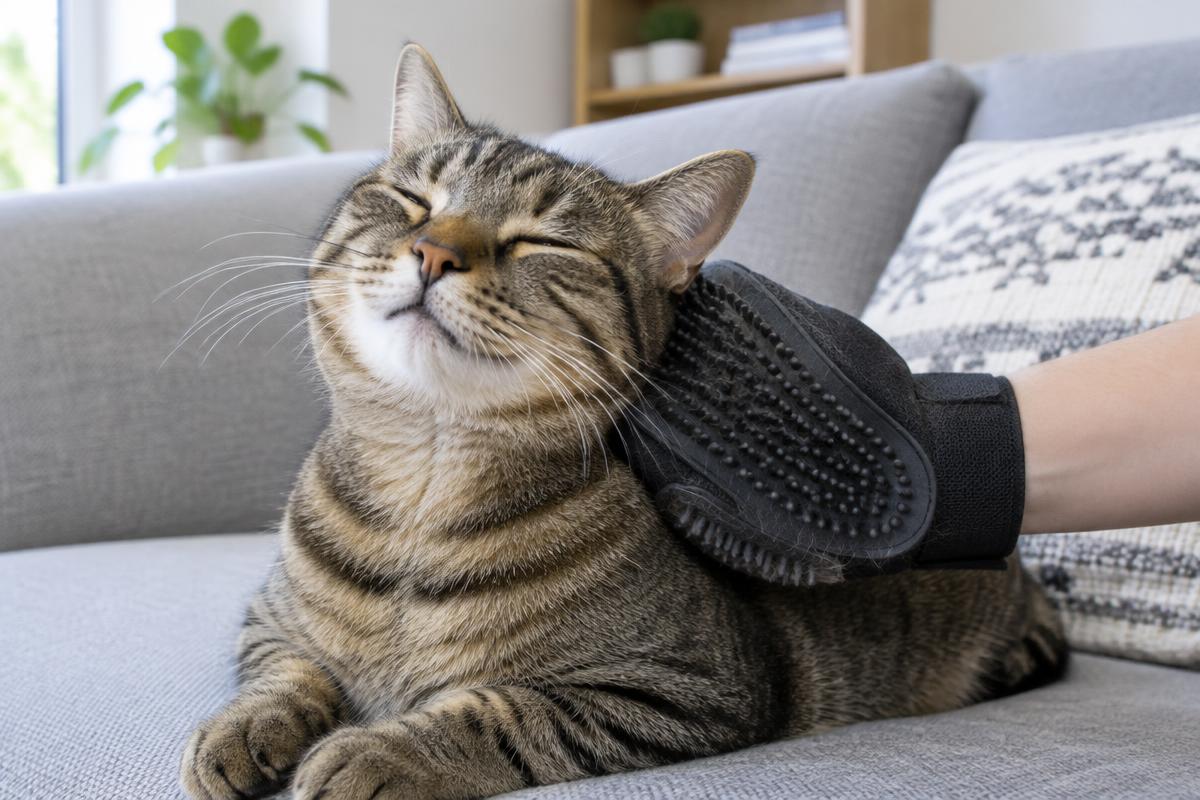
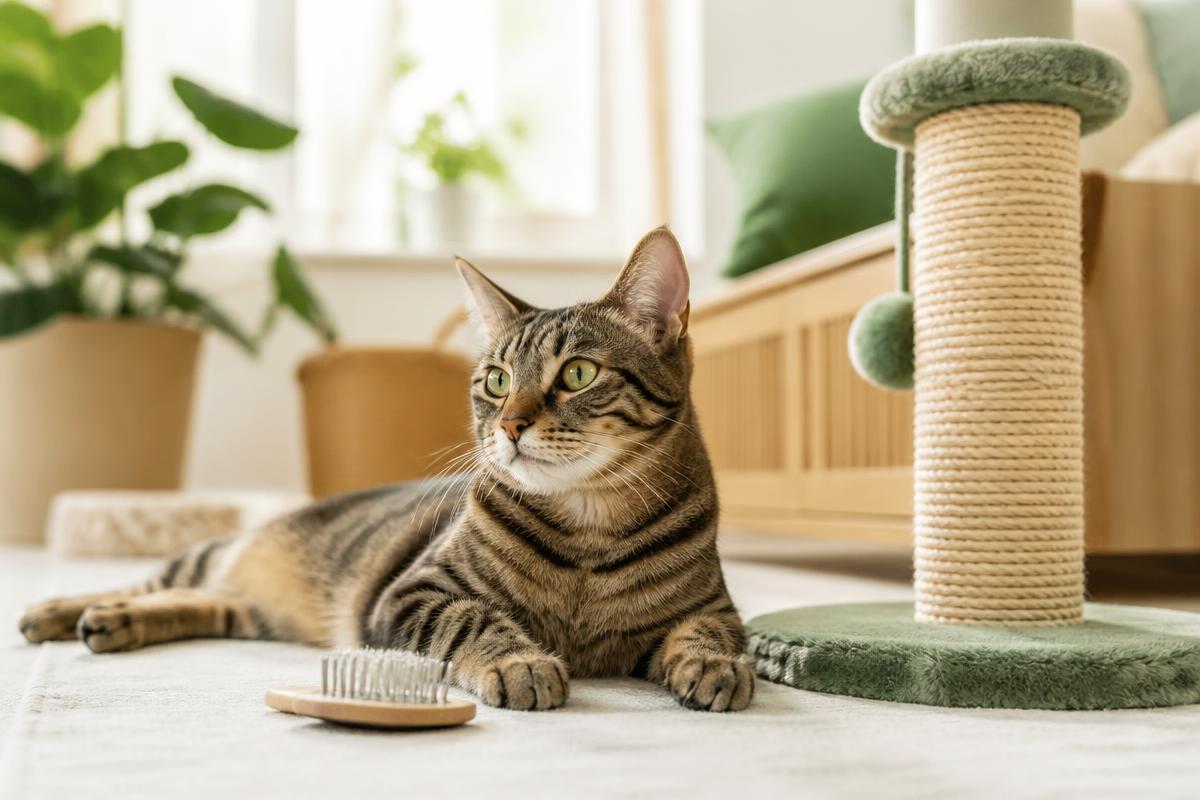
A rubber grooming mitt or soft bristle brush suits most short coats. A fine-toothed comb helps around the neck and tail. Keep treats nearby and pick a quiet time when your cat is relaxed.
Step 2: Start with stroking
Begin by stroking your cat with your hand, then introduce the mitt in the same motion. Work in the direction the fur grows. Start with areas your cat already enjoys, such as cheeks and back.
Step 3: Brush in short sessions
Brush for one to three minutes, then stop before your cat becomes restless. Tail flicking, skin twitching or turning the head toward your hand are signs to pause. Several brief sessions work better than one long one.
Step 4: Check skin and body as you go
While grooming, look for lumps, scabs, fleas, flea dirt, bald patches or sore areas. Note anything new and mention it to your veterinarian. Grooming is a good weekly health check.
Good to know: Gently part the fur at the base of the tail, a common spot for flea dirt.
Step 5: Be gentle with sensitive areas
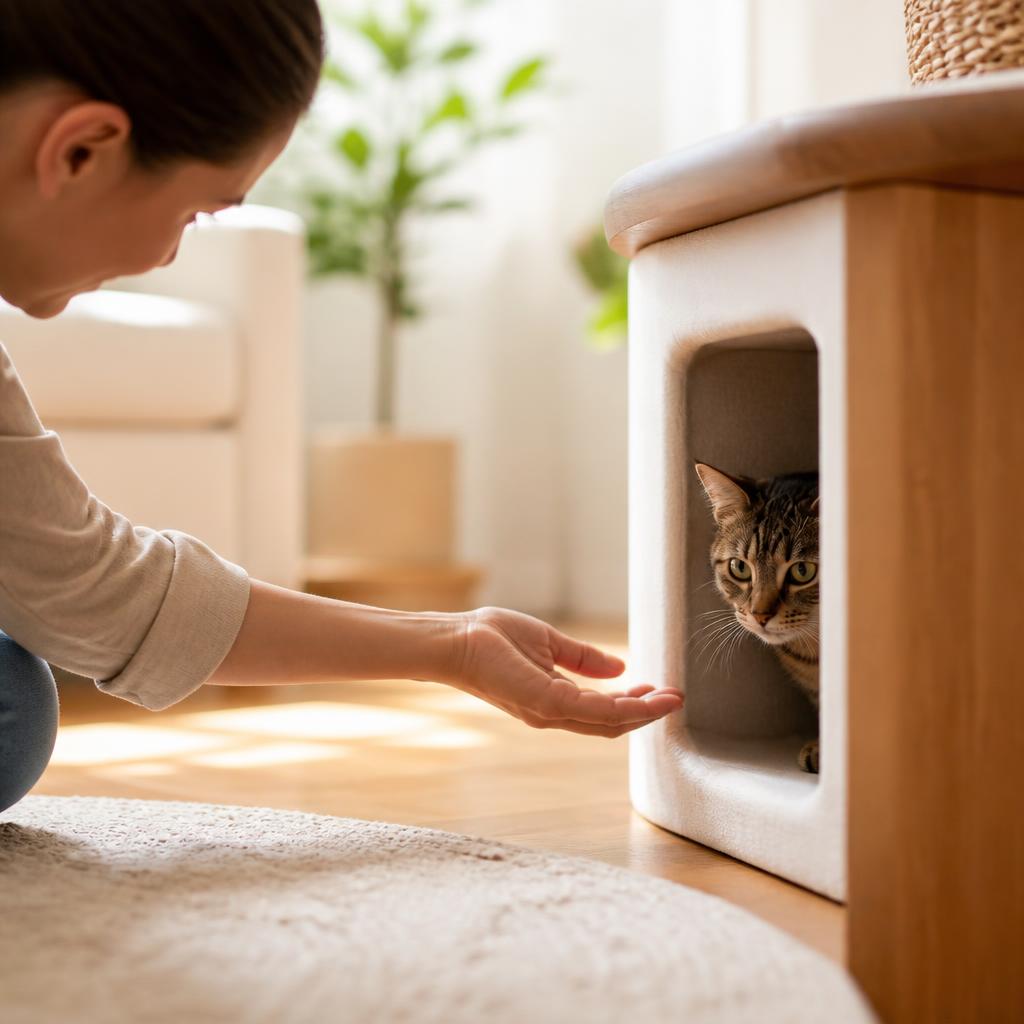
Many cats dislike brushing on the belly, legs and tail. Approach these slowly or skip them until trust builds. Never pull at mats; ask a groomer or veterinarian for help with tangles.
Step 6: Reward and repeat weekly
End with a treat or play. Brushing once or twice a week is often enough for short coats, with extra sessions during heavier seasonal shedding.
This guide was drafted with AI assistance and published by the Pawlito team. It has no formal source list yet. Spotted an error? Tell us and we'll correct it. Read our editorial policy.
Ask about this guide
Leave a comment or a question. Comments are public, so use a first name only and don't include emails, phone numbers or addresses. An automated assistant may reply straight away with general suggestions — it can't diagnose your pet.