How to Grow Cat Grass Indoors
Grow a fresh patch of indoor cat grass with safe seeds, good drainage, and simple care that keeps the tray clean and inviting.
- Written by
- Pawlito Editorial Team · AI-assisted guide
- Professional review
- Not yet reviewed by a veterinarian
- Published
- Last updated
In this guide (7 steps)
Step 1: Choose seeds intended for cat grass
Use untreated seeds sold for cat grass, commonly oats, wheat, barley, or rye. Check labels rather than using ordinary lawn seed that may contain unsuitable treatments. Buy modest quantities for fresh batches. Grass is optional enrichment, not a required supplement or reliable hairball remedy. Keep complete food available and let your cat explore the finished plants without expecting them to eat.
Good to know: Cat grass and catnip are different plants; check the seed name before buying.
Step 2: Prepare a stable draining container
Choose a broad sturdy planter that will not tip when blades are pulled. Drainage holes prevent water collecting around roots; empty the saucer after watering. Use fresh growing mix suitable for edible plants, avoiding added pesticides and exposed fertilizer granules. Leave watering space below the rim. Do not cover soil with loose decorative stones that could be swallowed. Keep planting materials inaccessible during preparation.
- Wash reused planters thoroughly.
- Choose a location where spilled soil can be cleaned easily.
Step 3: Sow an even patch
Follow packet directions for soaking, depth, and spacing because products differ. Moisten the mix until damp rather than saturated, scatter seeds evenly without thick heaps, and cover as directed. Water gently so seeds do not collect in corners. Keep the tray away from your cat while roots establish. Digging and eating loose seeds can disrupt the crop and create mess before usable grass has grown.
Step 4: Support growth without trapping moisture
Place in a warm indoor location with light appropriate to the packet. If a kit recommends a cover, remove it at the specified stage and keep it inaccessible while covered. Check moisture daily instead of watering automatically. Drain excess water and provide bright light after sprouting without overheating on a hot windowsill. Avoid strong fertilizers or treatments that are not intended for edible plants accessible to pets.
Good to know: Rotate the tray occasionally if shoots lean strongly toward the window.
Step 5: Offer rooted grass under supervision
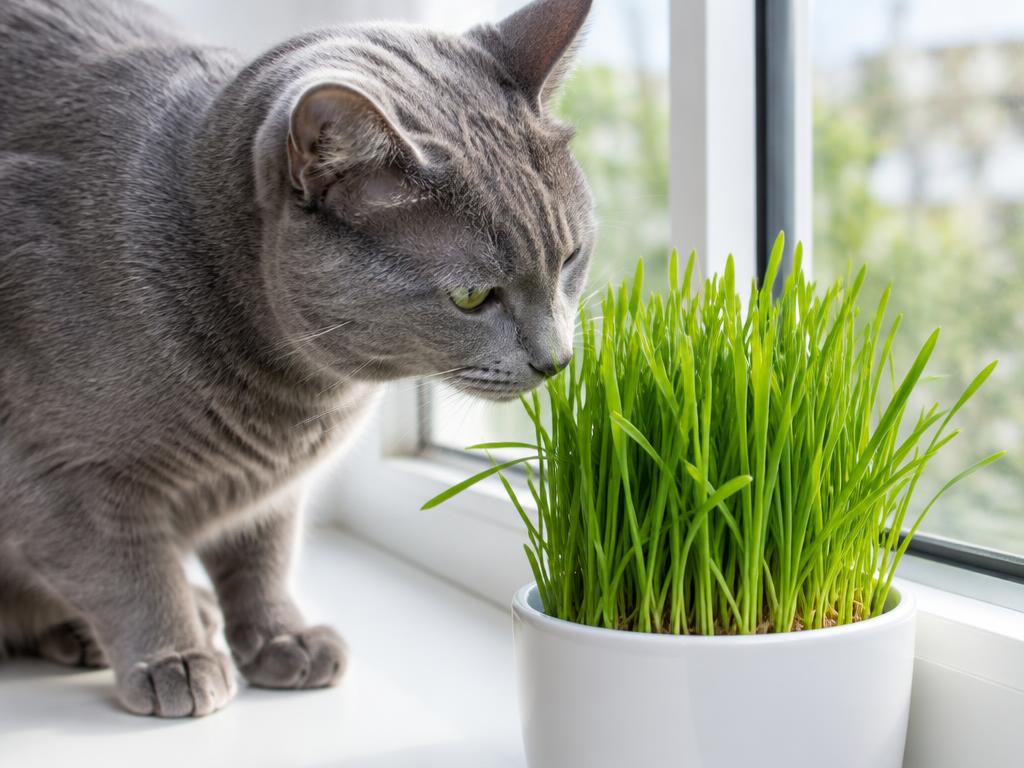
Wait until blades form a well-rooted patch, following kit guidance. Place on a stable easy-clean surface away from toxic houseplants. Allow sniffing, nibbling, or ignoring without pressure. Observe initial visits to distinguish blade nibbling from pulling up soil and roots. Remove access if your cat gulps large amounts, chews the container, or appears uncomfortable. Do not force interest by mixing the plant into meals.
- Keep grass separate from chemically treated plants.
- Remove the tray if the planter itself is chewed.
Step 6: Inspect for deterioration
Check daily for sour smells, slimy stems, fuzzy growth, pests, or standing water. Discard suspicious batches rather than trimming away visible mold. Remove clippings and wipe underneath the planter. Some yellowing happens as this short-lived crop ages, but heavily deteriorated grass should be replaced. If repeated vomiting follows grass eating, stop access and contact your veterinarian instead of assuming vomiting is beneficial.
Good to know: Empty the saucer; a dry surface below does not prove the roots are draining properly.
Step 7: Rotate small fresh batches
Sow a second tray while the first remains usable, adjusting timing to indoor growth. Wash old containers, discard used growing material appropriately, and restart with fresh mix. Keep unused seeds sealed, dry, and beyond reach. There is no reason to maintain an aging mold-prone patch indefinitely. Continue offering only if your cat enjoys it; ignoring the planter is an acceptable choice, not a problem to solve.
This guide was drafted with AI assistance and published by the Pawlito team. It has no formal source list yet. Spotted an error? Tell us and we'll correct it. Read our editorial policy.
Ask about this guide
Leave a comment or a question. Comments are public, so use a first name only and don't include emails, phone numbers or addresses. An automated assistant may reply straight away with general suggestions — it can't diagnose your pet.