How to Help a Shy Cat Come Out of Their Shell
Patient, kind techniques to help a nervous or timid cat build confidence and learn to trust you.
- Written by
- Pawlito Editorial Team · AI-assisted guide
- Professional review
- Not yet reviewed by a veterinarian
- Published
- Last updated

In this guide (8 steps)
Step 1: Give your cat a safe base camp
A shy cat needs one quiet room as their territory before facing the whole house. Set it up with food, water, a litter tray, hiding spots and a comfortable bed. Let your cat stay there undisturbed for the first days or weeks. Hiding is coping, not a problem — never drag a frightened cat out of their hiding place.
Step 2: Let the cat set the pace
The golden rule with shy cats is that all progress happens on their terms. Sit quietly in the room reading or working, letting your cat observe you from safety. Avoid direct eye contact, which cats find threatening — slow blinks are the friendly alternative. Speak softly and move slowly. Some cats warm up in days; others need months.
Good to know: Slow blinking at your cat is like saying 'I trust you' in cat language — many shy cats eventually blink back.
Step 3: Use food to build positive associations
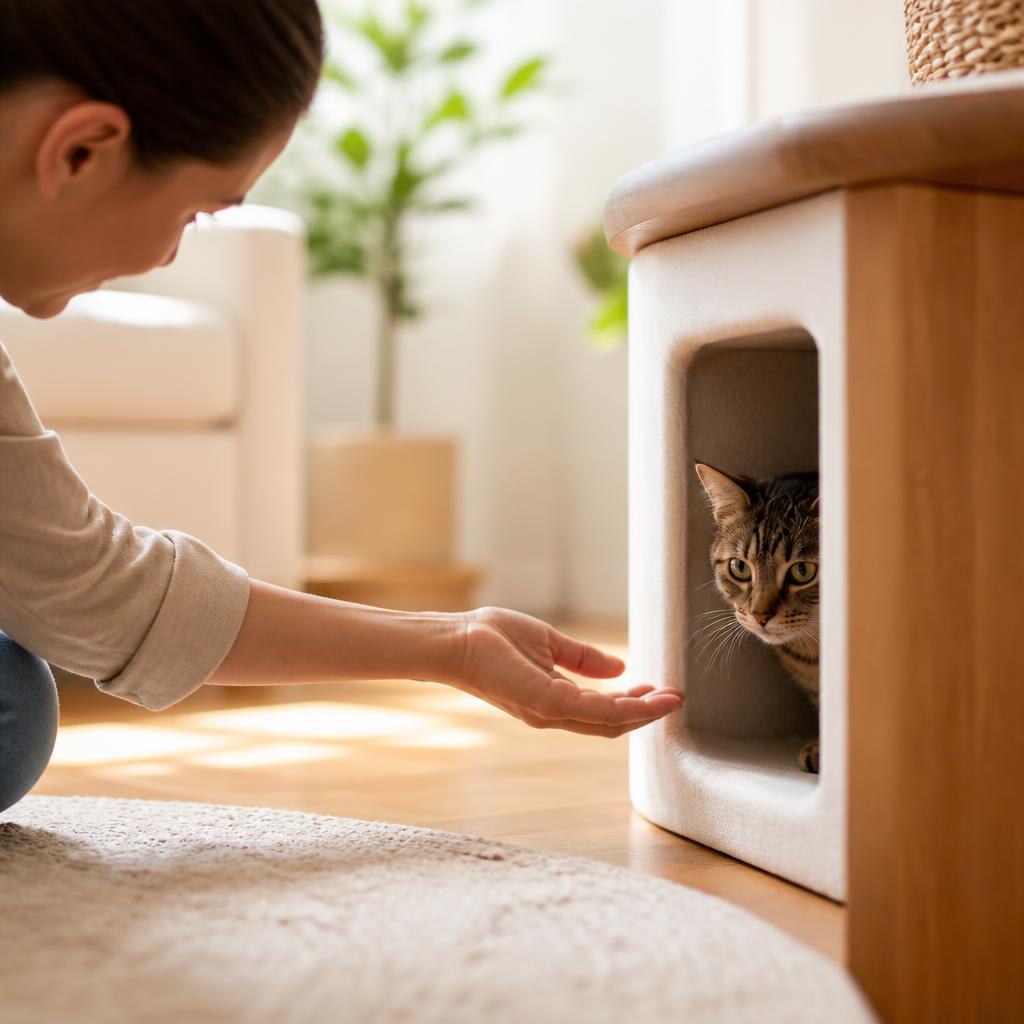
Food is the fastest route to a nervous cat's trust. Offer treats or wet food from a spoon or your outstretched hand, staying still and letting the cat approach. If they will not come close, place the food near their hiding spot and sit at a distance. Gradually decrease the distance over days and weeks. Never withhold meals to force interaction.
Step 4: Play your way to confidence
A wand toy lets a shy cat interact with you from a safe distance. Move it slowly at first, like cautious prey, and let your cat watch before joining in. Play triggers the hunting instinct, which overrides fear in many cats. Short daily sessions build positive associations with your presence faster than almost anything else.
Step 5: Introduce touch gradually
Only when your cat approaches you willingly should you attempt touch. Offer a finger at nose height and let the cat sniff and rub against it first. Start with cheek and chin strokes — the friendly zones — and avoid the tummy, tail and paws. Keep first touches to a few seconds, ending before the cat wants to leave.
Step 6: Expand their world slowly
Once your cat is confident in their base room, open the door and let them explore further at their own pace, always with the option to retreat. Add hiding spots and high perches along new routes so your cat never feels trapped in the open. Introduce other household members one at a time, using the same patient approach.
Step 7: Handle setbacks calmly
A loud noise, a visitor or a vet trip can send a shy cat back into hiding. This is normal — simply return to the last stage where your cat felt safe and rebuild. Never force progress to meet a schedule. Pheromone diffusers can take the edge off anxiety during setbacks.
Step 8: Know when to seek help
If your cat shows no improvement after two to three months, or stops eating, hides constantly or becomes aggressive, consult your vet to rule out pain or illness. A qualified feline behaviourist can create a tailored plan for severe cases. With patience, most shy cats become affectionate companions — the bond you build slowly is often the deepest of all.
Good to know: Keep a progress diary — small wins are easy to miss day to day but obvious over a month.
This guide was drafted with AI assistance and published by the Pawlito team. It has no formal source list yet. Spotted an error? Tell us and we'll correct it. Read our editorial policy.

Ask about this guide
Leave a comment or a question. Comments are public, so use a first name only and don't include emails, phone numbers or addresses. An automated assistant may reply straight away with general suggestions — it can't diagnose your pet.