How to Introduce Your Cat to a Pet Sitter
Help your cat feel safer with a pet sitter through calm introductions, familiar routines, and clear care instructions.
- Written by
- Pawlito Editorial Team · AI-assisted guide
- Professional review
- Not yet reviewed by a veterinarian
- Published
- Last updated
In this guide (7 steps)
Step 1: Arrange a calm meeting before travel
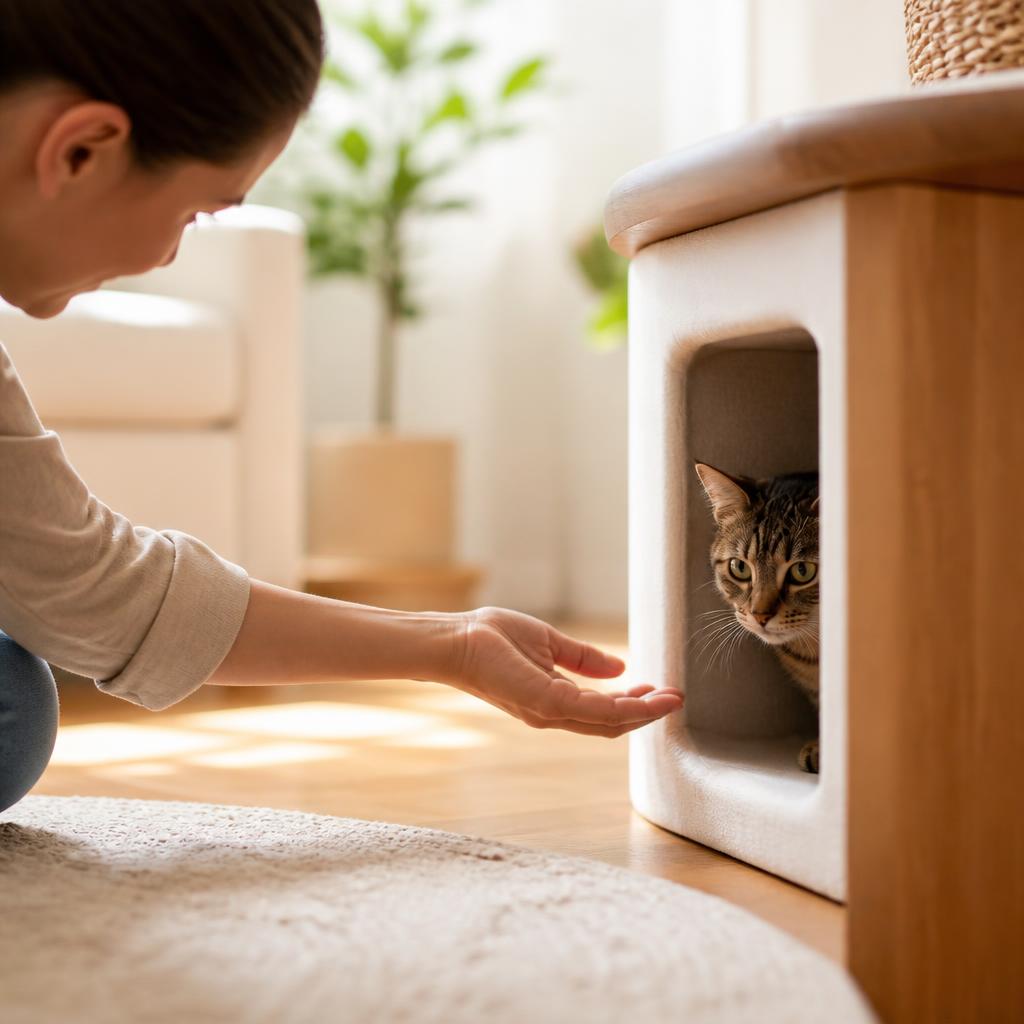
Schedule a visit well before departure so the sitter is not introduced alongside a sudden routine change. Pick a quiet time and keep the household ordinary. Ask the sitter to enter calmly, secure the exterior door, and avoid immediately approaching your cat. Keep familiar hiding places available. Your cat need not emerge: hearing and smelling a calm visitor from safety can be a useful first experience.
Good to know: Several short introductions may be easier than one long busy meeting.
Step 2: Let your cat choose the distance
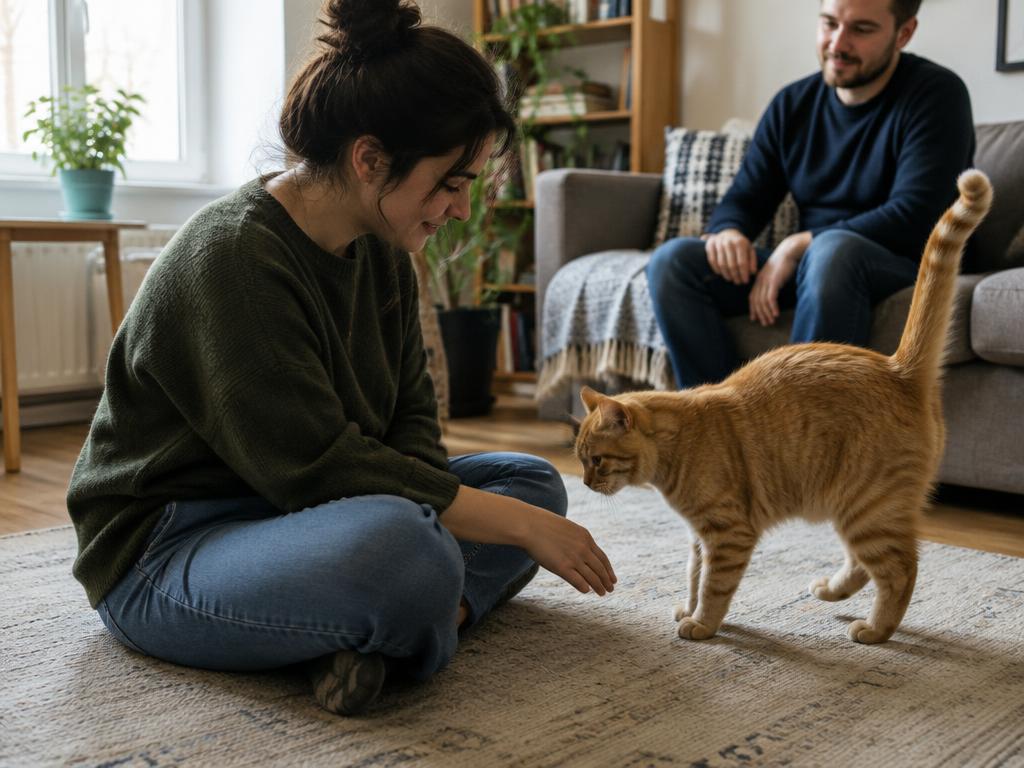
Ask the sitter to sit sideways with a soft gaze and hands near their own body. Avoid reaching into hiding places, looming over beds, or following between rooms. If your cat approaches, remain still for investigation. Petting is optional. A sniff followed by retreat provides useful information about comfort and must not be interrupted by attempted handling. Keep escape routes inside the safe home available.
- Never pick up a cat to complete an introduction.
- Keep paths between hiding places and essential resources clear.
Step 3: Offer pleasant associations at a distance
Give the sitter approved treats to place or gently toss near your cat's comfortable position. Do not use food to draw a hesitant cat into touching range. If wand play is enjoyed, offer slow movement across open floor away from the sitter's body. Stop for freezing, tense crouching, or withdrawal. The goal is a pleasant predictable encounter rather than making the cat interact on demand.
Step 4: Rehearse the care routine
Demonstrate feeding, water changes, litter cleaning, and familiar enrichment. Show exact portions, bowls, storage, and disposal arrangements. Explain doors, windows, and enclosed outdoor access. Provide written veterinary instructions for prescribed medication and confirm the sitter can safely follow them. Arrange professional support for difficult handling rather than expecting improvisation. Let your cat watch from a comfortable distance without using the introduction as a handling test.
Good to know: Have the sitter complete a simple task while you watch to reveal unclear instructions.
Step 5: Write essentials and emergency arrangements
Record normal appetite, litter habits, hiding places, and interaction preferences. Include your contact, a backup contact, regular veterinarian, and emergency clinic. Agree what happens if you cannot be reached, including authorization and payment arrangements. Show the carrier and its openings. Keep instructions accessible to the sitter without exposing sensitive details to general visitors. Confirm practical emergency transport rather than assuming someone else will arrange it.
- List exact meals and prescribed medication instructions.
- State escape precautions and prohibited areas.
Step 6: Try a brief practice visit without you
If possible, let the sitter complete a short visit while you leave. This checks entry arrangements and lets your cat experience care independently. Ask for the planned routine without unnecessary handling and a record of observations. Discuss eating, emerging, litter use, and hiding afterward. One practice visit cannot predict everything, but it can reveal access problems or tasks that need a calmer approach.
Good to know: Test keys, alarms, and building access before departure day.
Step 7: Agree on observations and updates
Set visit and update frequency according to actual care needs, not assumptions about feline independence. Ask for sightings without dragging your cat from hiding, plus monitoring of food, water, and litter output. Explain which changes need an immediate call or veterinary assessment. Straining to urinate or producing little or no urine needs urgent veterinary attention. Leave departure-day routines and bedding familiar.
This guide was drafted with AI assistance and published by the Pawlito team. It has no formal source list yet. Spotted an error? Tell us and we'll correct it. Read our editorial policy.
Ask about this guide
Leave a comment or a question. Comments are public, so use a first name only and don't include emails, phone numbers or addresses. An automated assistant may reply straight away with general suggestions — it can't diagnose your pet.