How to Introduce a Puzzle Feeder to Your Cat
Make food puzzles rewarding rather than frustrating with easy starting levels, measured meals, and gradual adjustments for your cat.
- Written by
- Pawlito Editorial Team · AI-assisted guide
- Professional review
- Not yet reviewed by a veterinarian
- Published
- Last updated
In this guide (7 steps)
Step 1: Match the puzzle to your cat
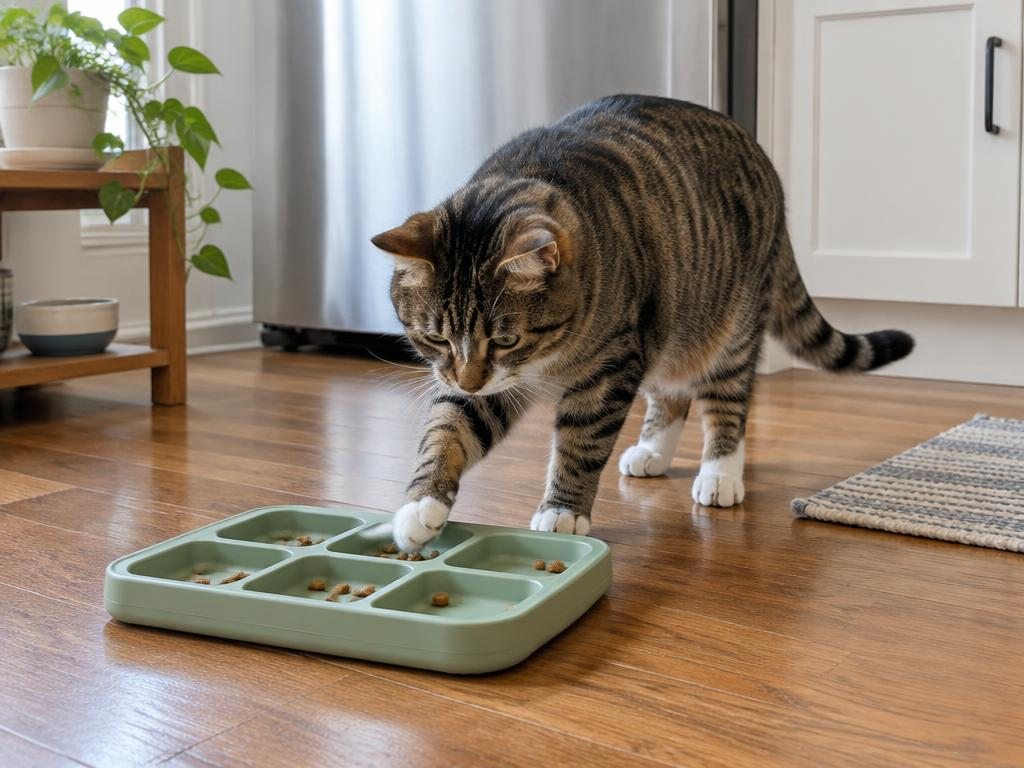
A food puzzle should encourage exploration without preventing normal eating. Start with a stable, washable tray with wide shallow compartments, not a difficult rolling dispenser. Consider your cat’s age, eyesight, paw movement, and usual food. Wet food needs a design suitable for it and prompt cleaning. Cats with medical diets or appetite concerns may need a feeding plan from their veterinarian first.
Good to know: Never make a new puzzle the only food source for a cat that has not learned to use it.
Step 2: Make the first reward obvious
Place a small part of the normal meal openly on the easiest sections while your cat watches from a comfortable distance. Set the puzzle in a quiet familiar spot away from litter trays and other animals. Let your cat sniff and eat without guiding their paws. Do not shake or push the puzzle toward them if they hesitate; step back and allow a calm investigation.
Step 3: Preserve reliable access to meals
Offer the rest of the measured meal in the usual bowl while your cat learns. Move more of the meal into the puzzle only after they consistently retrieve food and still eat normally. Keep track of intake, particularly in multi-cat households. Food deprivation is not a training method, and a cat refusing food should not be left hungry in the hope of figuring out a toy.
Good to know: Contact your veterinarian promptly for a significant appetite change; seek urgent help if your cat also seems unwell.
Step 4: Reward simple paw and nose movements
After easy eating becomes routine, place a few pieces beside a shallow divider. Your cat may use their nose, tongue, or paw; there is no single correct style. Choose openings that will not trap claws or press whiskers tightly. Avoid elastic bands, strings, and loose homemade parts that might be swallowed. Stop the session if your cat becomes agitated or repeatedly attacks the device.
Step 5: Increase only one difficulty at a time
Try a slightly deeper compartment or a lid set partly open, not an entirely new complicated puzzle at once. Leave some food in easy locations so success remains likely. If your cat walks away or cannot retrieve pieces, restore the previous level. Timid cats may prefer the same familiar device for weeks; there is no need to keep making the task harder.
Step 6: Manage portions and sharing
Measure puzzle food as part of the day’s ration, including any training treats, rather than adding extra meals. Place separate puzzles in spaced-out areas for cats that compete. Watch each cat use their own feeder so a confident housemate does not eat both portions. Ask your veterinarian about appropriate daily amounts if your cat is gaining weight or has special nutritional requirements.
Step 7: Clean, inspect, and rotate thoughtfully
Wash the feeder after use according to its material and allow it to dry fully. Remove stale or spoiled food and check for cracks or loose parts. Rotate between a few familiar easy designs when your cat enjoys variety, but keep ordinary feeding options available when they are ill or stressed. Food puzzles complement climbing, scratching, social contact, and play; they do not replace them.
This guide was drafted with AI assistance and published by the Pawlito team. It has no formal source list yet. Spotted an error? Tell us and we'll correct it. Read our editorial policy.
Ask about this guide
Leave a comment or a question. Comments are public, so use a first name only and don't include emails, phone numbers or addresses. An automated assistant may reply straight away with general suggestions — it can't diagnose your pet.