How to Introduce a Cat to a Dog
Learn how to introduce a cat to a dog safely with separate spaces, scent swapping, supervised meetings, and practical signs that both pets are ready to progress.
A calm, safety-first approachThis guide provides general education. Contact your veterinarian when symptoms are painful, persistent, or unusual.
- 1
Assess both pets before arranging contact (Step 1)
Before you introduce a cat to a dog, consider each pet’s history, confidence, physical comfort, and previous reactions to the other species. A dog that has chased, grabbed, or injured cats or other small animals needs a professional risk assessment before any face-to-face introduction. Likewise, a frightened cat, an excitable puppy, or a pet with limited mobility may need additional protection and a much slower approach. Arrange a veterinary visit if either animal has medical concerns, because pain or illness can make even a normally sociable pet less comfortable with change. If you are adopting, ask the shelter or rescue about observed behavior around other animals, while remembering that behavior can change in a new home. Set your goal as relaxed, safe coexistence rather than friendship, and accept that some cats and dogs will need permanent separation.
- Review any chasing or injury history
- Consider age, mobility, and confidence
- Ask about previous cat–dog interactions
- Discuss medical concerns with your vet
Good to know: For a dog with a known history of harming cats, consult a veterinary behaviorist or an appropriately qualified behavior professional rather than testing the dog’s reaction yourself.
- 2
Create secure spaces and escape routes (Step 2)
Set up a comfortable cat-only room with a solid door before the pets meet, giving the cat a dependable place where the dog cannot enter. Provide food, water, a litter box, scratching options, hiding places, and a stable elevated resting spot, with the litter box separated from eating areas. Give the dog a separate resting area too, and preserve familiar walks, meals, and quiet time so the household change feels more predictable. Check doors and barriers carefully, since a dog may push through a lightweight gate and a cat may squeeze through gaps or jump over it. In rooms you will eventually share, create multiple clear routes to dog-free areas so the cat never has to pass the dog to escape. Tell everyone in the household how separation works, including how to prevent accidental encounters when opening doors or moving pets between rooms.
- Secure cat-only room with a solid door
- Separate food, water, and resting areas
- Accessible litter box away from the dog
- Stable perches and unobstructed exits
- Household plan for opening doors
Good to know: Post a reminder on the cat-room door, especially when visitors or children are present, and secure the dog elsewhere before opening it.
- 3
Let both pets settle and exchange scents (Step 3)
Keep the pets physically separated at first, allowing the newcomer to explore a manageable space and establish comfortable eating, resting, and toileting routines. Once both seem settled, exchange a small blanket or bedding item carrying each pet’s natural scent without bringing the animals together. Place the item at a distance from essential resources so neither pet must approach it to eat, drink, rest, or use the litter box. Allow voluntary investigation, and offer a treat or gentle praise if the pet notices the scent and remains relaxed enough to enjoy the reward. You can also let each animal explore a shared area separately, but secure the other pet behind a closed door before switching locations. If either animal hides more than usual, repeatedly guards the door, or becomes unsettled by the scent, reduce exposure and allow more quiet adjustment time.
- Exchange familiar bedding
- Keep scent items away from essentials
- Reward relaxed, voluntary investigation
- Secure pets before swapping spaces
Good to know: Use bedding the pet has already rested on rather than holding the animal still to rub it with a cloth.
- 4
Build calm associations across a closed door (Step 4)
With the solid door still closed, offer each pet a pleasant activity on its own side, starting far enough away that both remain comfortable. This might be a few small treats, a familiar toy, or part of a meal, provided neither animal feels pressured to approach the doorway. If possible, have one adult with each pet so you can notice changes in posture and stop the session before tension builds. Look for ordinary behaviors such as sniffing briefly and moving away, eating at a normal pace, or responding easily to a familiar person. Barking at the door, persistent pawing, freezing, or refusing normally appealing food means you should increase distance or end that session. Repeat brief sessions until both pets can notice sounds or scent from the other side without remaining focused on the door.
- Start well back from the door
- Use rewards each pet already enjoys
- Watch posture as well as appetite
- End before barking or fixation escalates
Good to know: Eating is only one clue: a pet that accepts treats while standing rigidly or staring at the door is not necessarily ready to progress.
- 5
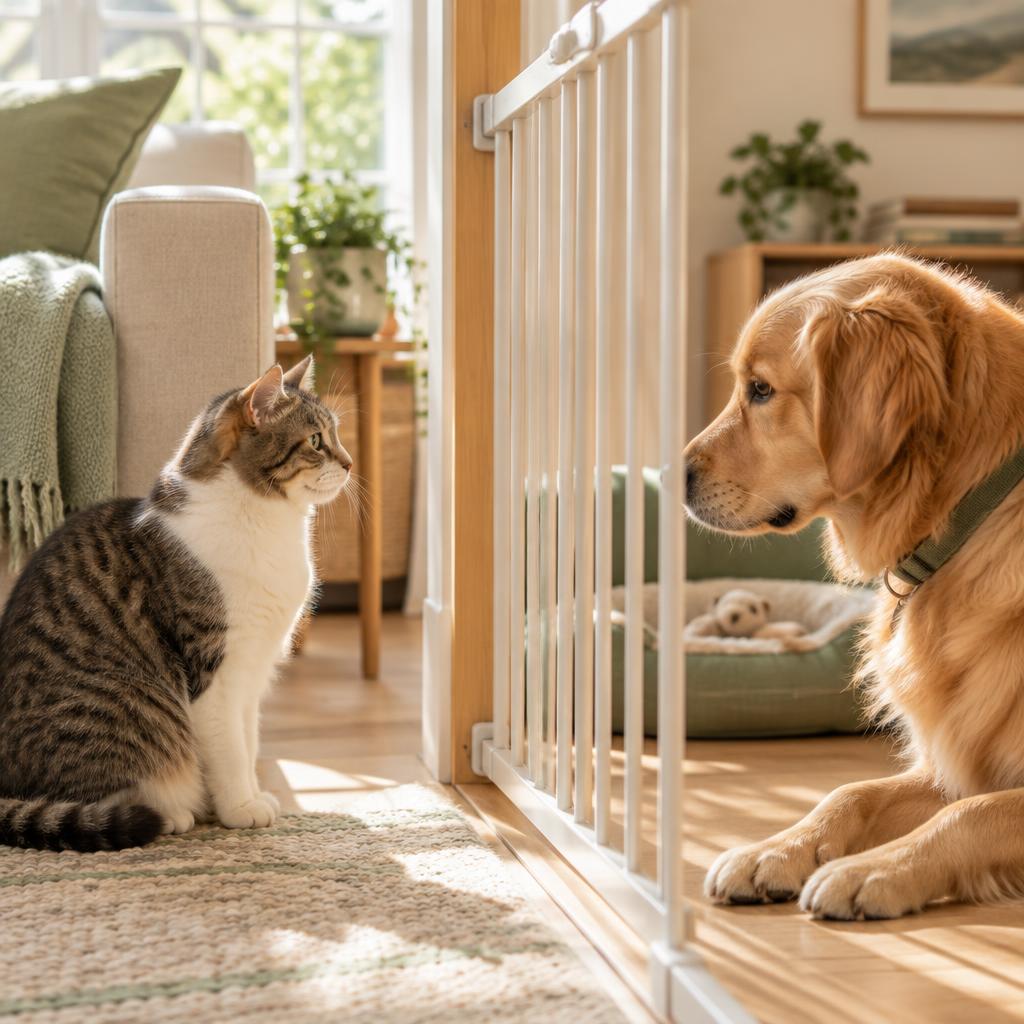
Introduce brief views through a secure barrier (Step 5)
When closed-door sessions are consistently calm, arrange a brief visual introduction through a secure screen or gate setup that neither animal can cross. A single baby gate may be inadequate, so check its height, openings, and stability before relying on it to protect either pet. Keep the dog on a comfortable harness and leash held by an adult, and let the cat choose whether to approach from a spacious, protected area. Begin with plenty of distance and just a few seconds of visibility, rewarding the dog for looking away from the cat and reconnecting with you. Reward the cat for calm observation too, but never carry the cat toward the barrier, hold it in place, or trap it in a carrier for inspection. Close the view while both pets are still comfortable, gradually extending later sessions only when they can notice each other and then disengage.
- Use a barrier neither pet can cross
- Keep the dog’s leash in hand
- Give the cat room to retreat
- Reward looking away and settling
- Keep initial glimpses very brief
Good to know: Practice the dog’s name response, turning away, and settling on a mat separately before asking for those behaviors near the cat.
- 6
Read body language and adjust the pace (Step 6)
Watch the whole animal rather than a single signal, because a wagging dog or a motionless cat is not automatically comfortable. Encouraging signs include loose muscles, soft attention, normal exploration, and the ability to turn away, settle, or respond to a familiar cue. Concerning dog behavior includes a fixed stare, stalking, a closed mouth with a rigid posture, lunging, or repeated attempts to pursue the cat. A crouched or frozen cat, flattened ears, a lashing tail, growling, hissing, or repeated swatting indicates that the interaction needs more distance or an end. Do not punish warnings or make the pets stay together to work things out, because that can increase fear and suppress useful communication. Return to an easier stage whenever tension appears, and seek qualified behavior help for persistent fixation, chasing attempts, or distress rather than repeatedly testing their tolerance.
- Progress: loose posture and easy disengagement
- Pause: freezing, hiding, or persistent staring
- Stop: stalking, lunging, or attempted chasing
- Never punish hissing or growling
Good to know: Keep a short session log noting distance, duration, and each pet’s behavior; progress is easier to judge from patterns than from one promising meeting.
- 7
Try a short, carefully managed room meeting (Step 7)
Move to the same room only after repeated barrier sessions in which both pets remain relaxed and can readily disengage from each other. Choose a quiet, spacious room with clear escape routes and accessible elevated refuges, and remove toys, chews, or food bowls that could trigger competition. Ideally, have two adults present, with one holding the dog’s harness-attached leash and the other observing the cat without restraining or cornering it. Let the cat decide where to go while keeping the dog far enough away that it can respond to familiar cues without straining toward the cat. Reward calm behavior separately, prevent any chase from starting, and finish the meeting after a brief successful period rather than waiting for either pet to become overwhelmed. If tension rises, calmly guide the dog away and restore separation without grabbing the cat or putting your hands between the animals.
- Clear the floor and escape routes
- Remove shared food and prized items
- Keep an adult holding the leash
- Allow the cat to approach or leave
- Finish while both pets remain calm
Good to know: Schedule the meeting after the dog has had a normal walk and a chance to settle, rather than immediately after exciting play.
- 8
Expand shared time without rushing freedom (Step 8)
Repeat successful supervised meetings, increasing only one challenge at a time, such as session length, freedom of movement, or access to another room. Continue keeping the dog’s leash in hand until there is a reliable pattern of calm behavior, including when the cat naturally walks around. Do not deliberately make the cat run to test the dog, because sudden movement can trigger pursuit even after several peaceful sessions. Consider supervised off-leash time only when the dog consistently disengages, responds to you around the cat, and shows no stalking, chasing, or guarding behavior. Stay actively attentive during these trials rather than cooking, taking a call, or assuming that being somewhere in the house counts as supervision. If either pet becomes uncomfortable as freedom increases, restore the earlier safeguards and build more successful practice at that level before trying again.
- Change only one challenge at a time
- Watch reactions to ordinary cat movement
- Keep rewards and exits available
- Return to separation after setbacks
Good to know: Do not leave a leash attached to an unattended dog, since it can snag on furniture or create an entanglement hazard.
- 9
Protect peaceful coexistence for the long term (Step 9)
Continue separating the pets whenever nobody can actively supervise until they have an established pattern of safe, relaxed behavior across ordinary household situations. There is no fixed number of days or weeks that makes unsupervised contact safe, and some households should maintain separation whenever people are asleep or away. Preserve dog-free resting places and litter access permanently, and feed the pets separately so they do not have to compete for essential resources. Reintroduce more structure after a move, illness, frightening encounter, or major routine change, since previously comfortable animals may need renewed support. Contact your veterinarian promptly for injuries, reduced appetite, toileting changes, or other medical concerns, and seek urgent veterinary care after a bite or forceful grab even if wounds look small. Measure success by both pets being able to rest, eat, explore, and choose distance comfortably, whether or not they ever cuddle or play together.
- Maintain permanent cat-only refuges
- Feed separately and protect litter access
- Separate when supervision is uncertain
- Seek veterinary care for medical concerns
Good to know: Use secure closed-door separation during absences if there is any doubt about safety; peaceful coexistence does not require unrestricted access to each other.

Ask about this guide
Leave a comment or a question about your own pet and the Pawlito assistant replies right away with practical next steps.