How to Introduce a New Kitten to Your Resident Cat
Use separate rooms, scent swapping and short supervised meetings to help an adult cat accept a new kitten.
- Written by
- Pawlito Editorial Team · Pet Care Writers
- Professional review
- Not yet reviewed by a veterinarian
- Published
- Last updated
In this guide (6 steps)
Step 1: Prepare a separate kitten room
Set up a room with litter tray, food, water, bed, scratching post and toys. The kitten stays here for the first days. This protects your resident cat's territory and gives the kitten a safe, small space to settle.
Step 2: Swap scents before sight
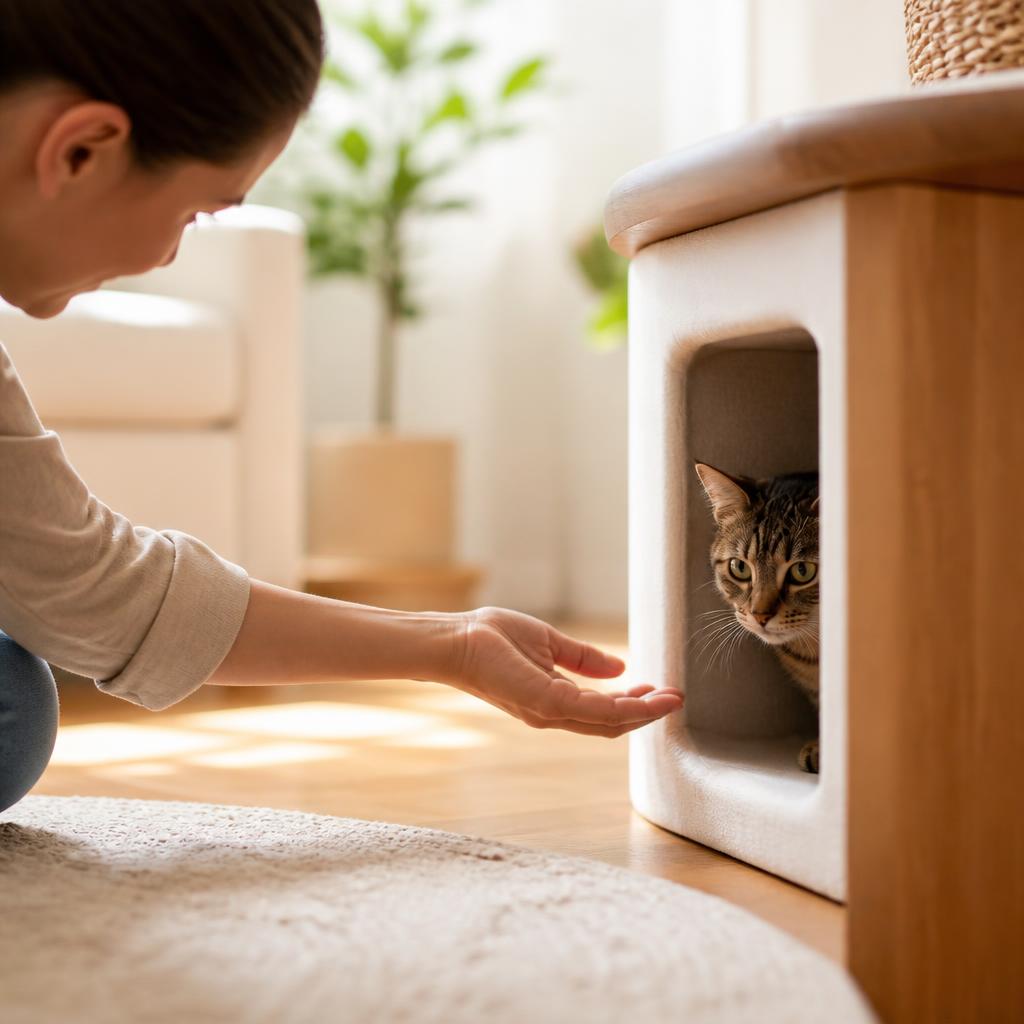
Rub a soft cloth on each cat's cheeks and leave it near the other's food bowl. Swap bedding every day. When both cats sniff the items calmly or ignore them, they are ready for the next step.
Step 3: Feed on either side of a door
Place food bowls on each side of the closed door, starting at a distance. Move them closer over several meals if both eat calmly. Hissing or refusing to eat means you should move the bowls back.
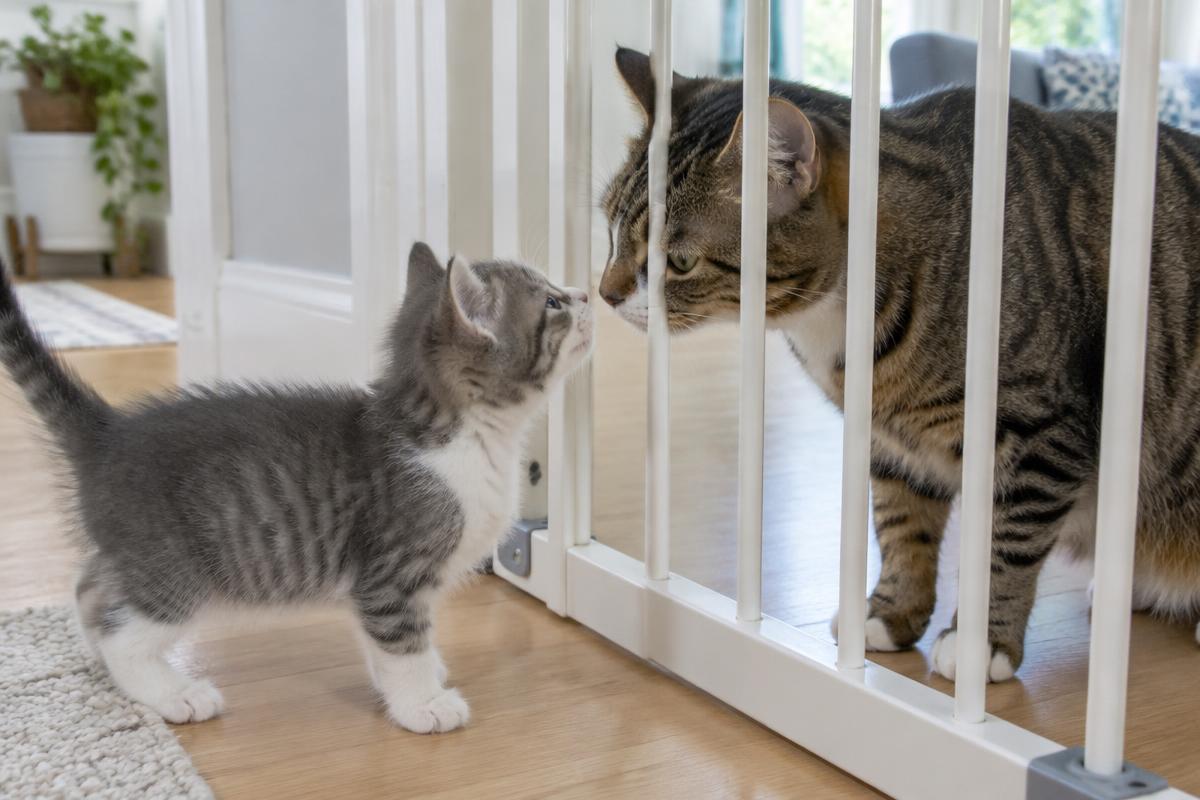
Step 4: Use a gate or cracked door for sight
Let the cats see each other through a baby gate or a door opened a few centimetres, during meals or play. Keep sessions short and end before tension rises. Reward calm behaviour with treats.
Good to know: Slow is faster. Rushing introductions can cause long-term conflict.
Step 5: Supervise short shared time
When both cats are relaxed at the gate, allow brief supervised time in the same room. Use wand toys to keep them busy. Have a towel or cushion ready to gently separate them if play turns rough.
Step 6: Keep resources plentiful
Provide separate litter trays, food stations, water and resting spots so neither cat has to compete. Give your resident cat extra attention. If fighting, injuries or ongoing stress occur, consult your veterinarian or a qualified behaviour professional.
This guide was drafted with AI assistance and published by the Pawlito team. It has no formal source list yet. Spotted an error? Tell us and we'll correct it. Read our editorial policy.

Ask about this guide
Leave a comment or a question. Comments are public, so use a first name only and don't include emails, phone numbers or addresses. An automated assistant may reply straight away with general suggestions — it can't diagnose your pet.