How to Litter Train a Kitten
Most kittens learn the litter tray quickly — here is how to set it up right and handle the occasional accident kindly.
- Written by
- Pawlito Editorial Team · AI-assisted guide
- Professional review
- Not yet reviewed by a veterinarian
- Published
- Last updated
In this guide (8 steps)
Step 1: Choose the right tray and litter
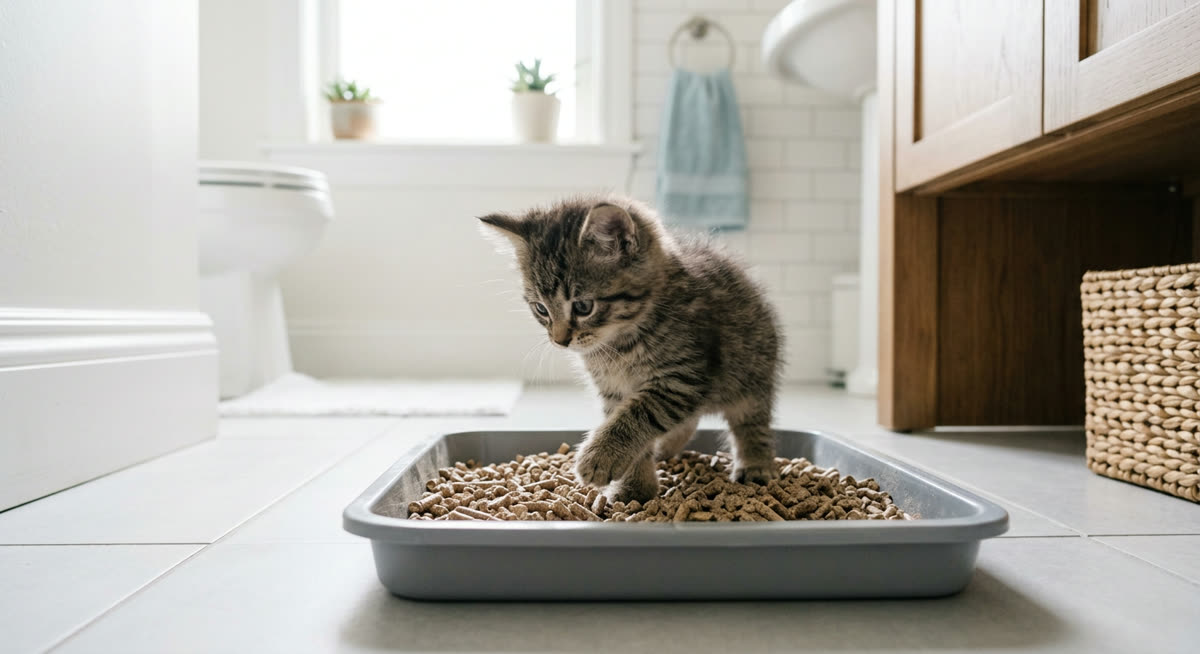
Kittens need a tray with low sides they can climb into easily — a shallow tray or even a large baking tray works for the tiniest kittens. Use an unscented, fine-grained clumping litter, which feels natural under paws. Avoid scented litters, which overwhelm a kitten's sensitive nose. You will need one tray per cat plus one extra as a general rule.
Step 2: Pick the perfect location
Place the tray in a quiet, low-traffic spot where your kitten will not be startled. Keep it well away from food and water bowls — cats naturally avoid toileting near where they eat. Avoid placing trays next to noisy appliances like washing machines. Once your kitten learns the spot, do not move the tray suddenly.
Good to know: In a large home, provide a tray on each floor so a small kitten never has far to go.
Step 3: Introduce your kitten to the tray
When your kitten first comes home, place them gently in the tray and let them sniff and explore. Most kittens instinctively scratch at the litter straight away. Repeat this after every meal, after naps and after play sessions for the first few days. Praise softly when they use it, but never hover or stare, which can make kittens nervous.
Step 4: Watch for the signs
Learn your kitten's pre-toilet signals: sniffing the ground, circling, squatting or scratching at the floor. When you see these, calmly carry your kitten to the tray. Timing matters more than anything in the first week. Within a few days most kittens start heading to the tray on their own.
Step 5: Handle accidents correctly
Accidents are normal in the first week or two. Clean them with an enzymatic cleaner to remove the scent completely — ordinary cleaners leave odours that invite repeat visits. Never punish or rub your kitten's nose in it; this only teaches fear of you. If accidents happen in the same spot, temporarily place a tray there, then move it gradually.
- Blot, then soak with enzymatic cleaner
- Avoid ammonia-based products, which smell like urine to cats
- Block access to repeat accident spots temporarily
Step 6: Keep the tray clean
Cats are fastidious and a dirty tray is the top cause of avoidance. Scoop solids and clumps at least once daily and wash the tray with mild soap weekly. Replace litter completely every one to two weeks. A clean tray keeps the habit strong for life.
Step 7: Troubleshoot problems
A kitten who suddenly stops using the tray may find the litter, location or cleanliness unacceptable — change one thing at a time to find the cause. Straining, crying or frequent unproductive visits to the tray are medical emergencies, especially in male cats, and need an immediate vet visit. Ongoing issues in a healthy kitten may need a behaviourist's input.
Step 8: Transition as your kitten grows
Around four to six months, upgrade to a full-sized tray, changing it gradually by placing the new tray next to the old one. If you want a covered tray eventually, introduce it with the door removed first. Keep the same litter type throughout transitions. Most kittens are fully reliable by twelve weeks with consistent management.
Good to know: Kittens usually need the toilet within twenty minutes of eating — use that window for tray trips.
This guide was drafted with AI assistance and published by the Pawlito team. It has no formal source list yet. Spotted an error? Tell us and we'll correct it. Read our editorial policy.
Ask about this guide
Leave a comment or a question. Comments are public, so use a first name only and don't include emails, phone numbers or addresses. An automated assistant may reply straight away with general suggestions — it can't diagnose your pet.