How to Litter Train Your Rabbit
Rabbits naturally pick a toilet corner — here’s how to work with that instinct for a reliably clean pen.
- Written by
- Pawlito Editorial Team · AI-assisted guide
- Professional review
- Not yet reviewed by a veterinarian
- Published
- Last updated
In this guide (4 steps)
Step 1: Watch where they already go
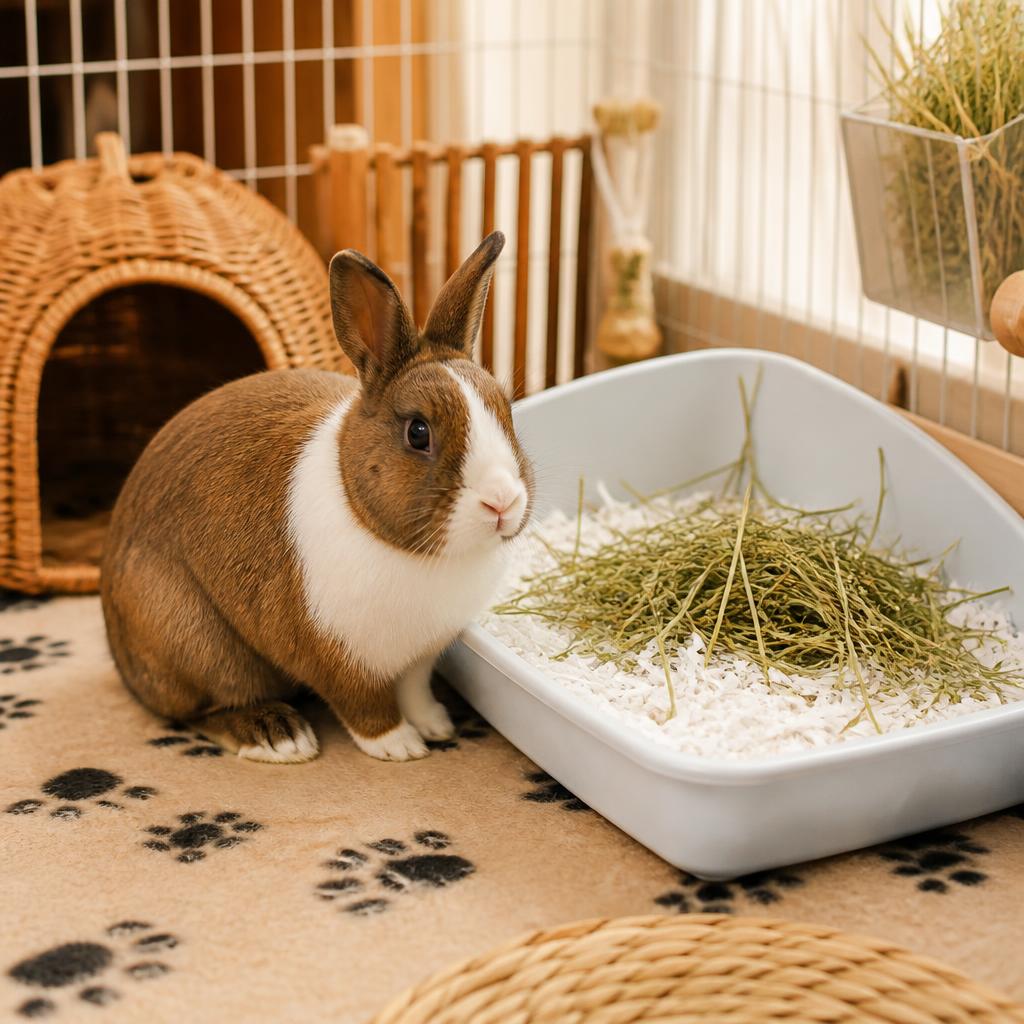
Rabbits choose one or two corners on their own. Put the litter box exactly there rather than where you’d prefer it — working with their choice is the whole secret.
Step 2: Set up the box the rabbit way
Use a large, low-entry box with rabbit-safe paper bedding, and pile fresh hay at one end. Rabbits eat while they toilet, so a hay-topped box does half the training for you.
- Paper-based or aspen litter — never clumping cat litter
- Unlimited fresh hay in or beside the box
- A box big enough to turn around in
Good to know: Spaying or neutering dramatically improves litter habits and reduces territorial marking.
Step 3: Confine, then expand
Start with a smaller pen so the box is always close. As habits solidify over one to two weeks, gradually open up more space — adding a second box if accidents appear in a new corner.
Step 4: Clean smart, not spotless
Scoop soiled litter daily but leave a few droppings in the box at first; the scent reminds your rabbit what it’s for. Sweep stray droppings into the box and clean accidents with white vinegar to erase odor markers.
This guide was drafted with AI assistance and published by the Pawlito team. It has no formal source list yet. Spotted an error? Tell us and we'll correct it. Read our editorial policy.

Ask about this guide
Leave a comment or a question. Comments are public, so use a first name only and don't include emails, phone numbers or addresses. An automated assistant may reply straight away with general suggestions — it can't diagnose your pet.