How to Make a Balcony Safer for Your Cat
Assess fall risks, enclosure gaps, heat, and household hazards before allowing supervised access to a securely enclosed balcony.
- Written by
- Pawlito Editorial Team · AI-assisted guide
- Professional review
- Not yet reviewed by a veterinarian
- Published
- Last updated
In this guide (7 steps)
Step 1: Treat every open edge as a fall risk
Cats can slip, chase a bird, or become startled regardless of how balanced they usually are. An ordinary railing is not a secure enclosure. Before letting your cat out, inspect the entire balcony from floor to ceiling, including the sides, drainage gaps, and spaces beneath rails. If you cannot install a complete, reliable barrier, keep the door closed and provide enrichment indoors instead.
Good to know: Supervision alone does not prevent a sudden jump or fall.
Step 2: Get permission and choose a secure enclosure
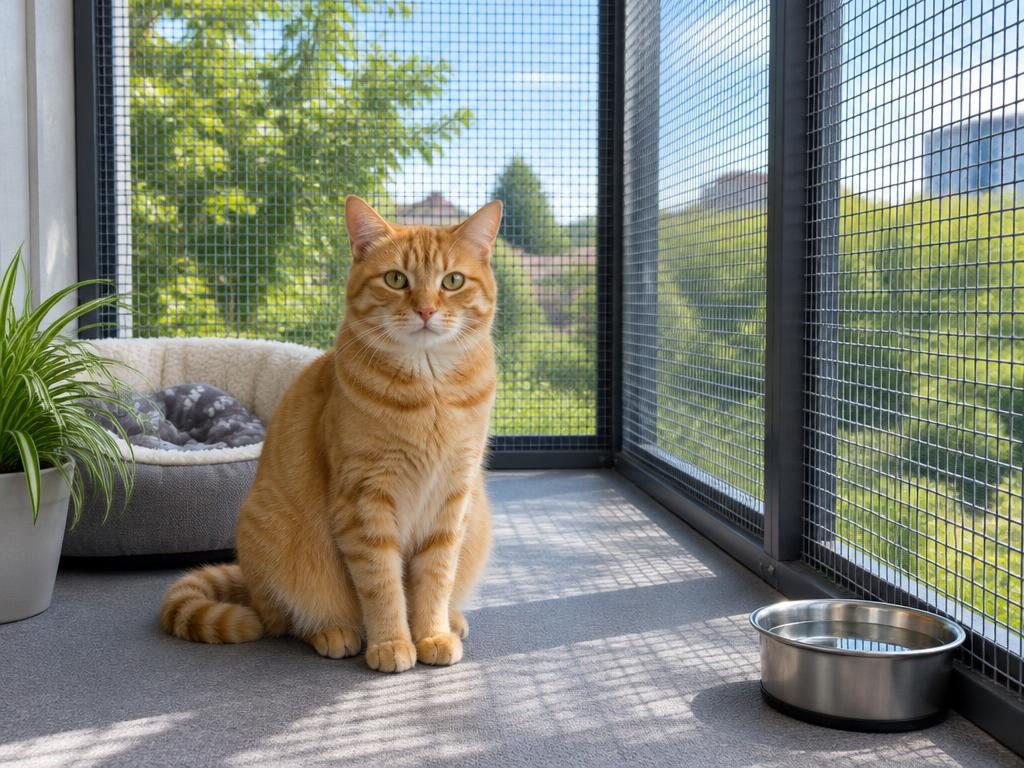
Check building, landlord, and local requirements before attaching screens or frames. Use a professionally designed cat enclosure or sturdy screening appropriate for the structure and your cat, rather than loose decorative netting. The barrier should cover climbable routes as well as straight-through gaps. Ask a competent installer to assess anchors and materials; weather and repeated climbing can loosen an apparently secure setup.
Step 3: Inspect doors, seams, and access routes
Look closely at corners, screen seams, lower edges, and the place where a balcony door opens. Make sure your cat cannot squeeze behind the enclosure or climb over it. Remove furniture that provides access to an unprotected area. Check screens without your cat present and repair gaps before use. Avoid leaving tilt-style windows accessible, as a cat can become trapped in the narrow opening.
Step 4: Remove toxic and physical hazards
Remove plants unless you have confirmed they are safe for cats; lilies are particularly dangerous and should not be kept around them. Store fertilizers, pesticides, cleaning products, charcoal, and sharp tools elsewhere. Clear cords, strings, and unstable pots. Do not place a litter tray or water bowl beside stored chemicals, and do not assume soil or plant runoff is harmless to drink.
Step 5: Provide shade and a retreat indoors
Set out clean drinking water and a shaded resting place on a stable, non-slip surface. Check the actual floor temperature and sun exposure, which can change quickly. Do not shut your cat outside, even in a screened enclosure. Allow them to return indoors freely under supervision. In very hot, cold, windy, or noisy conditions, skip balcony time entirely rather than relying on a shelter alone.
Step 6: Introduce the space calmly
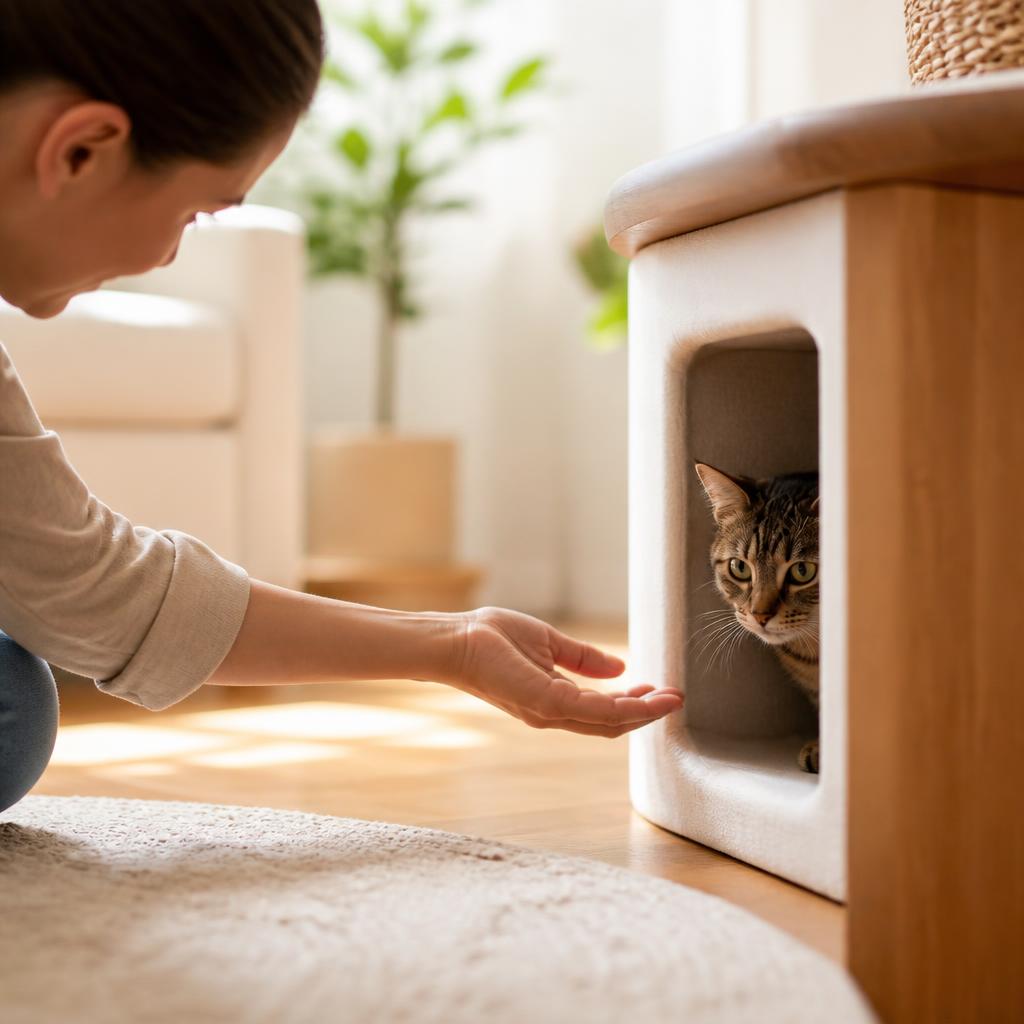
Start with the door open while you sit nearby and let your cat investigate voluntarily. Keep the first visits brief and do not carry a frightened cat into the enclosure. Avoid tempting them to jump at birds through the screening. If they try to climb, chew, or push the barrier, end access and reassess the design instead of treating it as a training problem.
Step 7: Repeat checks and plan for accidents
Inspect the enclosure after storms, maintenance work, and moving furniture, as well as before ordinary access. Keep identification details current and know your emergency veterinary contact. If your cat falls, seek veterinary care even when they appear able to walk; hidden injuries can be serious. Prevent further movement where safe and follow veterinary transport advice rather than assuming no visible wound means no harm.
Good to know: A safer balcony is still a supervised environment, not a guarantee against every accident.
This guide was drafted with AI assistance and published by the Pawlito team. It has no formal source list yet. Spotted an error? Tell us and we'll correct it. Read our editorial policy.
Ask about this guide
Leave a comment or a question. Comments are public, so use a first name only and don't include emails, phone numbers or addresses. An automated assistant may reply straight away with general suggestions — it can't diagnose your pet.