How to Move House With a Cat
Help your cat move safely and settle confidently with a practical plan for packing, travel and their first weeks in a new home.
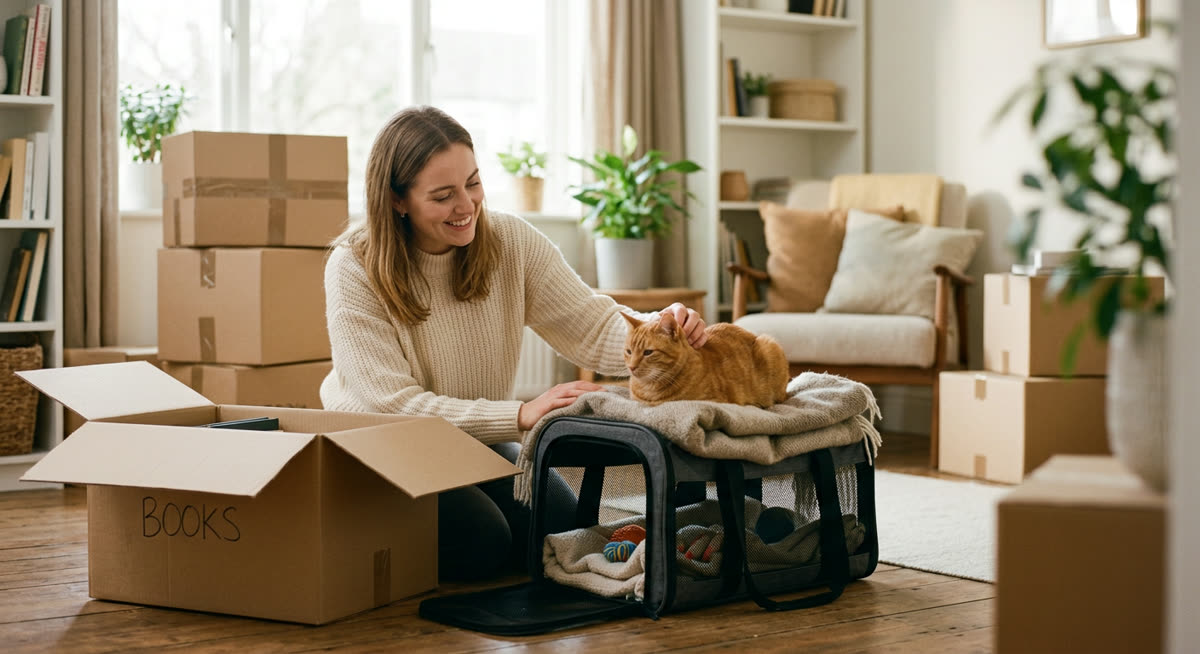
A calm, safety-first approachThis guide provides general education. Contact your veterinarian when symptoms are painful, persistent, or unusual.
- 1
1. Plan your cat’s move before you start packing
Start planning several weeks before moving day, noting who will look after your cat, how they will travel and where they will stay while doors are open. Check that their microchip details are current, then arrange to update your address with the database when you move. Keep your mobile number accessible on their carrier and, if they already wear a quick-release collar safely, check the identification tag too. Register with a vet near your new home and save the practice number and out-of-hours contact before you need them. If your cat has existing health needs, becomes very distressed during travel or faces a long journey, ask your vet for an individual moving plan. For a particularly busy move, consider a trusted carer or reputable cattery, checking availability and any vaccination requirements well ahead.
- Check microchip contact details
- Save local and emergency vet numbers
- Confirm safe transport arrangements
- Choose a named cat minder
Good to know: Take a clear, recent photograph of your cat before the move so you have an up-to-date image if they go missing.
- 2
2. Introduce the carrier and establish a quiet packing room
Choose a quiet room in your current home where your cat can retreat while you pack elsewhere. Place their usual litter tray, scratching surface, bed and hiding place there, with food and water away from the litter area. Leave a sturdy, well-ventilated carrier open in this room, checking that its door, clips and fastenings all close securely. Add familiar bedding and encourage voluntary visits with treats or meals near the entrance, gradually moving these inside as your cat becomes comfortable. Practise closing the door briefly while they remain relaxed, then build towards short lifts and short car journeys without forcing the pace. Keep feeding, play and rest times predictable, and pack their main belongings last so familiar smells and routines remain available.
- Secure carrier with sound fastenings
- Familiar bedding and hiding place
- Usual food, bowls and litter
- Scratching surface and favourite toys
Good to know: Avoid washing all your cat’s bedding before moving, as familiar scent can help the new surroundings feel less unfamiliar.
- 3
3. Prepare a secure base room in the new home
Before bringing your cat inside, select one quiet room that can stay closed while furniture and boxes arrive. Check window catches, fireplaces, vents and gaps behind fitted units, blocking any route where your cat could escape or become trapped. Remove exposed cleaning products, trailing cords, loose packing materials and plants that are unsafe for cats, including lilies. Set up familiar bedding, an accessible litter tray, a scratching surface and separate places for food and water. Provide a cardboard box on its side or another safe hiding place, plus a stable raised resting spot if your cat can use it comfortably. If you cannot set up in advance, ask a helper to prepare and secure this room while your cat remains safely contained and supervised.
- Check windows, vents and hidden gaps
- Remove toxic plants and chemicals
- Position familiar cat belongings
- Provide safe hiding and resting places
- Keep the room comfortably ventilated
Good to know: Photograph your cat’s existing room layout and recreate the relative positions of their bed, bowls and tray where practical.
- 4
4. Keep your cat contained while the old home is emptied
On moving morning, settle your cat in their prepared quiet room before removal workers arrive or external doors are propped open. Put a clear notice on the door and tell everyone that only the designated cat minder should enter. Check that your cat is actually inside before closing the room, rather than assuming they are under the bed. Allow them access to water and their litter tray, and follow your vet’s advice about feeding if travel sickness has been a problem. Once the loading route is clear and you are ready to leave, place your cat in the carrier inside the closed room and check every fastening. Move them directly to the vehicle rather than allowing them to roam through an emptied house or carrying them loose in your arms.
- Close and check the quiet room
- Display a do-not-open notice
- Nominate one responsible person
- Check carrier clips and door
- Keep bowls and litter supplies accessible
Good to know: Pack a separate cat essentials bag in your own vehicle so food, litter and cleaning supplies do not disappear into the removal van.
- 5
5. Transport your cat securely and calmly
Take your cat in your own vehicle where possible, never loose in the passenger compartment or inside the load area of a removal van. Position and secure the carrier according to its manufacturer’s instructions so it remains level and cannot slide or tip during braking. Use absorbent bedding, maintain a comfortable temperature and keep the carrier out of direct sunlight with its ventilation unobstructed. Drive smoothly, keep noise low and never leave your cat unattended in a parked vehicle, even for a short stop. Do not open the carrier at a roadside stop, as a frightened cat can escape through a vehicle door or window in seconds. For a long journey, agree a plan with your vet beforehand for water, feeding and toilet opportunities, using a fully enclosed, escape-proof space if the carrier must be opened.
Good to know: Carry spare bedding, paper towels and a waste bag for accidents, but only change bedding where your cat cannot escape.
- 6
6. Settle your cat into their new base room
Take the carrier straight into the prepared base room, close the door and check the windows before opening it. Place the carrier on the floor with its entrance clear, then let your cat decide when to come out rather than tipping or pulling them out. Sit quietly nearby or give them privacy if your presence seems to make them more watchful. Offer their usual food in a small portion, provide fresh water and leave an unobstructed route to the litter tray. Keep other pets, excited children and visitors out initially, and check on your cat at calm, predictable intervals. Leave the carrier available as a retreat and keep your cat in this room until they are eating, using the tray and moving around with increasing confidence, whether that takes hours or several days.
- Close the room before opening the carrier
- Let your cat emerge voluntarily
- Offer familiar food and fresh water
- Keep the litter tray easy to reach
- Limit noise and visitors
Good to know: If you have several cats, provide separate resources and use separate base rooms if they are tense around one another.
- 7
7. Respond to hiding, missed meals and toileting changes
If your cat hides, keep the room quiet and resources accessible, and do not drag them from a safe hiding place. Check how much they eat and drink and whether they pass urine and stools, rather than relying only on whether they appear sociable. If they stop eating, contact your vet promptly for advice and do not wait beyond 24 hours; seek advice sooner for kittens, older cats or cats with existing health needs. Contact a vet urgently if your cat repeatedly strains to urinate, produces little or no urine, has difficulty breathing, collapses or appears severely distressed. For a toileting accident, clean the area with a pet-safe enzymatic cleaner according to its label and check that the tray is clean, quiet and easy to access. Never punish accidents or give medicines or calming products without veterinary guidance, and seek advice if changes persist or your cat seems unwell.
- 8
8. Introduce the rest of the home gradually
Once your cat is comfortable in their base room, offer access to one additional quiet area while external doors and windows are securely closed. Let them explore at their own pace and keep the route back to their original room open. Check each new area for unstable boxes, reclining furniture, open appliances and gaps behind equipment before allowing access. Spread litter trays, water bowls, scratching surfaces and resting places around the home as their territory expands, rather than removing the original resources immediately. If your cat starts hiding more, stops eating normally or appears overwhelmed, reduce the area again and return to a predictable routine. Introduce resident pets gradually with separate spaces and controlled encounters, and supervise children so your cat can retreat without being followed.
Good to know: Tell everyone to check washing machines, tumble dryers and reclining chairs before using them, as cats may choose these as hiding places.
- 9
9. Maintain security and plan any return outdoors
Keep your cat indoors for at least three to four weeks after moving, and longer if they remain unsettled, while maintaining daily play and opportunities to scratch, climb and hide. Indoor-only cats do not need outdoor access, and a secure cat enclosure can provide an alternative to free roaming. Before letting an outdoor-going cat out, confirm that microchip details show the new address and discuss neutering, vaccinations and parasite prevention with your vet. Assess nearby roads and other hazards, then choose a quiet daylight period for a short first outing before a normal mealtime, without withholding food to make them hungry. Accompany them if they are comfortable with this, keep the entrance back inside accessible and never carry them away from the doorway or force them outside. If you have moved nearby, alert your former neighbours that your cat might return to the old address, and continue checking security, appetite and litter habits as they settle.


Ask about this guide
Leave a comment or a question about your own pet and the Pawlito assistant replies right away with practical next steps.