How to Reduce Hairballs in Cats With Simple Daily Habits
Learn how to reduce cat hairballs with gentle brushing, moisture-rich meals, daily play, and clear signs that your cat needs veterinary care.
A calm, safety-first approachThis guide provides general education. Contact your veterinarian when symptoms are painful, persistent, or unusual.
- 1
Check whether the problem is really a hairball
Before changing your routine to reduce cat hairballs, note exactly what your cat does: a typical expelled hairball is a damp, compact clump of fur, often shaped like a short tube rather than a round ball. Cats swallow loose hair while grooming, and much of it normally passes in their stool, so the goal is to reduce unnecessary hair ingestion—not to make vomiting a regular part of digestion. Repeated coughing, neck-stretching, or retching without producing fur should not automatically be labeled a hairball, because breathing problems and other illnesses can look similar. Start a 14-day log recording episodes, whether fur or food appeared, appetite, stool changes, and any recent food changes, but do not wait to finish it if concerning signs occur. If you can do so without delaying care, take a 20- to 30-second video of an episode and photograph anything your cat brings up for your veterinarian. Contact your veterinarian promptly for recurring or increasing vomiting, and seek urgent care for repeated unproductive retching, inability to keep water down, a painful or swollen belly, marked lethargy, or refusal to eat. Open-mouth breathing, obvious breathing difficulty, or collapse requires immediate emergency veterinary attention rather than any home hairball remedy.
- Record the date and time of each episode.
- Note whether the material contains fur, food, or liquid.
- Track appetite, energy, and litter-box changes.
- Save a short video when it is safe to do so.
Good to know: Do not assume that an episode is harmless just because it contains hair; frequent vomiting still deserves a veterinary assessment.
- 2
Remove loose fur with gentle daily brushing
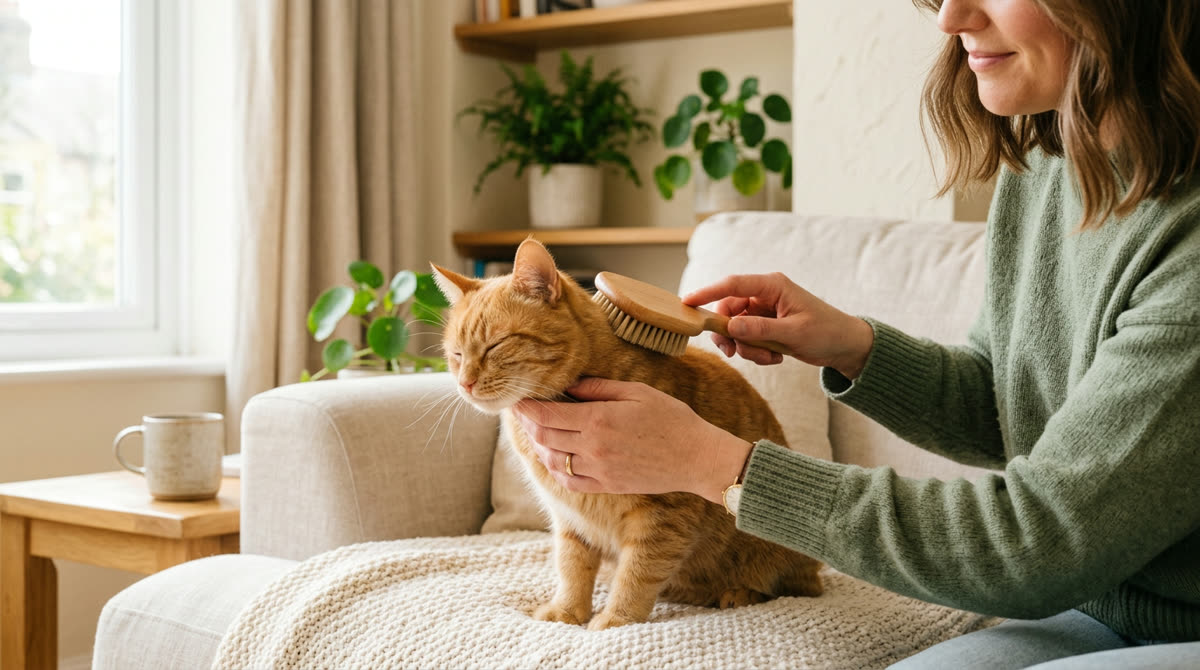
Build a short daily brushing habit, starting with 1 to 2 minutes and gradually working toward about 5 minutes if your cat remains relaxed; long-haired cats may do better with two short sessions instead of one lengthy groom. Removing loose coat before your cat licks it up directly reduces the amount of hair entering the digestive tract, making brushing one of the most useful daily habits for hairball prevention. For short-haired cats, try a soft-bristle brush or rubber grooming mitt, while long-haired cats often benefit from a wide-toothed metal comb followed by a finer comb on areas that are already tangle-free. Work in the direction of hair growth with light pressure, beginning at the cheeks, shoulders, and back before attempting more sensitive areas such as the belly and hindquarters. Check behind the ears, under the front legs, and around the rear legs for tangles, but stop if the comb catches rather than pulling through and hurting the skin. During heavy shedding, add a second brief session and remove collected fur from the tool frequently instead of pressing harder or repeatedly scraping the same patch. Finish with praise or a small reward, and stop immediately if your cat starts tail-lashing, flattening their ears, biting at the brush, or trying to escape.
- Choose a tool suited to your cat’s coat length.
- Keep early sessions under 2 minutes.
- Use light strokes in the direction of growth.
- Check common tangle areas without tugging.
- Reward calm behavior before your cat gets frustrated.
Good to know: Never cut out a mat with scissors: cat skin can be pulled up inside it. Ask a veterinarian or an experienced cat groomer to handle tight, painful, or skin-close mats.
- 3
Address excessive grooming and keep resting areas clean
Spend a few minutes each day noticing where, when, and how intensely your cat grooms, especially if the hairball problem began after a household change. Grooming is normal, but repeated licking of one area, thinning fur, scabs, or a sudden increase in grooming should prompt a veterinary appointment rather than simply more brushing. Ask your veterinarian about cat-safe parasite prevention appropriate to your location and household, since itching can increase grooming and hair ingestion. Support a calmer routine with predictable meals, quiet resting places, scratching surfaces, and hiding spots that allow your cat to withdraw without being followed. In multi-cat homes, distribute food, water, and resting spots so one cat cannot block another, and aim for one litter box per cat plus one extra when space allows. Lift loose fur from favorite beds and blankets daily, and wash washable covers roughly once a week according to their care labels to keep resting areas comfortable and make changes in shedding easier to notice. Remember that most swallowed hair comes from the coat, so cleaning supports the routine but cannot replace brushing or treatment of an underlying reason for excessive licking.
- Look for bald patches, redness, or broken skin.
- Provide at least one undisturbed hiding place.
- Separate resources if cats compete for access.
- Remove loose fur from favorite resting spots.
Good to know: Never use a dog flea product on a cat; some ingredients, including permethrin in certain dog treatments, are highly toxic to cats.
- 4
Increase moisture through food and fresh water
Support normal digestion and stool passage by making water easy to access, while recognizing that extra water does not dissolve an existing hairball or treat an obstruction. Place at least two water stations in quiet, easily reached locations, away from litter boxes and anywhere another pet may guard access. Use wide, stable ceramic or stainless-steel bowls, refresh the water at least daily, and wash the bowls every day to remove residue. A fountain may appeal to cats that prefer moving water, but it still needs cleaning and filter replacement according to the manufacturer’s instructions. If your cat currently eats only dry food, discuss replacing some of their calories with a complete and balanced wet food rather than adding wet food on top of the existing daily ration. For a cat that accepts the texture, stir 1 to 2 teaspoons of plain water into one wet-food meal, increasing gradually only if they continue eating readily. Never force water into your cat’s mouth, abruptly remove their familiar food to make them eat a wetter diet, or add broth containing onion, garlic, or excessive salt.
- Offer water in more than one location.
- Wash bowls daily and maintain fountains regularly.
- Choose complete and balanced wet food.
- Count wet food within the daily calorie allowance.
Good to know: If your cat eats a prescription diet or has a condition requiring a tailored feeding plan, check with your veterinarian before changing the food or adding supplements.
- 5
Keep meals consistent and change diets gradually
Feed a measured daily amount based on your cat’s food, body condition, and veterinary guidance, using a kitchen scale for dry food when possible because scoops can vary considerably. Divide that allowance into three or four small meals if this suits your household, or use a timed feeder, rather than encouraging one large meal followed by rapid eating. Smaller meals may help cats that gulp food, but bringing up food soon after eating is not automatically a hairball problem and should be discussed with your veterinarian if it recurs. If brushing and basic feeding improvements are not enough, ask whether a complete and balanced hairball-control diet is appropriate; these foods often use particular fiber blends to help swallowed hair move through the intestine. Unless your veterinarian advises otherwise, transition over 7 to 10 days, beginning with about 25% new food and increasing through 50% and 75% before switching completely. Slow the transition and seek advice if appetite falls or vomiting, diarrhea, hard stool, or straining develops, rather than assuming digestive upset is a necessary adjustment. Avoid combining a new diet with pumpkin, bran, psyllium, and other fiber additions, because more fiber is not always better and multiple changes make it difficult to identify what helps.
- Measure the entire day’s food before dividing meals.
- Count treats within the daily allowance.
- Introduce a new diet over 7 to 10 days.
- Change one feeding variable at a time.
- Monitor appetite and stool during the transition.
Good to know: Keep treats to no more than about 10% of daily calories unless your veterinarian recommends otherwise; most calories should come from complete and balanced food.
- 6
Add daily movement and watch litter-box habits
Schedule two or three interactive play sessions of about 5 to 10 minutes each day, adjusting the length to your cat’s age, mobility, interest, and comfort. Regular activity supports healthy weight and normal gastrointestinal function, although exercise alone cannot prevent every hairball or move a blockage through the gut. Use a wand toy to imitate brief bursts of prey movement, let your cat catch the toy regularly, and finish before they become exhausted or frustrated. Food puzzles can add gentle activity between sessions, but fill them from the measured daily ration and choose an easy starting design so your cat can reliably obtain food. Scoop litter boxes at least daily and notice whether stools are becoming smaller, unusually dry, less frequent, or difficult to pass. Contact your veterinarian if your cat has not passed stool for around 48 hours—or sooner if that is unusual for them—and seek prompt care for straining accompanied by vomiting, pain, or reduced appetite. If your cat repeatedly visits the box but produces little or no urine, seek emergency veterinary care immediately, because an apparent bowel problem may actually be a urinary emergency.
Good to know: Put away string, ribbon, yarn, and wand toys after supervised play. If a string is visible from your cat’s mouth or anus, do not pull it; contact a veterinarian immediately.
- 7
Use hairball products only with veterinary guidance
Before buying a hairball gel, paste, chew, or supplement, ask your veterinarian whether it is suitable for your cat and whether recurring symptoms need investigation first. Products marketed for hairballs differ in ingredients and purpose, and a package claim does not establish that a product will help your particular cat. Bring the exact product name and ingredient list to the conversation, along with your cat’s current food, supplements, and medications, so the veterinarian can check for concerns. If a product is recommended, follow the veterinarian’s directions and the relevant label instructions rather than borrowing another cat’s amount or increasing it when results are not immediate. Do not improvise with butter, cooking oil, mineral oil, human laxatives, or enemas, since these are not safe substitutes for a tailored plan and some can cause serious harm. Never squirt an oily product into your cat’s mouth or smear a sticky dose over their nose or paws to force licking, because forced administration can cause distress and aspiration is a concern with oils. Stop the product and contact your veterinarian if vomiting, diarrhea, loss of appetite, or unusual lethargy develops, and never use a hairball remedy to delay care for repeated retching or suspected blockage.
Good to know: A hairball treat is not automatically a complete treatment or a nutritionally complete food. Check its calories and avoid stacking several hairball products without veterinary advice.
- 8
Review progress and arrange follow-up when needed
After establishing the daily routine, review your notes weekly for 2 to 4 weeks, provided your cat is otherwise well and has no signs that need earlier veterinary attention. Look for less loose fur during grooming, comfortable stool passage, a stable appetite, and fewer episodes of bringing up hair, rather than expecting an instant change after one brushing session. Keep a simple daily checklist for brushing, water care, measured meals, play, and litter-box observations, and record significant changes such as a new food or the start of seasonal shedding. Weigh your cat about once a month on the same scale when practical, and report unexplained weight loss even if hairballs seem less frequent. If hairball episodes persist, increase, or return after initially improving, book a veterinary appointment and bring your log, videos, diet labels, and supplement details instead of repeatedly changing home remedies. Seek care sooner for reduced eating, persistent diarrhea or constipation, blood in vomit or stool, or changes in comfort and behavior, and do not wait beyond 24 hours without food for veterinary advice—contact the clinic sooner for kittens, diabetic cats, or cats that seem unwell. The most reliable way to reduce cat hairballs is a sustainable combination of coat care, appropriate nutrition, hydration, and monitoring, with veterinary help whenever the pattern suggests more than ordinary swallowed fur.
- Review your episode log once a week.
- Continue brief brushing even between shedding seasons.
- Track weight and appetite alongside hairballs.
- Bring food and product details to veterinary visits.
Good to know: There is no universal number of hairballs that is normal for every cat. A new pattern, increasing frequency, or associated illness matters more than an arbitrary monthly limit.



Ask about this guide
Leave a comment or a question about your own pet and the Pawlito assistant replies right away with practical next steps.