How to Rotate Cat Toys Without Losing Interest
Refresh your cat’s play routine with thoughtful toy rotation, safe storage, and games matched to their favorite hunting styles.
- Written by
- Pawlito Editorial Team · AI-assisted guide
- Professional review
- Not yet reviewed by a veterinarian
- Published
- Last updated
In this guide (7 steps)
Step 1: Observe preferred play patterns
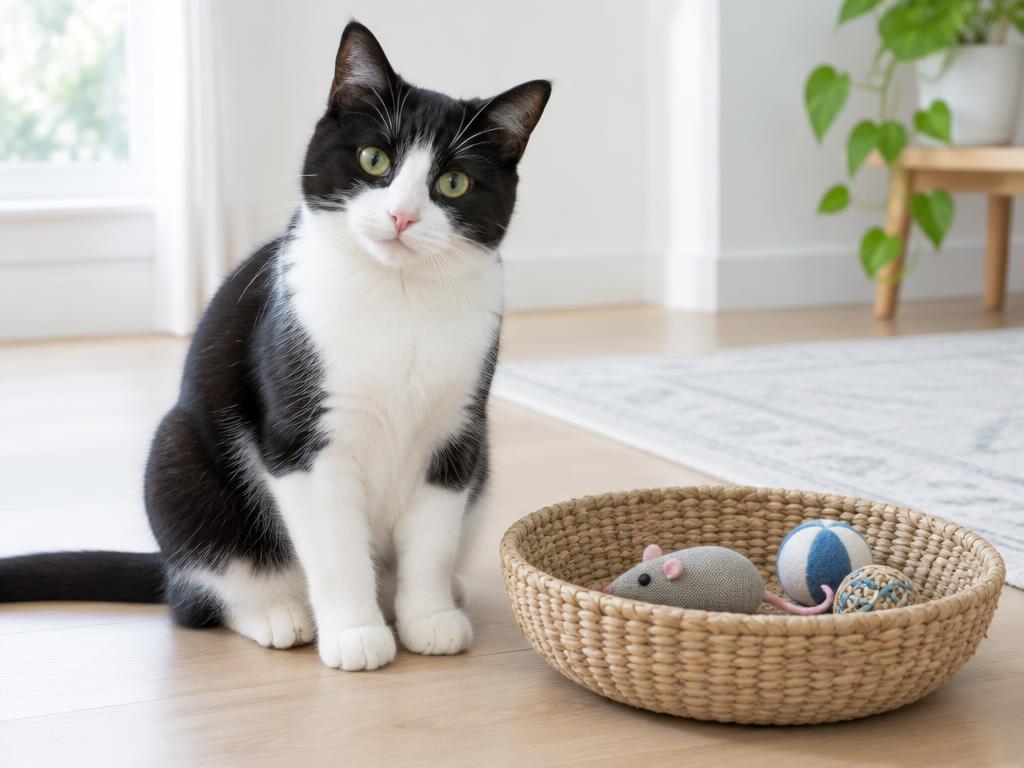
Notice whether your cat likes stalking along the floor, batting light objects, wrestling soft kickers, or exploring tunnels. Record timing, surfaces, and movement that attract interest. A toy ignored at midday might appeal in the evening. Do not assume every unused item needs replacing. Presentation and opportunities to catch it often matter more than buying something new, especially when your cat already has a familiar favorite.
Good to know: Note favorite movements as well as favorite toys.
Step 2: Inspect and sort the collection
Sort toys where your cat cannot access loose parts. Remove detached bells, exposed stuffing, sharp pieces, unraveling cords, and swallowable components. Separate wand toys and strings requiring active supervision from everyday toys. Group safe items by play style for varied rotations. Do not return damaged favorites unless a secure repair introduces no new hazards. Batteries and attachments deserve attention even when a toy looks intact.
- Discard exposed batteries and insecure battery compartments.
- Keep ribbons, strings, and elastic bands out of reach.
Step 3: Create small varied sets
Create a few modest sets rather than displaying everything together. Include different safe play styles, such as a rolling toy, soft grab toy, and exploration option. Keep an important comfort toy available if removal upsets your cat. Rotation should refresh choices, not remove security. There is no ideal number for all homes; begin with several items and adjust for interest, floor space, and safety.
Good to know: Photograph sets so everyone can restore the rotation without mixing everything together.
Step 4: Store resting toys safely
Use a closed container in a dry place your cat cannot open. Wash suitable toys according to instructions and dry thoroughly. Do not add perfume, essential oils, or scented cleaners to create novelty. Use catnip sparingly if your cat enjoys it, recognizing that not all cats respond. Separate anything damp and check stored items for deterioration before bringing them back into circulation.
- Keep boxes away from heat and moisture.
- Recheck seams and attachments each time a toy returns.
Step 5: Reintroduce with realistic movement
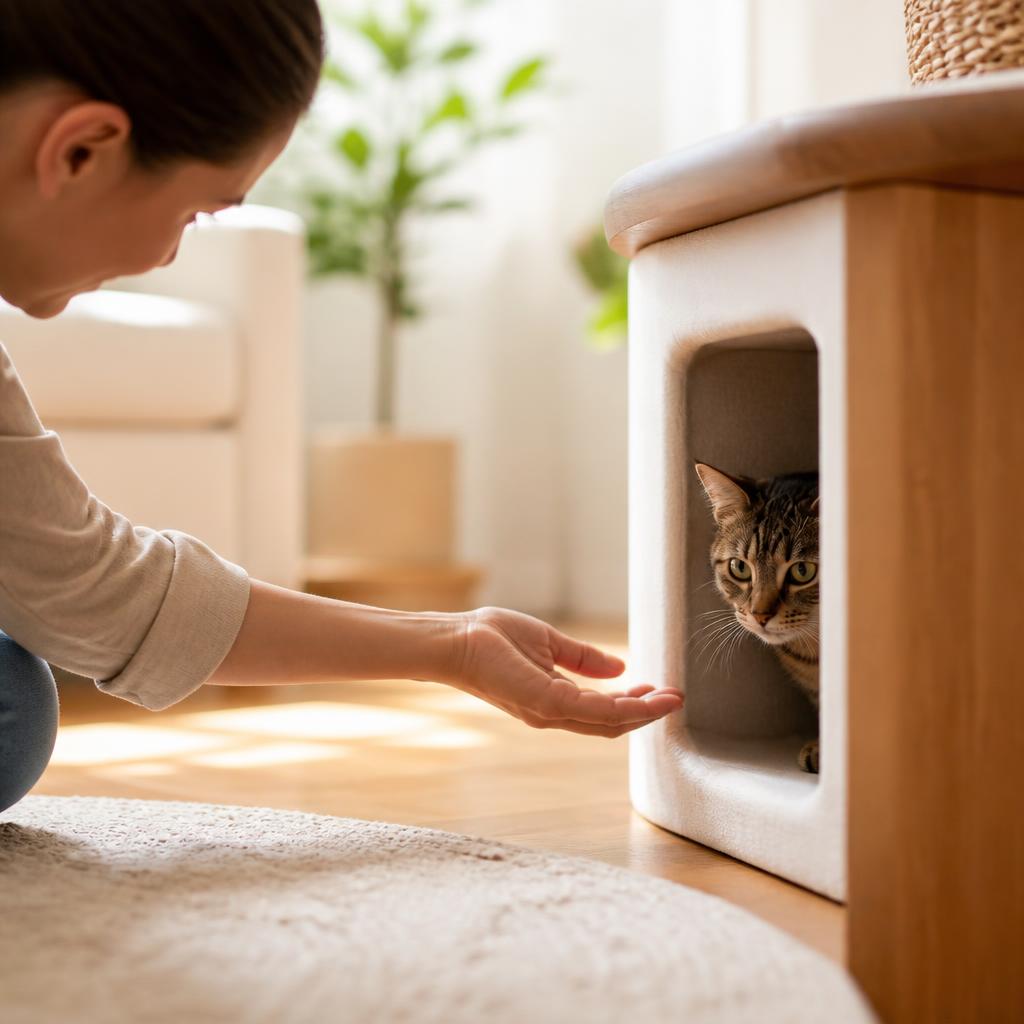
When your cat is receptive, offer a refreshed set without placing everything against their body. Roll a ball across the path or move a supervised wand behind a box. Allow pretend prey to pause and hide, with frequent opportunities to catch it. Avoid swinging toward the face or encouraging high jumps on slippery floors. Finish with a catch and a calm transition to rest.
Good to know: A familiar toy moving differently can be more appealing than a new motionless toy.
Step 6: Adjust timing to actual interest
Swap sets based on your cat's response rather than a rigid calendar. Some enjoy changes every few days; others prefer repeated access to favorites. Before changing everything, try a shorter session, another location, or different motion. Make one change at a time to identify what helps. Never chase your cat with a toy. In multi-cat homes, offer separate play so confident cats cannot monopolize access.
Step 7: Balance variety and predictability
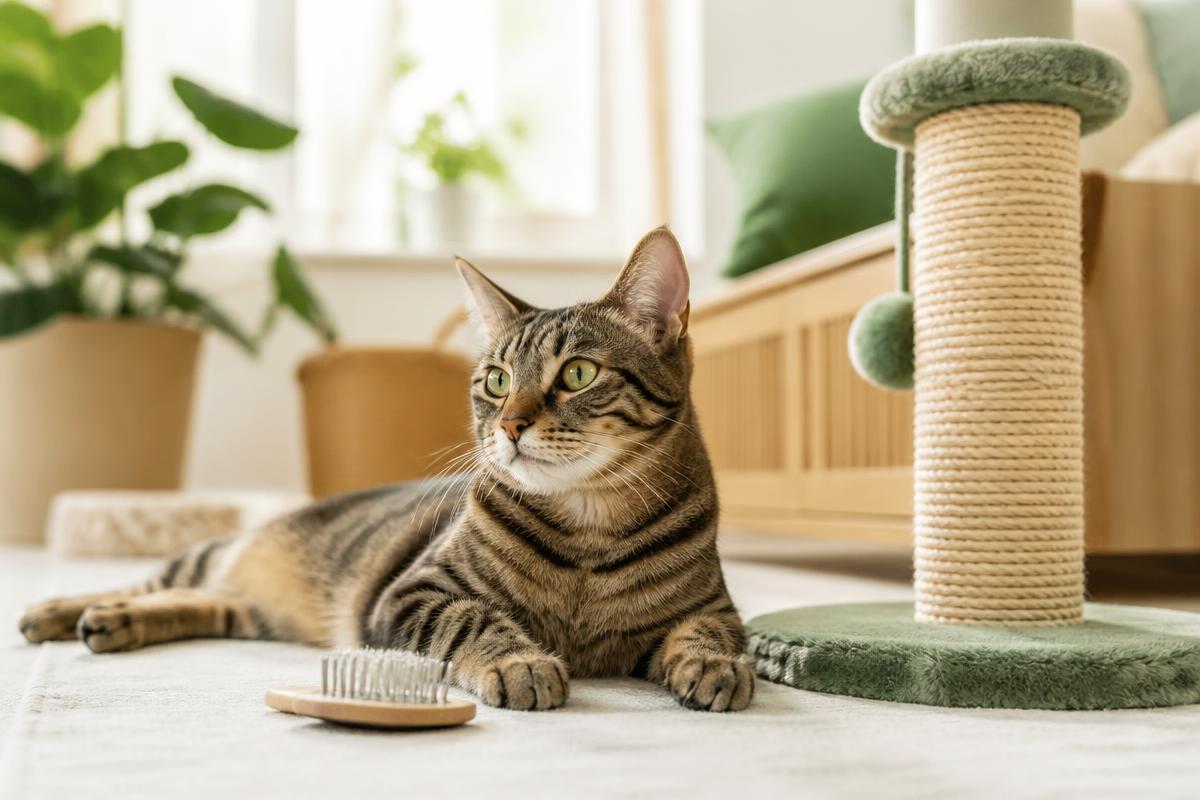
Keep familiar play times and resting spaces while changing toys within the routine. Combine solo options with interaction, climbing, scratching, and exploration; toy rotation cannot replace those needs. Put supervised toys away and collect detached pieces after play. A sudden sustained loss of play interest alongside appetite, movement, or behavior changes deserves veterinary attention, not an ever-growing pile of exciting toys.
This guide was drafted with AI assistance and published by the Pawlito team. It has no formal source list yet. Spotted an error? Tell us and we'll correct it. Read our editorial policy.
Ask about this guide
Leave a comment or a question. Comments are public, so use a first name only and don't include emails, phone numbers or addresses. An automated assistant may reply straight away with general suggestions — it can't diagnose your pet.