How to Set Up a Cat Feeding Station
Design a calm, clean feeding area with the right bowls, placement and water setup to support relaxed mealtimes.
- Written by
- Pawlito Editorial Team · Pet Care Writers
- Professional review
- Not yet reviewed by a veterinarian
- Published
- Last updated
In this guide (6 steps)
Step 1: Pick a quiet location
Choose a low-traffic spot away from noisy appliances, doors and the litter tray. Cats prefer to eat where they feel safe and can see who approaches.
Step 2: Choose suitable bowls
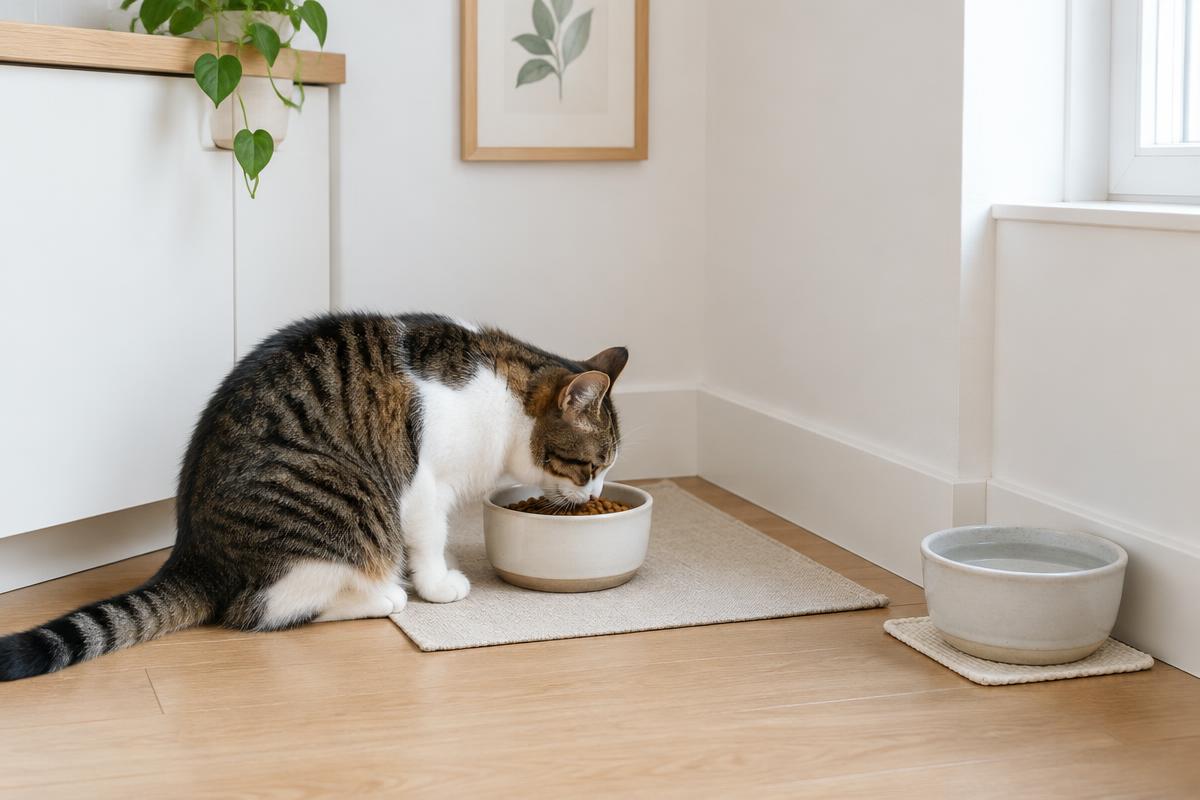
Wide, shallow bowls help avoid whisker discomfort. Ceramic, glass or stainless steel are easy to clean. Place a washable mat underneath to catch spills.
Step 3: Separate food and water
Many cats drink more when water is placed a short distance away from food. Try a second water bowl in another room or a fountain if your cat likes moving water.
Step 4: Give each cat their own station
In multi-cat homes, set up separate feeding spots, ideally out of sight of each other. This reduces stress and lets you notice if one cat stops eating.
Good to know: Raised stations at different heights suit cats who like to eat up high.
Step 5: Keep it clean
Wash food bowls after every meal and refresh water daily. Clean the mat weekly. Leftover wet food should be removed after a reasonable time to keep it fresh.
Step 6: Notice changes in appetite
A dedicated station makes it easier to see how much your cat eats. A sudden drop in appetite or thirst changes are reasons to contact your veterinarian.
This guide was drafted with AI assistance and published by the Pawlito team. It has no formal source list yet. Spotted an error? Tell us and we'll correct it. Read our editorial policy.
Ask about this guide
Leave a comment or a question. Comments are public, so use a first name only and don't include emails, phone numbers or addresses. An automated assistant may reply straight away with general suggestions — it can't diagnose your pet.