How to Stop Your Cat Biting During Play
Teach your cat to chase toys, not hands, with safe play routines, well-timed pauses and practical ways to prevent bites.
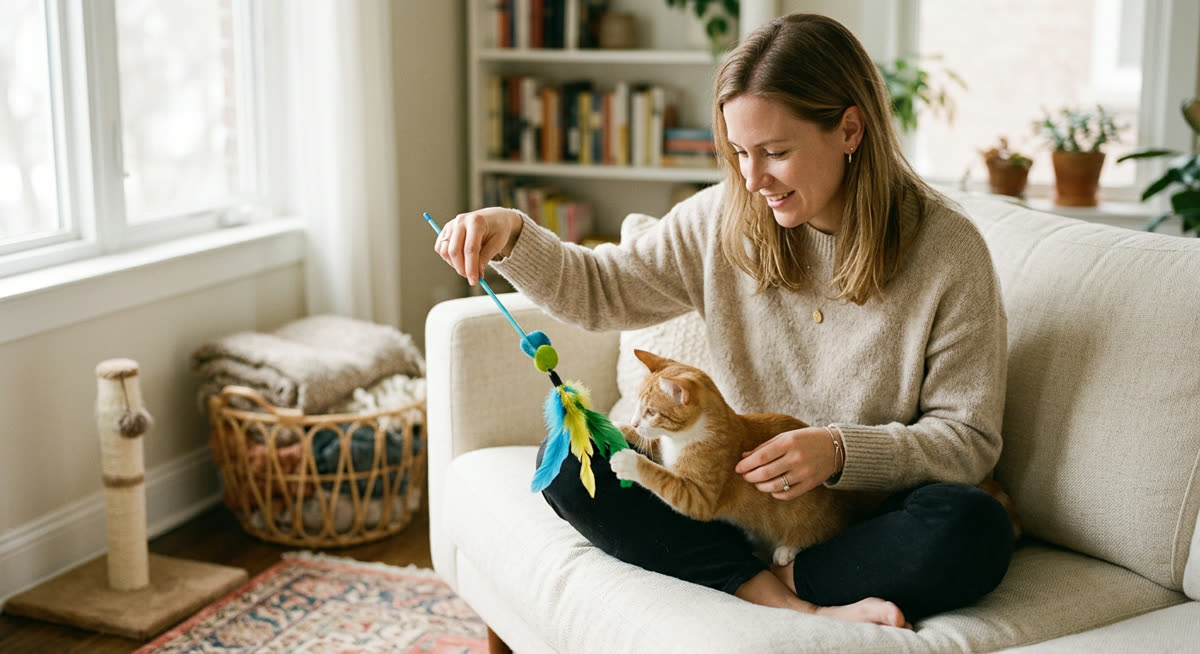
A calm, safety-first approachThis guide provides general education. Contact your veterinarian when symptoms are painful, persistent, or unusual.
- 1
1. Identify when and how the biting starts
Before changing your cat’s play routine, note what happens immediately before each bite, including which toy you are using and how long the session has lasted. Watch for stalking, pouncing and grabbing during play, but do not assume that every bite is playful. Record whether your cat targets moving hands, ambushes ankles or bites when you touch a particular area. Stop handling them if they flinch, cry out, hide or appear uncomfortable, and give them space rather than testing their reaction again. Contact your vet if the biting starts suddenly, becomes noticeably more intense or occurs alongside changes in appetite, movement, grooming or toileting. If your cat otherwise seems comfortable, use your notes to identify the situations you can prevent during the following steps.
- Time and location of each incident
- Toy or movement that triggered it
- Length of play before the bite
- Body language before contact
Good to know: Keep a brief phone note after each incident so you can spot patterns without deliberately provoking another bite.
- 2
2. Prepare safe toys and a clear play area
Choose a sturdy wand toy with enough reach to keep your hands well away from your cat’s paws and mouth. Add a suitably sized kicker toy that your cat can hold with their front paws and kick with their back feet without reaching your fingers. Check toys before every session and discard any with loose eyes, exposed wire, splitting seams or pieces that could be swallowed. Clear a play space with secure footing and an unobstructed route to a hiding place or raised resting spot. Put fishing-line toys, ribbons and other string-like attachments away securely after supervised play, and never leave them dangling where your cat can become caught. Avoid using a laser pointer as your main play tool, since a physical toy lets your cat actually catch their target.
- Long, sturdy wand toy
- Intact kicker toy
- Clear floor with secure footing
- Accessible retreat
- Closed storage for string toys
Good to know: Keep suitable toys near common ambush spots, but store anything with string in a closed cupboard between sessions.
- 3
3. Make hands and feet off-limits for everyone
Agree with everyone in the household that hands, fingers, toes and clothing will no longer be used as play targets. Stop finger-wiggling games, hand wrestling and moving feet under a blanket to encourage pouncing, even when a kitten’s bites seem gentle. Use a toy to invite interaction instead of tapping your cat’s face, belly or paws. Keep stroking separate from energetic play at first, offering brief contact only when your cat approaches calmly and appears to welcome it. Explain the same rules to visitors, and supervise children closely so an adult can end the interaction before chasing or grabbing begins. Do not shout, spray water, scruff or hit your cat, because punishment can frighten them and make future interactions less predictable.
Good to know: Practise moving a toy rather than your hand whenever you feel tempted to encourage a playful pounce.
- 4
4. Offer short, predictable hunting-style sessions
Start with two or three short play sessions spread across the day, adjusting their length to your cat’s interest, age and mobility. For a cat who becomes bitey quickly, begin with just two or three minutes rather than pushing through a longer session. Move the wand toy away from your cat in short bursts along the floor, with pauses that allow them to stalk and plan a pounce. Let them catch the toy regularly, and avoid repeatedly snatching it away just as they reach it. Keep the target away from your body and avoid high leaps or sharp turns, especially if your cat has mobility concerns. Schedule a session before a predictable ankle-ambush period so your cat has a suitable outlet before they begin targeting people.
- Move the toy away, not towards the face
- Include stalking pauses
- Allow frequent catches
- Keep movements within physical ability
- Finish before biting usually starts
Good to know: If bites usually begin after five minutes, finish at three minutes and reassess once several sessions have stayed comfortable.
- 5
5. Recognise when excitement is becoming too much
Watch your cat throughout the session rather than focusing only on the toy. Look for a sudden shift towards your hands, increasingly forceful grabbing, a tense crouch, flattened ears or a sharply lashing tail. Consider these signals together and in context, because wide pupils or tail movement alone do not reliably tell you how your cat feels. At the first sign that they are losing control or becoming uncomfortable, reduce the toy’s speed and lower the intensity of the game. If they remain focused on the toy, allow an easy final catch before putting the wand away once they release it. If they turn towards you or seem distressed, stop moving and give them space without attempting to stroke, pick up or restrain them.
Good to know: Aim to end sessions while your cat is still playing successfully, rather than waiting for a bite to tell you they have had enough.
- 6
6. Respond calmly if teeth touch skin
If your cat bites or grabs you, stop the game immediately and keep the caught hand or foot as still as you safely can. Avoid yanking away, which can worsen scratches or punctures and may encourage your cat to hold on. Do not prise their jaws open or grab their collar; wait for their grip to loosen if it is safe, then withdraw slowly. If necessary, use a cushion as a barrier between you and your cat without pressing it onto them. Once free, step out of reach and pause interaction until your cat has disengaged and their body looks relaxed, rather than immediately starting an exciting replacement game. If a bite breaks your skin, wash it promptly with soap and warm running water and seek medical advice promptly, particularly for a puncture wound or a bite to the hand.
- Stop movement and play
- Avoid pulling against the grip
- Withdraw when safely released
- Use a barrier if needed
- Clean wounds and seek medical advice
- 7
7. Reward toy-focused play and calm approaches
During the next planned session, keep the toy far enough from your body that your cat can pounce without contacting you. Continue the game when they chase, catch or wrestle the toy appropriately, making access to play the reward. If they approach your hands but have not grabbed or bitten, move the target away from your body to give them a better option. Outside play sessions, reward calm approaches and four paws on the floor with gentle attention if your cat enjoys it, or a small treat placed away from your fingers. Take food rewards from their normal daily allowance, and avoid offering food from your hand while they are excited. Keep the sequence consistent so calm behaviour and toy play earn interaction, while biting reliably brings the game to a pause.
Good to know: Offer the toy before an ambush happens, rather than teaching your cat that biting an ankle makes a toy appear.
- 8
8. Adjust the plan if biting continues
Review your notes after several days and change one factor at a time, such as session timing, toy type or play duration. If your cat ambushes ankles in a hallway, leave the route clear and arrange a short play session before the usual trigger, such as your evening arrival. For cats who grab hands when a wand comes close, increase the distance and choose a target that stays on the floor away from your feet. In a multi-cat home, provide separate play sessions if competition, staring or chasing between cats makes one of them more excitable. If biting is frequent, intense, unpredictable or not improving despite consistent changes, contact your vet and ask whether referral to a suitably qualified feline behaviour professional would help. Keep children and anyone unable to follow the plan out of close play interactions while you seek support, using separate comfortable spaces rather than forced handling.
- Check whether sessions run too long
- Try a different toy movement
- Prevent predictable ankle ambushes
- Separate competing cats for play
- Seek help for persistent or escalating bites
- 9
9. Finish with a calm routine and maintain progress
End successful sessions with a final catch, then let your cat release the toy without pulling it from their mouth. If it suits their feeding routine, offer a small portion of their usual food afterwards, then allow quiet time in a comfortable resting place. Put supervised toys away and leave only safe, intact solo-play options available. Support the new routine with accessible scratching surfaces, hiding places and secure vantage points so play is not your cat’s only outlet. Check any human bite wounds and seek urgent medical help if redness spreads, swelling or pain increases, discharge develops or you feel unwell. Continue the same household rules as biting decreases, and measure progress by gentler, more predictable interactions rather than expecting an immediate change.



Ask about this guide
Leave a comment or a question about your own pet and the Pawlito assistant replies right away with practical next steps.