How to Stop a Cat Jumping on Counters
Learn how to stop cat jumping on counters with rewarding alternatives, safer kitchen habits, and a consistent training plan that respects your cat’s natural instincts.
A calm, safety-first approachThis guide provides general education. Contact your veterinarian when symptoms are painful, persistent, or unusual.
- 1
Step 1: Work out what makes the counter appealing
Start by watching when your cat jumps onto the counter and what they do once they arrive, without scolding or turning the moment into a chase. Cats naturally seek elevated lookout spots, and your kitchen may also offer food smells, dripping water, warmth, or a close-up view of whatever you are doing. For a few days, note whether visits happen before meals, during cooking, overnight, or when your cat wants attention, because each pattern suggests a slightly different solution. A cat searching for crumbs needs better food management, while one watching you prepare dinner may benefit most from a nearby elevated resting place. Check whether the counter provides access to something else, such as a window or shelf, so you can offer a safer route or equivalent view. If the behavior begins suddenly alongside increased hunger, thirst, restlessness, or other changes, contact your veterinarian rather than assuming it is simply a training problem.
- Record the busiest counter-surfing times
- Look for food and water attractions
- Notice favorite landing spots
- Check for access to windows or shelves
Good to know: Keep a short note on your phone with the time, likely attraction, and what happened afterward; a few observations can reveal a useful pattern.
- 2
Step 2: Make the kitchen safe before training
Before working on manners, remove hazards your cat could encounter during an unexpected jump, including sharp utensils, breakable dishes, food scraps, and accessible cleaning products. Keep cats away from hot burners, cooling stovetops, hot appliances, and unstable cookware, remembering that a surface can remain dangerous long after cooking finishes. During busy food preparation, use a closed door or a separate, comfortable room if you cannot reliably keep your cat away from heat and sharp tools. Set that space up with water, a resting place, suitable enrichment, and access to a litter box, and introduce it calmly rather than using it as punishment. Ordinary baby gates rarely contain an agile cat, so do not depend on one to protect them from an active cooking area. If your cat is burned, injured, or may have swallowed something toxic, contact a veterinarian promptly and do not wait for training changes to solve the problem.
- Put knives and fragile items away
- Secure food waste and cleaning products
- Block access to hot cooking areas
- Prepare a comfortable separate space
Good to know: Arrange your cat’s safe space before switching on the stove, not after they have already jumped beside a hot pan.
- 3
Step 3: Remove the rewards from the counter
Make counters consistently unrewarding by putting food away promptly, clearing dishes, wiping up crumbs and grease, and securing the rubbish or compost container. Even an occasional stolen bite can keep a cat checking the same surface, so pay particular attention to butter dishes, cooling meals, pet-food packets, and dishes left soaking. Use cleaning products according to their labels, keeping your cat away until surfaces are dry and any required rinsing is complete. If your cat visits the sink for water, deal with leaks and offer fresh water in an accessible bowl or a regularly cleaned pet fountain away from the preparation area. Avoid leaving toys, interesting packaging, or a comfortable folded towel on the counter if those items encourage lingering. Continue cleaning food-preparation surfaces before use, since a cat may still visit when nobody is watching and training does not replace kitchen hygiene.
- Store food in secure containers
- Clear plates after meals
- Wipe away crumbs and spills
- Offer fresh water elsewhere
- Remove appealing packaging and bedding
Good to know: Do a quick counter-and-sink check before bed; overnight access to leftovers can undermine otherwise consistent daytime training.
- 4
Step 4: Create a better place to perch
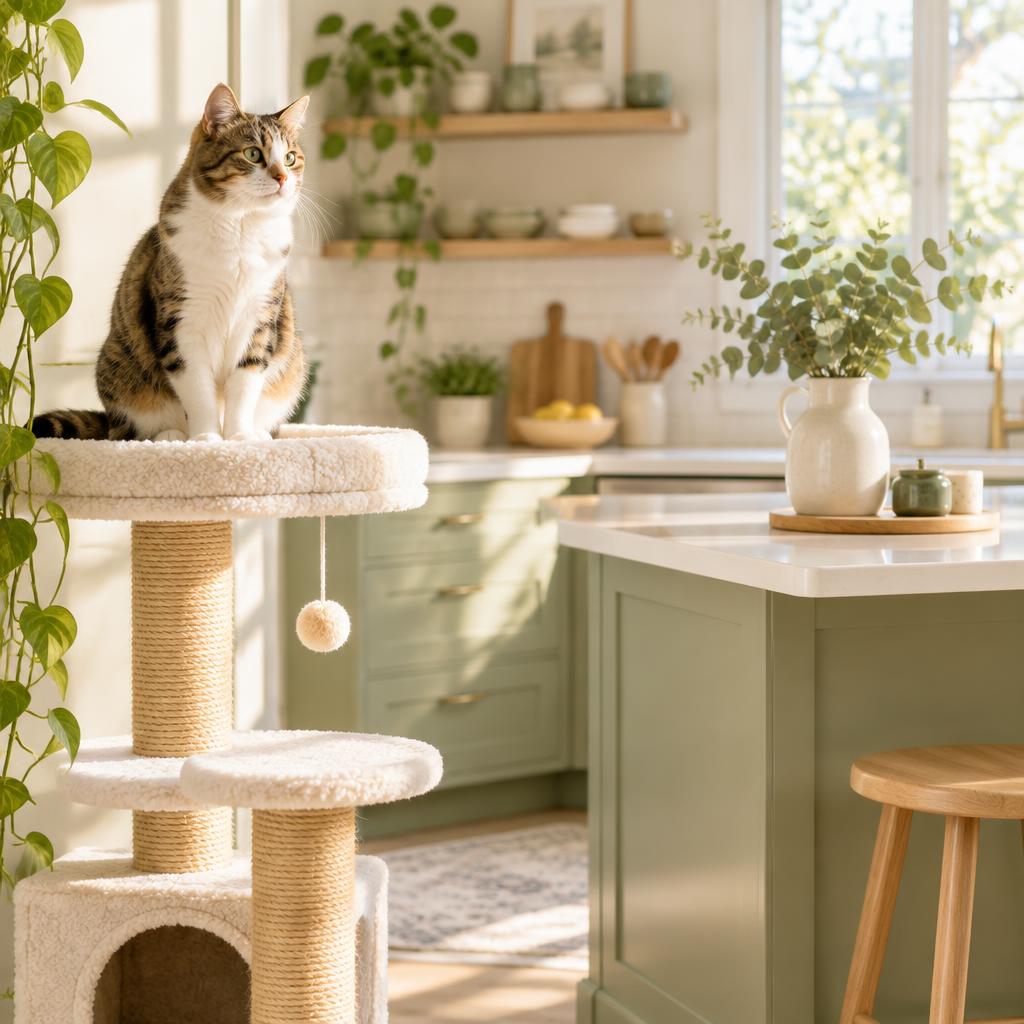
Give your cat a permitted elevated spot that meets the same need as the counter, such as a sturdy cat tree, a stable stool with a nonslip resting surface, or a properly installed wall perch. Position it where your cat can watch household activity without being within easy reach of burners, food preparation, or anything they might knock over. Choose a surface large enough for comfortable turning and lying down, and check that it will not wobble when your cat lands on it. For kittens, older cats, or cats with limited mobility, provide an easily reached option with intermediate steps rather than expecting a high leap. Introduce the perch by placing a familiar blanket there and rewarding voluntary investigation, without lifting your cat onto it if they resist handling. In a home with several cats, offer more than one appealing resting spot so access to the approved lookout does not become a source of conflict.
- Choose a stable, nonslip surface
- Keep it clear of cooking hazards
- Provide an interesting view
- Make access easy and comfortable
- Offer multiple spots when needed
Good to know: If your cat ignores the new perch, try changing its location before buying something else; the view and proximity to you may matter more than the furniture.
- 5
Step 5: Teach your cat to choose the approved spot
Begin training while the kitchen is quiet, using a few small pieces of your cat’s usual food or another suitable reward they genuinely enjoy. Encourage them toward the approved perch with a lure or target, then say a brief marker word such as “yes” the instant all four paws reach it and deliver the reward there. Once your cat starts approaching confidently, say a cue such as “place” just before they move toward the perch, gradually reducing the hand motion or food lure. Build duration in tiny increments by rewarding a second or two of staying, then slowly extending the interval while your cat remains relaxed and successful. Keep sessions brief, around one to three minutes, and stop before your cat becomes frustrated or loses interest. Count food rewards within their daily intake, and ask your veterinarian about suitable treats if your cat has dietary restrictions or weight-management needs.
- Mark the behavior immediately
- Deliver rewards on the perch
- Add the cue after early successes
- Increase waiting time gradually
- Keep practice sessions short
Good to know: Keep rewards in a sealed container that your cat cannot open, rather than leaving an enticing treat bag on the counter.
- 6
Step 6: Respond calmly to counter jumps
If your cat jumps onto a cool, hazard-free counter, stay calm and avoid shouting, spraying water, or startling them with sudden noises. Use a familiar target or practiced cue to guide them toward a safe route down, giving them room to move without grabbing, crowding, or chasing. When the counter is safe, rehearse this movement on a permitted low platform at another time so you are not trying to teach a brand-new skill during every unwanted jump. Avoid making every counter visit trigger an immediate treat, because some cats learn a counter-to-floor routine that repeatedly earns food. Instead, focus your food rewards on going to the approved perch before a jump and on remaining there, while keeping any necessary redirection quiet and uneventful. If a jump puts your cat near immediate danger, prioritize getting them safely separated from the hazard rather than worrying about perfect training timing.
- Stay quiet and predictable
- Allow a safe route down
- Reward proactive perch choices
- Avoid spray bottles and shouting
- Skip sticky, startling, or painful deterrents
Good to know: The most useful moment to intervene is often before the jump: when your cat approaches the counter and looks up, cue their approved perch instead.
- 7
Step 7: Practice during everyday kitchen routines
Once your cat understands the perch cue in a quiet room, practice while you do a simple kitchen task, such as putting away a few clean, cool dishes. Cue the perch before starting and reward frequently enough that staying there is easier and more worthwhile than coming over to investigate. Add distractions gradually, moving from quiet tasks to brief food preparation only when your cat can comfortably handle the easier version. If they repeatedly leave the perch, shorten the session, lower the difficulty, or use their safe separate space rather than repeating the cue with increasing frustration. A short interactive play session followed by an appropriate meal or food puzzle before your usual cooking time may help meet their activity and foraging needs. Ask everyone in the household to use the same cue, reward the same approved location, and avoid offering scraps from the counter, even as an occasional exception.
- Start with low-distraction tasks
- Cue the perch before cooking
- Increase difficulty in small stages
- Plan play before busy periods
- Agree on household rules
Good to know: Do not use hot-food preparation as a test of new training; maintain physical separation whenever a mistake could cause injury.
- 8
Step 8: Track progress and adjust the plan
Judge progress by fewer counter visits, quicker responses to the perch cue, and longer relaxed stays in the approved spot rather than expecting an immediate end to every jump. Many cats need repeated practice over several weeks or longer, especially if counters have provided food or attention for a long time. As the new habit becomes reliable, gradually space out food rewards while continuing occasional rewards and offering attention or other enjoyable interaction where your cat is allowed to rest. If counter visits increase again, check for a new attraction, missed meals, reduced play, household changes, or a perch that no longer feels comfortable or secure. Seek veterinary advice for changes in appetite, thirst, movement, toileting, or general behavior, and ask about a qualified feline behavior professional if a consistent plan is not helping. Keep the safe setup and food-management habits in place long term, because respecting your cat’s need to climb works better than relying on punishment or assuming they will never investigate again.
- Compare progress week by week
- Reduce rewards gradually
- Recheck food and water attractions
- Maintain approved climbing options
- Get professional help when needed
Good to know: A useful early win is your cat choosing the perch as you enter the kitchen; reward that voluntary decision even if occasional counter visits still happen.


Ask about this guide
Leave a comment or a question about your own pet and the Pawlito assistant replies right away with practical next steps.