How to Stop Your Cat from Scratching the Furniture
Protect your sofa without punishing your cat by understanding scratching and redirecting it to the right surfaces.
- Written by
- Pawlito Editorial Team · AI-assisted guide
- Professional review
- Not yet reviewed by a veterinarian
- Published
- Last updated
In this guide (8 steps)
Step 1: Understand why cats scratch
Scratching is essential, healthy cat behaviour — it stretches muscles, maintains claws and marks territory with scent from the paw pads. Your cat is not being naughty; the sofa simply meets their needs better than anything else available. Punishment does not work because the need remains. The solution is to make the right surface more attractive than the furniture.
Good to know: Never consider declawing — it is a painful amputation, banned in many countries, and causes lifelong problems.
Step 2: Choose the right scratching post
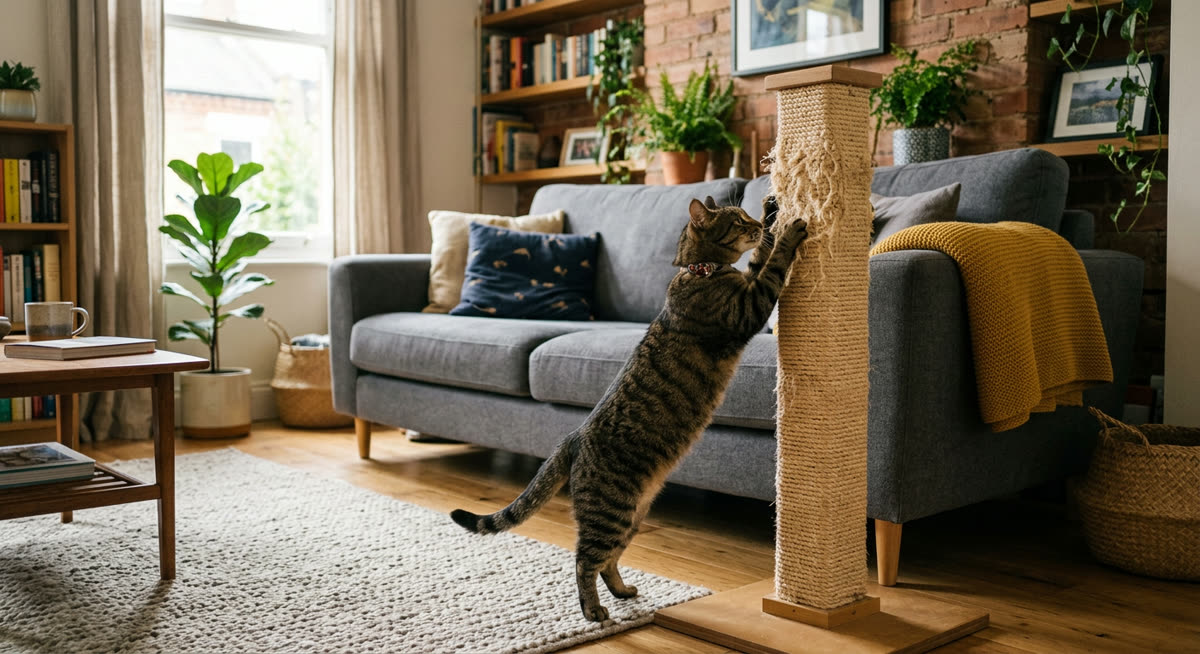
Watch how your cat scratches: cats who stretch upward on sofa arms need tall vertical posts, while carpet scratchers prefer horizontal scratchers. A vertical post must be tall enough for a full stretch — at least 70 centimetres — and heavy enough not to wobble. Sisal rope is the most popular texture. Buy more than one; cats like options in different rooms.
Step 3: Place posts where your cat actually scratches
The biggest mistake is hiding the post in a corner. Put it directly next to the furniture your cat scratches, because that location already matters to them. Cats also scratch after waking, so place a post near favourite sleeping spots. Once the habit transfers, you can gradually move the post a few centimetres a day to a better spot.
Step 4: Make the post irresistible
Rub catnip into the post, dangle a toy from the top, and praise your cat warmly every time they use it. Play around the post with a wand toy so claws naturally sink in during play. Reward with a treat the moment scratching happens. Never force your cat's paws onto the post — this creates a negative association.
Step 5: Make furniture unappealing at the same time
While building the new habit, protect the furniture. Double-sided sticky tape on scratched areas feels unpleasant on paws. Fitted throws or aluminium foil work as temporary covers. A citrus-scented spray deters many cats, though test fabrics first. Trim your cat's claws every two to three weeks to reduce damage.
- Sticky tape or furniture protectors on target areas
- Regular claw trims every fortnight
- Soft nail caps as a humane option for persistent cases
Step 6: Enrich your cat's environment
Bored, under-stimulated cats scratch more. Two or three short play sessions a day with a wand toy burn energy and reduce stress. Climbing trees, window perches and puzzle feeders keep your cat occupied. A content cat scratches appropriately rather than destructively.
Step 7: Troubleshoot persistent scratching
If your cat ignores every post, experiment with textures — some cats prefer cardboard, carpet or bare wood. Scratching near doors and windows can signal stress about outdoor cats; blocking the view or using a pheromone diffuser may help. Sudden increased scratching in an older cat can indicate anxiety, so consider a vet or behaviourist consultation if nothing works.
Step 8: Maintain the habit long term
Replace worn posts when the sisal frays, since cats prefer fresh surfaces. Keep at least one post per floor of your home. Continue occasional treats and praise for post use so the behaviour stays strong. With the right setup, most households see furniture scratching stop within a month.
Good to know: A post your cat ignores in the shop may become a favourite once placed in the right spot at home — keep receipts.
This guide was drafted with AI assistance and published by the Pawlito team. It has no formal source list yet. Spotted an error? Tell us and we'll correct it. Read our editorial policy.
Ask about this guide
Leave a comment or a question. Comments are public, so use a first name only and don't include emails, phone numbers or addresses. An automated assistant may reply straight away with general suggestions — it can't diagnose your pet.