How to Teach Your Cat to Come When Called
Cats can learn recall too. Pair a sound with tasty rewards and build reliable responses in short sessions.
- Written by
- Pawlito Editorial Team · Pet Care Writers
- Professional review
- Not yet reviewed by a veterinarian
- Published
- Last updated
In this guide (6 steps)
Step 1: Pick a unique signal
Choose a word, whistle or treat-bag shake that you use only for recall. A distinctive sound helps your cat recognise it among everyday household noises.
Step 2: Pair the sound with a treat
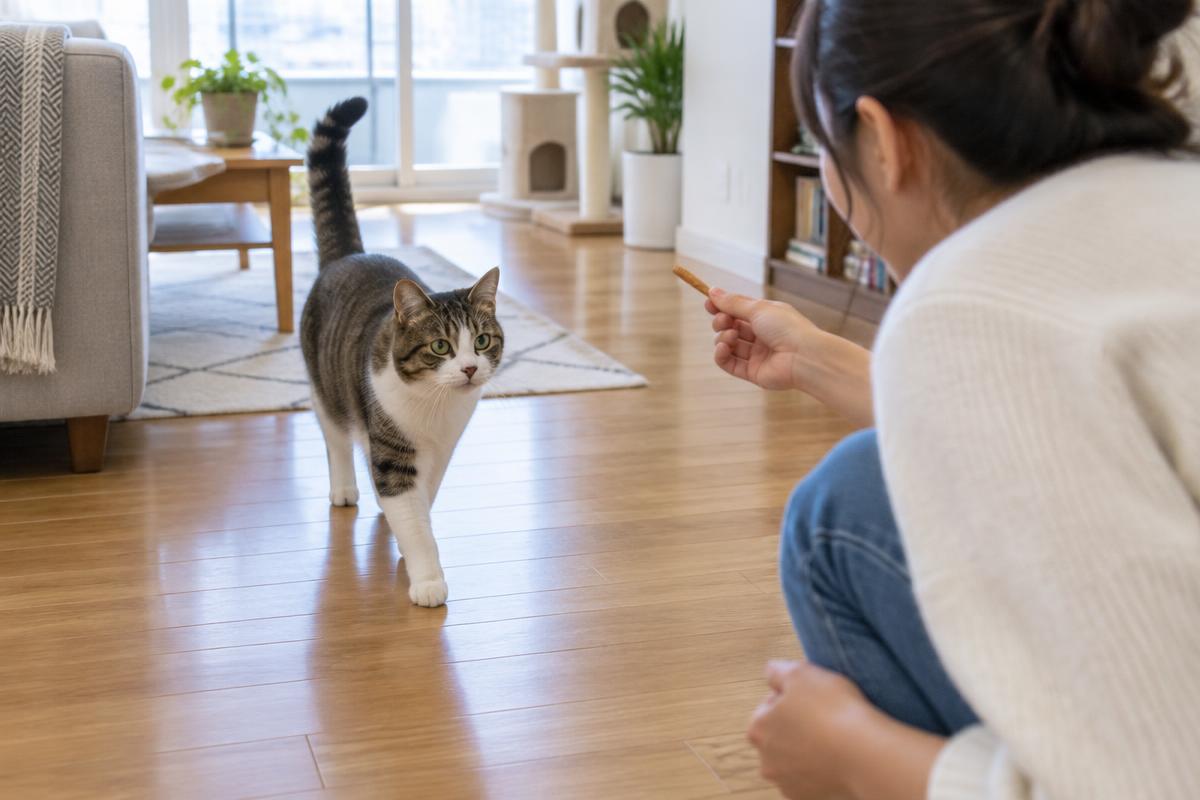
Stand close to your cat, make the sound, and immediately give a tiny favourite treat. Repeat several times over a few days so the sound predicts something delicious.
Step 3: Add a little distance
Move a few steps away, make the sound and reward when your cat comes. Gradually increase distance, then call from another room. Practise before meals, when cats are more motivated.
Step 4: Keep sessions short and positive
Do three to five repetitions and stop while your cat is still interested. Never use the recall to do something your cat dislikes, such as medication or the carrier.
Good to know: If your cat does not come, do not repeat the call. Try again later from closer.
Step 5: Use it in daily life
Call your cat for dinner, play or cuddles. Regular rewarding use keeps the response strong. A reliable recall can help in emergencies or when you need to find a hiding cat.
Step 6: Respect your cat's choices
Cats are individuals and some respond more slowly. Keep rewards high value and stay patient. For indoor safety, recall supports but does not replace secure windows and doors.
This guide was drafted with AI assistance and published by the Pawlito team. It has no formal source list yet. Spotted an error? Tell us and we'll correct it. Read our editorial policy.
Ask about this guide
Leave a comment or a question. Comments are public, so use a first name only and don't include emails, phone numbers or addresses. An automated assistant may reply straight away with general suggestions — it can't diagnose your pet.