How to Train a Cat to Use a Scratching Post Instead of Furniture
Make cat scratching post training easier with the right surfaces, smart placement, and rewards that help protect furniture without punishment.
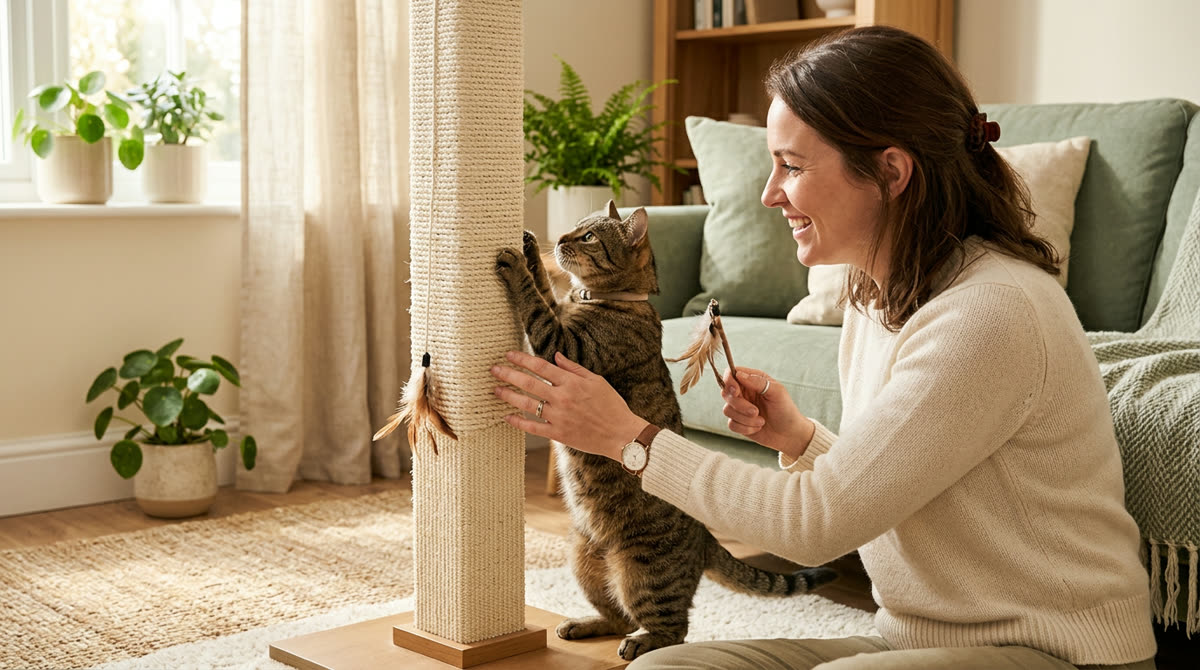
A calm, safety-first approachThis guide provides general education. Contact your veterinarian when symptoms are painful, persistent, or unusual.
- 1
Identify when, where, and how your cat scratches
Start cat scratching post training by observing your cat for 2 to 3 days and noting which furniture surfaces attract scratching, what time it happens, and what your cat does immediately beforehand. Scratching is normal feline behavior that helps cats stretch, maintain their claws, and leave visual and scent signals, so the goal is to provide a better outlet rather than eliminate the behavior. Watch whether your cat reaches upward on a sofa arm, stretches forward across a rug, or scratches at an angle, because these movements reveal which scratcher shapes are worth trying first. Also note the texture involved: a cat targeting woven upholstery may enjoy sisal fabric, while one scratching carpets may prefer a horizontal cardboard or carpet scratcher. Record common triggers, such as waking from a nap, greeting you at the door, or becoming excited during play, so you can offer the post before furniture scratching begins. Take a photo of existing damage or keep a simple daily tally to distinguish new scratches from old ones and measure progress without guessing. If scratching changes suddenly, or your cat limps, bleeds, repeatedly licks a paw, or reacts painfully to ordinary movement, stop training and contact a veterinarian rather than assuming this is a behavior problem.
- Record the two most frequently scratched locations.
- Note vertical, horizontal, or angled scratching.
- Identify preferred textures and predictable scratching times.
- Watch for paw discomfort or damaged claws.
Good to know: Do not punish scratching or remove every acceptable scratching surface to protect your home; cats need a safe place to perform this normal behavior.
- 2
Choose stable scratchers that match your cat
Choose a vertical scratching post tall enough for your cat to stand on the hind legs and extend the front legs without reaching over the top; about 30 to 36 inches suits many adult cats, while larger cats may need more height. Look for a broad, heavy base and test the assembled post with a firm push in several directions, because wobbling or tipping can make a cat avoid it after a single unpleasant experience. For a cat that scratches rugs or stretches forward, add a horizontal scratcher roughly 18 to 24 inches long, adjusting upward if your cat cannot comfortably stand on it while scratching. Start with two different formats or textures, such as a tall sisal post and a corrugated-cardboard pad, instead of purchasing several identical posts before you know your cat's preference. Tightly woven sisal fabric, well-secured sisal rope, and sturdy cardboard are useful options, but the cat's demonstrated preference matters more than the product's appearance or price. Inspect each scratcher for exposed staples, loose fittings, sharp edges, and dangling fibers or strings that could catch claws or be swallowed. For older cats or cats with limited mobility, offer a stable low-angle or horizontal option that does not require climbing or balancing, and ask your veterinarian about new difficulty stretching.
- Provide enough height or length for a full stretch.
- Check that the base does not rock, slide, or tip.
- Offer at least two initial surface or shape options.
- Remove loose strings and inspect exposed hardware.
Good to know: A small decorative post may suit a kitten but become too short as the cat grows; reassess its size rather than assuming the cat has become stubborn.
- 3
Place the post beside the furniture target
Put the preferred scratching post immediately beside the exact sofa arm, chair corner, or doorway trim your cat targets, ideally within a few inches when the layout allows. Cats often select scratching spots for their location as well as their texture, so hiding the new post in an unused room makes it less likely to replace a familiar furniture habit. Position the usable surface toward the cat's normal approach and leave enough space for the body and tail during a full stretch. Add another scratcher near a favorite sleeping area, since many cats scratch soon after waking, and place one along a frequently used route if scratching happens during greetings. In a multi-cat home, spread scratching options across separate resting and activity areas rather than clustering them together where one cat can block access. Keep posts away from noisy appliances, swinging doors, and narrow escape routes that might make your cat feel trapped while using them. Leave the initial setup in place during early training, because repeatedly shifting the post prevents your cat from building a predictable routine around the alternative.
- Put the first post directly beside the damaged spot.
- Keep the scratching face accessible from the usual approach.
- Provide an option near a regular sleeping place.
- Distribute scratchers across areas used by different cats.
Good to know: If a freestanding post will not fit beside the target, consider a securely mounted scratching panel or a stable corner scratcher, installed according to its instructions.
- 4
Temporarily protect furniture without frightening your cat
Protect the previously scratched section of furniture at the same time you introduce the nearby post, so the old choice becomes less satisfying while the new choice remains convenient. Use a tightly fitted washable cover, a secured smooth furniture guard, or temporary room access management when you cannot supervise, checking that nothing creates loops, loose edges, or entrapment points. If you choose a furniture-safe adhesive deterrent, use a product specifically labeled for that purpose, test a hidden patch first, and stop using it if your cat chews it or adhesive transfers to the fur or paws. Covers should lie flat and remain secure, because a loose throw can become another appealing scratching surface or slide off during use. Avoid essential-oil mixtures, hot pepper, strong fragrances, spray bottles, shouting, and startling devices, which may irritate or frighten your cat without teaching an acceptable alternative. Never confine your cat somewhere without appropriate scratching surfaces, and maintain access to water, litter, comfortable resting places, and other daily necessities when restricting a room. Keep protections in place until the nearby scratcher is being used reliably, rather than uncovering the sofa after one successful training session.
- Test guards or adhesives on hidden upholstery first.
- Secure covers without exposed pins or loose loops.
- Remove any protection your cat chews or pulls apart.
- Keep an appealing scratcher next to the protected area.
Good to know: Do not wrap adhesive tape around your cat's paws or apply deterrent substances to the cat; furniture protection should change the surface, not cause discomfort.
- 5
Reward voluntary contact and scratching
Introduce the post during a calm period and allow your cat to sniff and investigate without being picked up, held against it, or having the paws dragged down its surface. Keep a few tiny treats ready and immediately reward a promising first action, such as approaching or touching the post, if your cat is initially hesitant. As confidence grows, reserve the reward for claw contact and then an actual scratching stroke so the lesson becomes specific rather than simply rewarding sitting beside the post. Use a quiet marker word such as "yes" at the moment scratching begins, then deliver the treat within about 1 to 2 seconds whenever practical, without pulling your cat out of a satisfying stretch. You can move a wand toy slowly alongside the scratching surface to encourage a reach, but keep the toy from wrapping around the post and let the cat choose whether to engage. Offer two or three brief opportunities daily, usually 1 to 3 minutes each, and also reward spontaneous post use whenever you happen to see it. Use part of the normal food allowance or very small treats, keeping all treats combined under 10 percent of daily calories unless your veterinarian recommends a different limit.
- Keep a marker word and reward timing consistent.
- Reward investigation first only when needed.
- Progress to rewarding actual scratching.
- End sessions while your cat remains comfortable.
Good to know: A small pinch of catnip or a cat-labeled silvervine product may encourage investigation in cats that respond to it, but neither is necessary; skip attractants if they cause overexcitement or avoidance.
- 6
Redirect calmly and prevent repeated furniture practice
When you notice your cat approaching a familiar scratching target, invite the cat toward the adjacent post before claws touch the furniture, using a quiet cue or a brief movement of a wand toy. If furniture scratching has already started, avoid yelling, clapping, spraying water, or grabbing the cat, since these responses can create fear of you while leaving the scratching preference unchanged. Instead, calmly attract attention toward the nearby scratcher, and reward only after your cat actually scratches the acceptable surface. If your cat does not respond, do not escalate into a struggle; wait until the cat moves away, restore the furniture guard, and reassess whether the post is close, stable, and appealing enough. Preventive timing is especially useful after naps or during your return home, when you can be ready beside the post before the usual scratching sequence begins. If your cat repeatedly scratches the sofa and then looks to you for a treat, shift rewards toward spontaneous post use and preemptive sessions so furniture scratching does not become the first step in a reward routine. Ask everyone in the household to follow the same approach, because alternating praise with punishment or using different rules makes learning less predictable.
Good to know: Never carry or restrain an aroused cat to make it use a post; give the cat space, especially if you see tail lashing, flattened ears, growling, or attempts to bite.
- 7
Troubleshoot the setup rather than blaming the cat
Review your notes after about 7 days and look for a trend toward more post use and fewer new furniture-scratching events, recognizing that an established habit may take several weeks to change. If your cat ignores the post completely, test one major change at a time for roughly 3 to 5 days, such as switching from rope to cardboard, offering a horizontal surface, or moving the post directly against the preferred sofa corner. If the cat sniffs the post but scratches the furniture beside it, check whether the post moves under pressure, is too short for a full stretch, or requires an awkward body angle. If your cat uses the post but still scratches other furniture, add a scratcher at the remaining hotspot rather than assuming one successful station should meet every location-based need. In multi-cat homes, watch from a distance for staring, chasing, or blocked pathways, and give each cat accessible scratching options in areas where they already feel secure. Support the training plan with predictable routines and one or two daily interactive play sessions of about 5 to 10 minutes, adjusted to your cat's stamina, without treating play as a replacement for scratching surfaces. If there is little improvement after 2 to 4 weeks of consistent adjustments, consult your veterinarian and consider referral to a qualified feline behavior professional, seeking veterinary help sooner for sudden changes, pain, damaged claws, or escalating aggression.
- Recheck height, stability, texture, and scratching angle.
- Change one major feature at a time.
- Add an option at any remaining furniture hotspot.
- Watch for another cat blocking access.
Good to know: Do not wait for a training deadline if your cat has a torn or bleeding claw, swelling, or difficulty bearing weight; stop the session and contact a veterinarian promptly.
- 8
Fade rewards and move the post gradually
Once your cat has chosen the post consistently for about 1 to 2 weeks with little or no furniture scratching, begin reducing food rewards gradually rather than stopping them overnight. Reward every other successful use at first, then offer occasional unpredictable treats while continuing quiet praise or gentle attention if your cat enjoys it. Keep rewarding use at difficult times, such as after furniture is uncovered or when household routines change, because those situations can revive the old habit. If the post must move for practical reasons, shift it only about 2 to 4 inches every few days and watch whether your cat continues using it comfortably. Move along the same general activity area rather than transferring the post abruptly to a distant corner, and accept that the original location may remain the best permanent solution. Remove furniture protection in small stages after reliable post use, uncovering one section first and watching for renewed scratching over the next several days. If furniture scratching returns, replace the protection, move the post back toward the target, and temporarily resume frequent rewards instead of interpreting the setback as deliberate misbehavior.
Good to know: Keep at least one scratcher in a prominent, socially important part of the home; a post that works for your cat is more valuable than one hidden neatly out of sight.
- 9
Maintain safe surfaces and reinforce the habit
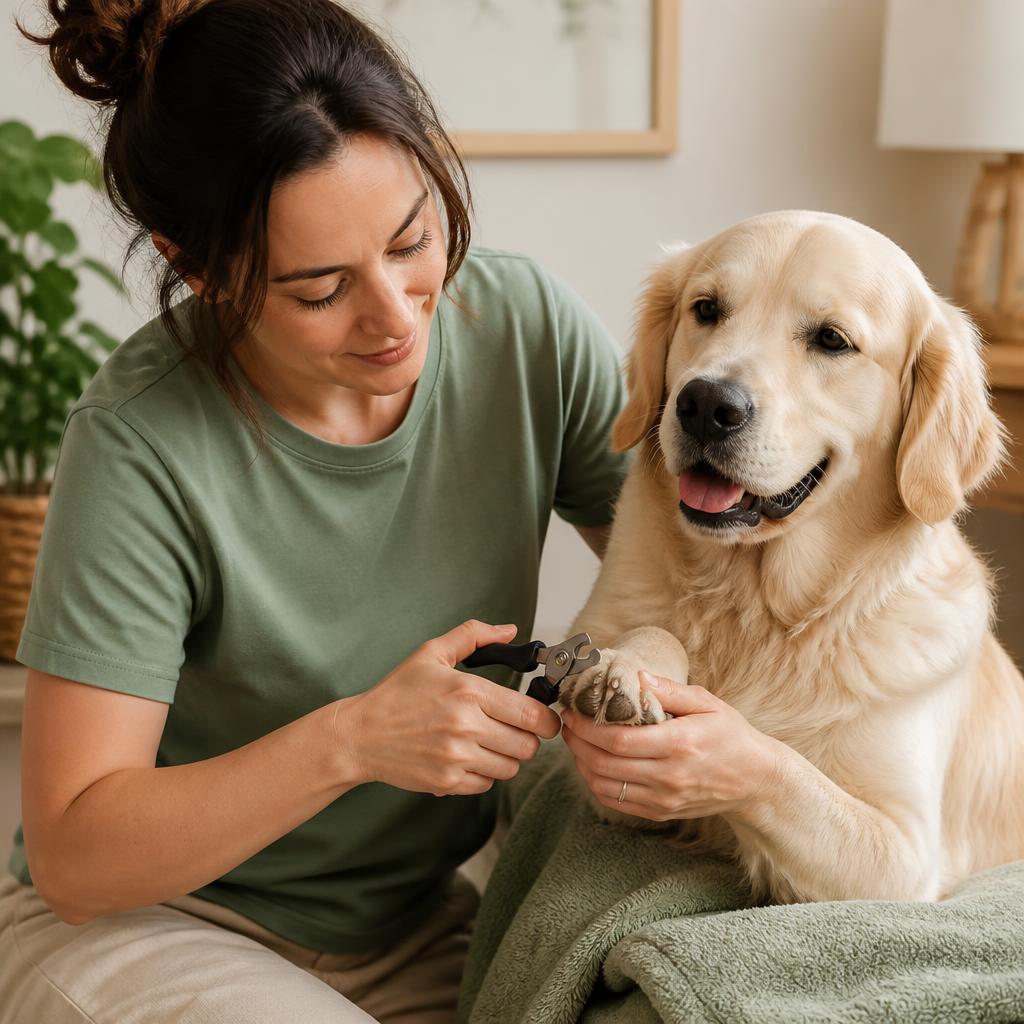
Check scratching equipment weekly for wobbling bases, loose fasteners, exposed staples, and long strands, tightening or replacing components according to the manufacturer's instructions. Vacuum loose debris as needed, but avoid heavily perfumed cleaners or replacing every familiar scratcher at once, since an established surface can carry appealing scent and visible scratching marks. When a scratcher becomes unsafe or too worn to provide resistance, place its replacement beside it for several days when possible, removing the old one immediately if it presents an injury hazard. Check claws every 2 to 4 weeks, especially in older cats, and ask a veterinarian or veterinary nurse to demonstrate trimming if you are unsure how to identify the sensitive quick. If your cat accepts trimming, use cat nail clippers to remove only the sharp tip and stop before the quick; work on one or two claws at a time if needed, and stop if the cat struggles or becomes distressed. Nail trimming may reduce accidental damage but does not remove the need to scratch, and declawing is not an appropriate training solution because it involves amputation and carries risks of pain and lasting complications. Continue occasional rewards for good choices, provide extra scratchers after moves or furniture changes, and revisit your observation notes whenever cat scratching post training needs a refresher.
- Inspect posts and pads every week.
- Replace hazardous equipment promptly.
- Keep familiar safe scratchers during transitions.
- Reward spontaneous scratching occasionally.
- Reassess placement after household changes.
Good to know: Do not try to free an embedded claw or cut through a claw that appears to enter the paw pad; contact your veterinarian for safe assessment and care.


Ask about this guide
Leave a comment or a question about your own pet and the Pawlito assistant replies right away with practical next steps.