How to Trim Your Cat's Claws Without Stress
A gentle, gradual method for claw trims that keeps both you and your cat calm — no wrestling required.
- Written by
- Pawlito Editorial Team · AI-assisted guide
- Professional review
- Not yet reviewed by a veterinarian
- Published
- Last updated
In this guide (8 steps)
Step 1: Get the right tools
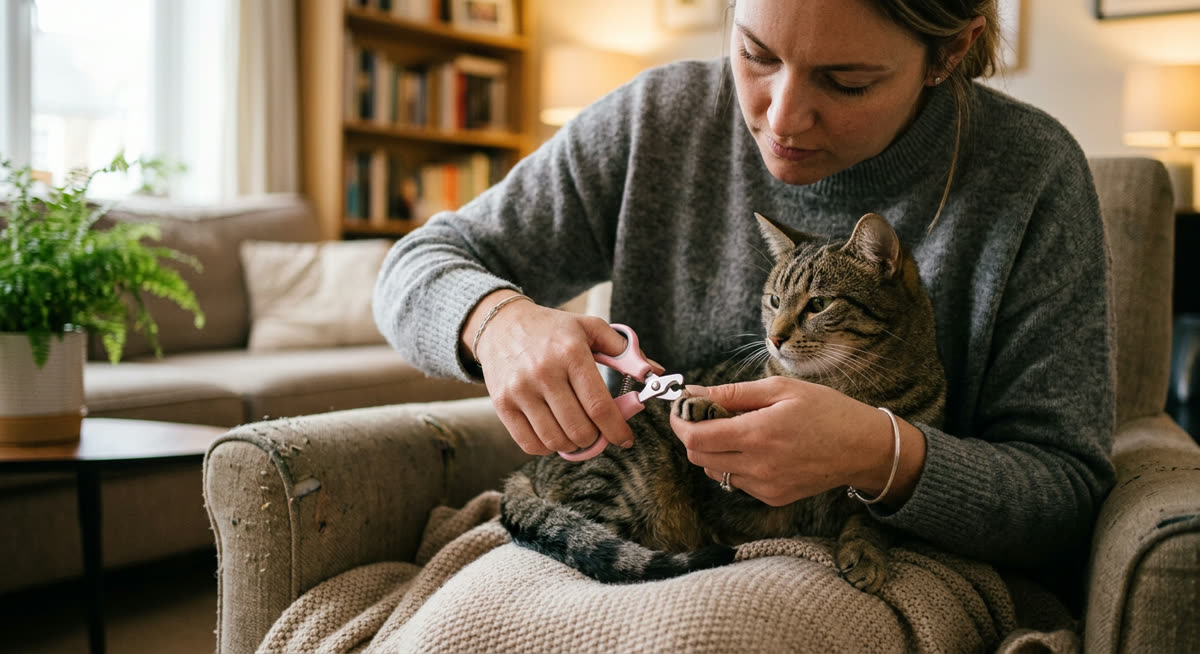
Use proper cat claw clippers — either scissor-style or guillotine-style, whichever feels comfortable in your hand. Human nail clippers can split cat claws. Keep styptic powder or cornflour nearby in case you nick the quick, though this is rare with care. Have treats ready before you start.
Step 2: Get your cat used to paw handling first
For several days before the first trim, simply touch your cat's paws during relaxed cuddle time. Gently press the pad to extend the claw, then release and treat. Keep sessions under a minute and stop before your cat gets annoyed. This foundation makes the actual trim far easier.
Good to know: Choose a time when your cat is sleepy — after a meal or play session is ideal.
Step 3: Learn where to cut
Look at the extended claw in good light. The pink area inside is the quick, which contains blood vessels and nerves — cutting it hurts and bleeds. Trim only the sharp, clear, curved tip, about two millimetres from the quick. When in doubt, cut less. On dark claws where the quick is invisible, trim only the very tip.
Step 4: Start with just one or two claws
For the first session, trim a single claw, then treat and stop. This teaches your cat that trims are brief and rewarding. Add one or two more claws each session over the following days. There is no rule that all claws must be done at once — spreading trims across several days is perfectly fine.
Step 5: Find a comfortable position
Most cats do best sitting in your lap facing away from you, or lying on a table beside you. Hold the paw gently but firmly, press the pad to extend the claw, and clip decisively. If your cat pulls away, let them — never restrain forcefully, as this creates lasting fear. A second person offering treats or chin scratches can help enormously.
Step 6: Handle a wriggly or fearful cat
If your cat struggles, wrap them loosely in a towel with one paw out — the 'purrito' method — keeping sessions very short. Some cats respond better to trims while dozing. If your cat becomes genuinely distressed or aggressive, stop and ask your vet or a groomer for help; a professional trim every few weeks is inexpensive.
- Towel wrap for wrigglers, one paw at a time
- Never punish or shout — it makes the next trim harder
- Professional trims are a valid long-term option
Step 7: Set a trimming schedule
Indoor cats usually need trims every two to three weeks, while outdoor cats often wear claws down naturally. Check claws monthly at minimum. Overgrown claws can curl into the paw pad, which is painful and needs a vet. Regular short sessions keep claws healthy and reduce furniture damage too.
Step 8: Keep it positive for life
Always end sessions with a treat, even if you only managed one claw. Keep clippers sharp — dull blades crush rather than cut, which cats hate. Replace them when they start to snag. With patient practice, most cats accept trims as a normal part of life within a month or two.
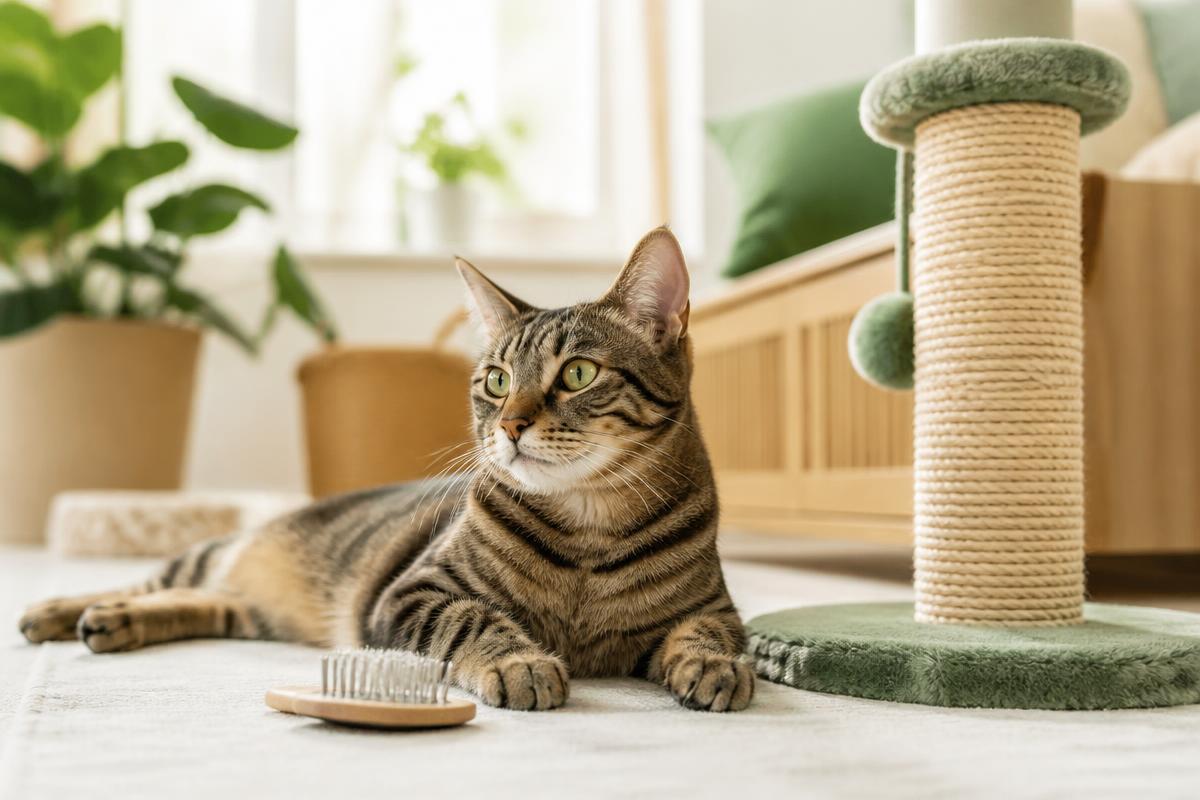
Good to know: Scratching posts do not replace trims for indoor cats — they shed outer layers but do not shorten claws.
This guide was drafted with AI assistance and published by the Pawlito team. It has no formal source list yet. Spotted an error? Tell us and we'll correct it. Read our editorial policy.

Ask about this guide
Leave a comment or a question. Comments are public, so use a first name only and don't include emails, phone numbers or addresses. An automated assistant may reply straight away with general suggestions — it can't diagnose your pet.