How to Trim Your Dog’s Nails Without Stress
A calm, step-by-step method for safe nail trims — including how to avoid the quick and build your dog’s confidence.
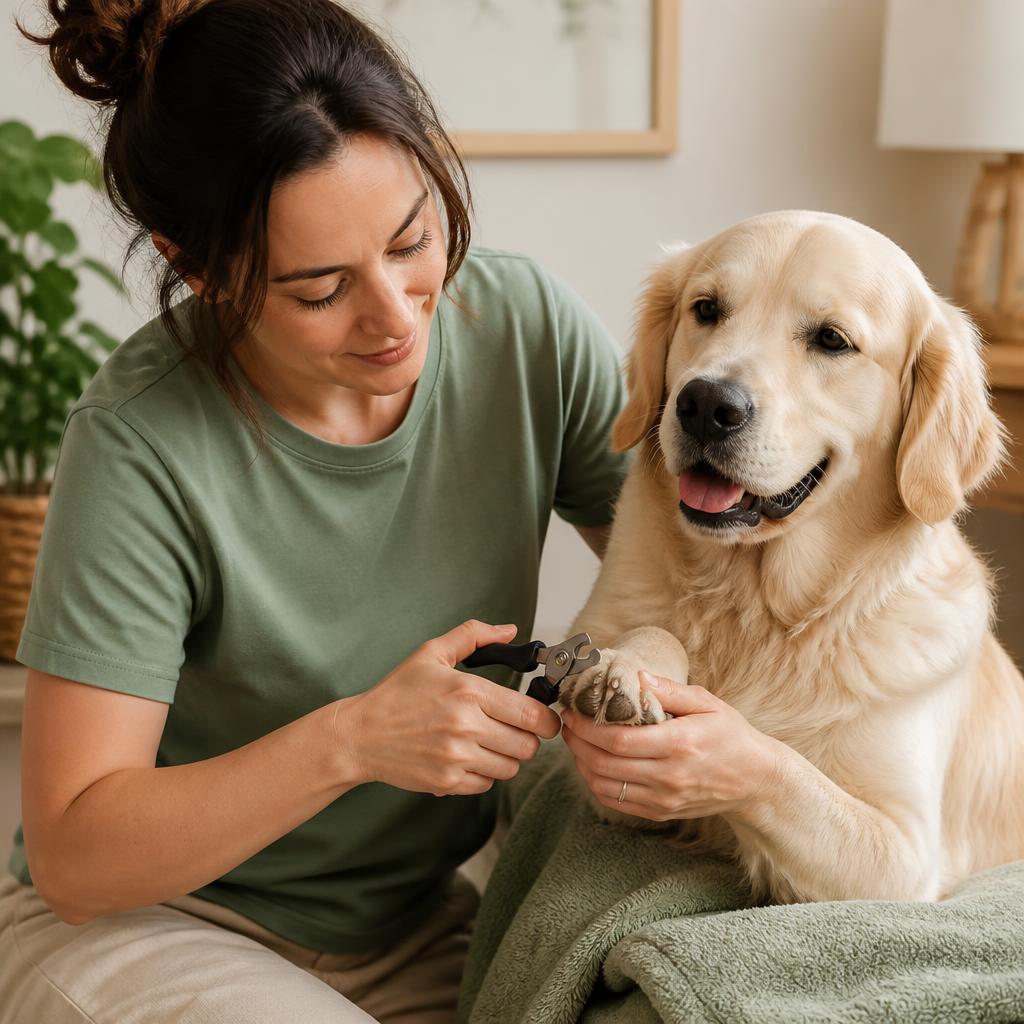
A calm, safety-first approachThis guide provides general education. Contact your veterinarian when symptoms are painful, persistent, or unusual.
- 1
Get your dog used to paw handling
For a few days before the first trim, touch your dog’s paws briefly during relaxed moments, then reward. Gradually hold each paw a little longer so handling feels normal.
Good to know: Short, positive sessions beat one long wrestling match. Stop while your dog is still calm.
- 2
Choose the right tool
Use scissor-style or guillotine-style dog nail clippers that match your dog’s size, or a pet nail grinder for dogs who dislike the clipping sensation. Keep styptic powder nearby just in case.
- Size-appropriate dog nail clippers or a grinder
- Styptic powder or cornstarch for accidental nicks
- High-value treats within reach
- 3
Find the quick before you cut
The quick is the blood vessel inside the nail. On light nails it appears as a pink core; on dark nails, look for a small dark dot in the center of a fresh cut surface. Plan to cut well short of it.
- 4
Trim small amounts at a time
Hold the paw firmly but gently, and take off a thin sliver at a 45-degree angle. After each snip, check the cut surface — stop when you see a pale circle with a darker center appearing.
- 5
Reward and repeat regularly
End every session with praise and a treat, even if you only finished one paw. Trimming a little every one to two weeks keeps the quick short and the routine easy.



Ask about this guide
Leave a comment or a question about your own pet and the Pawlito assistant replies right away with practical next steps.