How to Bathe a Dog That Hates Water
Help your water-wary dog feel safer at bath time with gentle preparation, gradual introductions and a calm, practical washing routine.
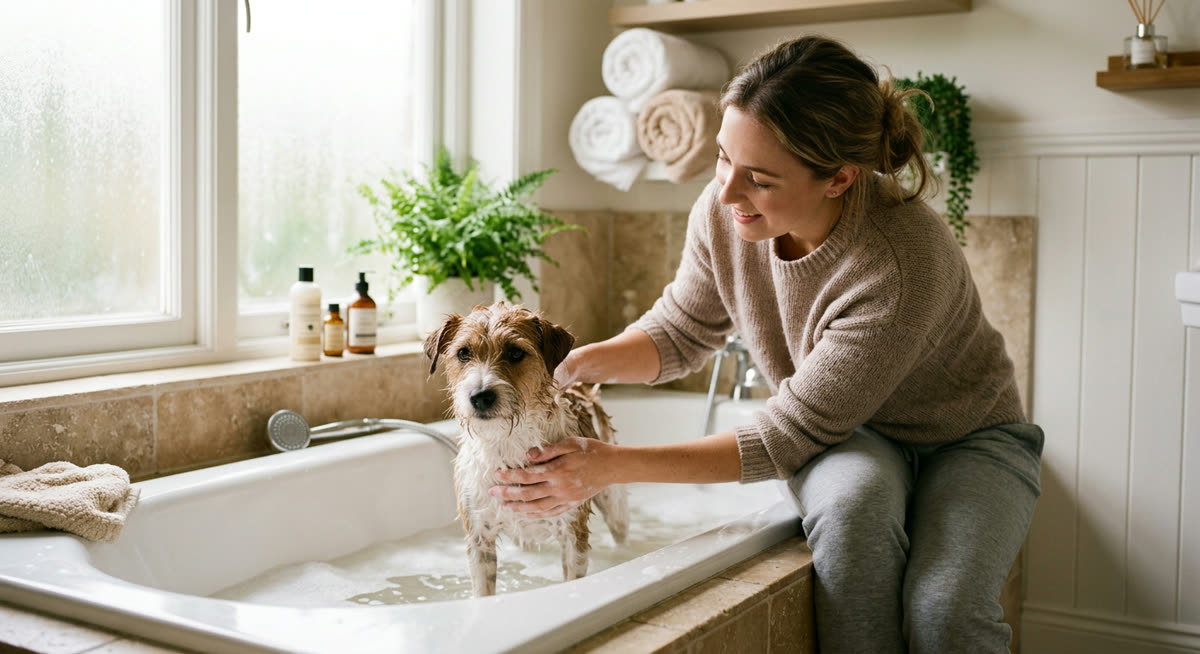
A calm, safety-first approachThis guide provides general education. Contact your veterinarian when symptoms are painful, persistent, or unusual.
- 1
1. Decide whether a full bath is necessary
Check your dog’s coat to see whether they need a full wash or just a muddy patch cleaned with a lukewarm, damp cloth. If they are only lightly dirty, spot-cleaning gives you time to work on their fear without forcing an unnecessary bath. Contact your vet before bathing if your dog has sore skin, open wounds, painful movement or a sudden new fear of being touched. If an unknown chemical or potentially harmful substance is on their coat, prevent licking and contact your vet promptly rather than experimenting with cleaning products. For an ordinary bath, choose a quiet time when your dog is settled, with no visitors, excited children or other pets nearby. Set a modest goal for the session, remembering that calmly approaching the washing area may be enough progress for today.
- Check whether spot-cleaning will do
- Look for soreness or broken skin
- Choose a quiet, unhurried time
- Keep other pets out of the area
Good to know: Start practising bath-time skills before your dog urgently needs washing, so you can progress at their pace.
- 2
2. Prepare a secure, comfortable washing area
Choose a washing area your dog can enter safely, such as a walk-in shower, rather than a high-sided bath they must struggle to reach. Put a non-slip mat beneath their feet and another on the floor where they will step out. Gather dog-formulated shampoo, several towels, a soft washcloth, a plastic jug and small pieces of a familiar treat within easy reach. Keep the room comfortably warm and check that the water feels lukewarm, not hot, against the inside of your wrist. If you use a shower attachment, select a gentle flow and make sure its temperature stays steady before bringing your dog over. Arrange for a calm adult helper if needed, but never tether your dog to a tap, leave them unattended or use restraint to force them to stay.
- Non-slip mats inside and outside
- Dog-formulated shampoo
- Towels and a soft washcloth
- Plastic jug or gentle shower attachment
- Small, familiar treats
Good to know: Open bottles and unfold towels beforehand to reduce sudden movements and clattering while your dog is nearby.
- 3
3. Build confidence in the dry bathing space
With the water off, let your dog investigate the room and reward a voluntary look, step or sniff towards the washing area. Place treats on the approach or mat without using food to lure them into a space you then prevent them from leaving. If they can enter safely by themselves, reward stepping onto the dry mat and allow them to step back out. For a small dog who needs lifting, practise only if they are comfortable being picked up, supporting both their chest and hindquarters. Keep sessions to a few minutes and finish while your dog still looks relaxed, even if you have not reached the bath itself. Repeat over separate sessions until they can stand comfortably in the dry space without freezing, repeatedly trying to escape or backing away.
- Loose, comfortable posture
- Willing movement towards the area
- Comfort with standing on the mat
- Freedom to pause and step away
Good to know: Use the same non-slip mat for dry practice and washing so your dog has a familiar surface underfoot.
- 4
4. Introduce water in small, manageable stages
Let your dog hear a brief trickle of water from a comfortable distance, then turn it off and reward calm behaviour. Move closer only while they remain relaxed, separating the sound of running water from the sensation of getting wet. Begin contact with a damp cloth on a shoulder or lower leg rather than spraying their whole body. If they stay comfortable, pour a little lukewarm water from a jug close to the coat or use a low-pressure shower held close to the body. Start with the feet and legs, then gradually wet the body while keeping water away from the face and ear openings. Keep the drain clear so water does not pool around their legs, and postpone shampooing if they are not yet comfortable with enough water for a thorough rinse.
Good to know: If the shower noise worries your dog, try a plastic jug, but check every refill and keep enough lukewarm water available for rinsing.
- 5
5. Wash the coat gently and leave the head mostly dry
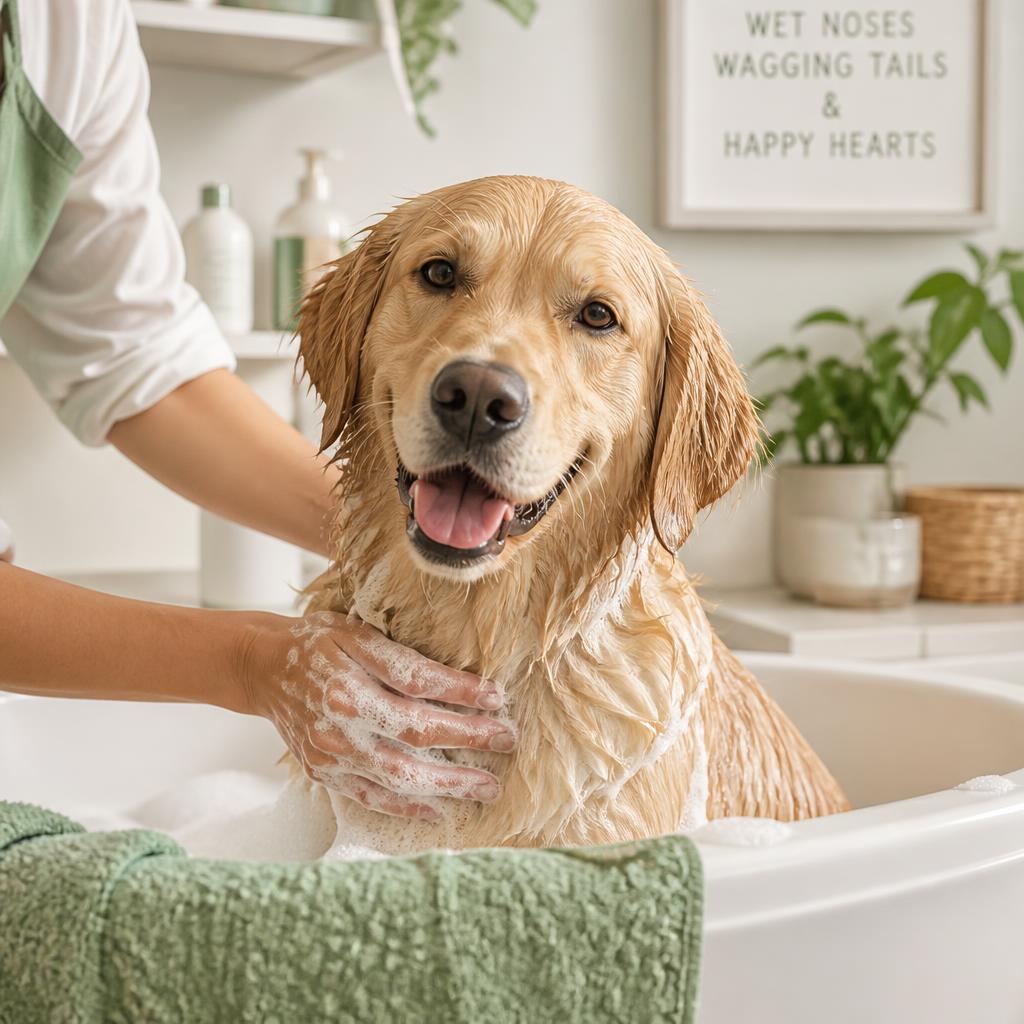
Once your dog accepts wetting, work lukewarm water through the coat to the skin using your fingers rather than increasing the water pressure. Apply a dog-formulated shampoo according to its label, including any instructions about dilution and contact time. Massage it gently through the body, legs, underside and tail, avoiding vigorous scrubbing or pulling at tangles. Keep shampoo away from the eyes, mouth, ear openings and genital area, and do not insert anything into the ears. Wipe the face with a separate damp cloth without shampoo, leaving stubborn dirt near the eyes for advice from your vet if it will not come away gently. Offer brief pauses and small rewards while your helper watches your dog’s comfort, and stop if handling appears painful.
- Follow the shampoo label
- Use gentle fingertip massage
- Keep the face free of shampoo
- Avoid spraying into ears
- Pause if your dog becomes tense
Good to know: Use only as much shampoo as the label directs, because excess product makes rinsing longer and more difficult.
- 6
6. Rinse carefully without rushing
Begin rinsing at the shoulders and work down the body so suds flow towards the drain rather than over areas you have already cleaned. Keep the jug or shower close to the coat to minimise splashing and avoid directing water towards the head. Use your free hand to gently part thicker fur so clean water reaches the skin. Pay particular attention to the armpits, belly, groin, feathering and underside of the tail, where shampoo can collect. Continue until there are no visible suds and the coat no longer feels soapy, checking these hidden areas again before finishing. If your dog needs a brief pause, turn off the water and let them settle on the mat before completing the rinse.
Good to know: Rinse one small area thoroughly at a time rather than repeatedly sweeping a spray over the entire dog.
- 7
7. Stop and reset if your dog becomes frightened
At any stage, stop adding water or shampoo if your dog begins trembling, repeatedly scrambling, freezing rigidly, growling or trying to bite. Turn off the water, soften your movements and give them space without leaning over or gripping them more tightly. If no shampoo has been applied, end the session and return to an easier dry-training stage another day. If shampoo is already on the coat, use the quietest method your dog can safely tolerate to rinse it away, with gentle jug pours or repeated passes of a clean wet cloth for small patches. If you cannot remove the product safely, contact your vet promptly for guidance rather than risking a bite or leaving substantial residue on the skin. For ongoing fear, ask your vet about support from a qualified, reward-based behaviour professional or a groomer experienced in low-stress handling, and never punish warning signals.
- Switch off the water
- Reduce noise and movement
- Do not tighten restraint
- Remove shampoo safely
- Seek help if you cannot continue safely
Good to know: A growl is a signal to change what you are doing, not a behaviour to suppress.
- 8
8. Help your dog out and dry them comfortably
Lay a towel over the non-slip exit area and help your dog leave without jumping onto a slippery floor. If lifting is necessary and your dog accepts it, support their chest and hindquarters and ask a helper to manage the towel. Allow them to shake in a clear space, keeping your face away from theirs. Blot and gently squeeze moisture from the coat with towels rather than rubbing vigorously, especially on long or easily tangled fur. Use towels alone if dryer noise worries them; only use a dryer if they are already comfortable with it, choosing a cool or barely warm setting, keeping it moving and directing it away from the face. Keep your dog in a warm, draught-free room while they dry, and contact your vet if shivering persists or they seem unwell.
- Provide a non-slip exit
- Support the body when lifting
- Blot rather than scrub
- Avoid hot dryer settings
- Keep the drying room draught-free
Good to know: For a thick-coated dog, swap a saturated towel for a dry one rather than continuing to rub with the wet towel.
- 9
9. Check comfort and plan an easier next bath
Once your dog is settled, gently check that their armpits, skin folds, paws and areas beneath a collar or harness are not staying damp. Leave collars and harnesses off until the coat underneath is dry, provided your dog is safely contained indoors. When the coat is dry enough for its usual grooming routine, work through any small tangles gently and seek professional help for tight mats rather than cutting close to the skin. Watch for persistent scratching, redness, head shaking, eye irritation or unusual discomfort after the bath, and contact your vet if you notice these signs. Note which surface, water method, rewards and handling your dog tolerated best, then practise only the difficult stages in short, pressure-free sessions between baths. Base future bathing on actual need and advice for your dog’s coat and skin, using spot-cleaning when suitable instead of repeating full baths simply to make them get used to water.
Good to know: Finish with a calm activity your dog enjoys, such as sniffing for a few treats, without insisting on extra handling or cuddles.
Ask about this guide
Leave a comment or a question about your own pet and the Pawlito assistant replies right away with practical next steps.