How to Bathe a Ferret and Care for Its Coat
Learn when bathing a ferret is necessary, how to wash and dry safely, and which coat-care habits keep your pet comfortable between baths.
A calm, safety-first approachThis guide provides general education. Contact your veterinarian when symptoms are painful, persistent, or unusual.
- 1
Decide whether your ferret needs a bath
Before bathing a ferret, check whether the coat is genuinely dirty or simply has the mild, musky scent that healthy ferrets naturally produce. A full bath is reasonable when feces, urine, or another ordinary mess has soaked into the fur, but a small dirty patch usually needs only a soft washcloth dampened with warm water. Most healthy ferrets do not need scheduled baths; if washing is necessary, think in terms of months between baths rather than weekly or monthly grooming. Frequent shampooing removes protective skin oils, which can cause irritation and may make the odor seem stronger as those oils return. Check the skin beneath the coat for redness, scabs, sores, parasites, or unusual thinning before choosing any grooming products. If you notice persistent scratching, a sudden change in smell, bald patches, or painful skin, skip the cosmetic bath and arrange a veterinary examination rather than trying a deodorizing shampoo. If paint, a cleaner, essential oil, or another potentially toxic substance is on the fur, prevent licking and immediately contact a veterinarian or animal poison service for substance-specific decontamination advice.
- Normal musk alone: do not bathe.
- One small dirty area: spot-clean first.
- Widespread ordinary dirt: consider a short bath.
- Skin changes or toxic contamination: seek veterinary advice.
Good to know: Bathing does not eliminate a ferret’s natural scent. Washing bedding and removing litter-box waste are usually more effective ways to keep the home smelling fresh.
- 2
Prepare a warm, escape-proof bathing area
Choose a quiet bathroom with the door closed, a comfortable room temperature of roughly 75–80°F (24–27°C), and no fan or air-conditioning draft aimed at the bathing area. Gather everything within arm’s reach before bringing in your ferret, because a wet, slippery pet must never be left unattended while you fetch a towel. You will need a non-slip mat, two or three absorbent towels, a plastic rinsing cup, a soft washcloth, a water thermometer, and a mild shampoo specifically labeled for ferrets. If you cannot find a ferret shampoo, ask your veterinarian to recommend an appropriate alternative rather than assuming that any kitten, puppy, or “natural” product is suitable. Avoid human shampoo, dish detergent for routine grooming, perfumes, essential-oil products, and flea or medicated shampoos unless your veterinarian specifically directs their use. Put a clean carrier or a low, supervised drying area nearby, lined with a dry towel and free of loose threads that could catch nails. For a ferret that is inexperienced with handling, recruit a calm helper to steady the animal while you rinse, and postpone the bath if you cannot manage it safely.
- Non-slip mat and shallow basin
- Ferret-appropriate shampoo
- Plastic cup, thermometer, and washcloth
- Two or three towels and clean bedding
- Closed door and a draft-free drying area
Good to know: Keep electrical appliances, cleaning chemicals, and open toilet bowls out of reach. Ferrets can climb or squeeze into surprisingly small spaces when trying to leave a bath.
- 3
Brush and spot-clean before adding water
Spend about 3–5 minutes gently brushing the dry coat with a soft, small-animal brush, working in the direction the hair grows. This removes loose fur before it becomes wet and helps you check the shoulders, back, belly, and tail for hidden dirt or skin changes. Support your ferret on your lap or on a towel-covered floor rather than an elevated counter, and reward a few calm brush strokes with a tiny portion of a familiar ferret-appropriate treat. If dried waste is caught in the coat, hold a warm, damp washcloth against it for 30–60 seconds, repeating as needed instead of pulling the fur. For long-haired ferrets, gently separate small tangles with your fingers, but stop if the skin pulls or your pet shows discomfort. Do not cut close-fitting mats with scissors, because thin skin can be drawn into the tangle; ask a veterinarian or a groomer experienced with ferrets to remove them safely. If brushing and localized wiping leave the coat clean, end the grooming session here rather than giving an unnecessary full bath.
Good to know: A painful reaction to brushing is a reason to stop and inspect, not to hold your ferret more firmly. Seek veterinary advice if tenderness, swelling, or an unexplained skin lesion is present.
- 4
Introduce shallow, comfortably warm water
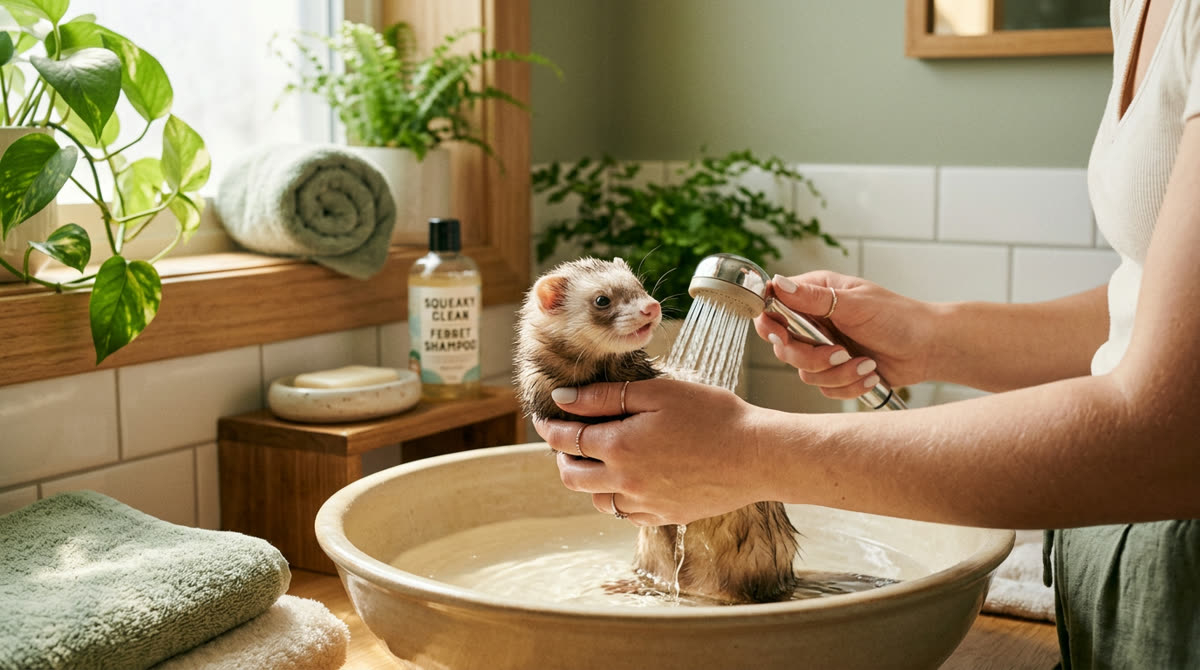
Fill a stable basin or sink with about 1–2 inches (2.5–5 cm) of water, adjusting the depth so your ferret can stand with its feet supported and its head well clear. Aim for approximately 98–102°F (37–39°C), checking with a thermometer and your inner wrist before the animal enters. Warm water limits chilling, but hotter water is not safer or more comfortable just because ferrets normally have a higher body temperature than people. Place the non-slip mat beneath the feet and lower your ferret in gradually, supporting both the chest and hindquarters without squeezing the abdomen. Allow 30–60 seconds to sniff and adjust, keeping a steady hand nearby rather than expecting your pet to swim. Use the cup to wet the shoulders, back, sides, belly, and tail slowly, keeping poured water away from the face and ears. If your ferret repeatedly scrambles, bites in panic, or cannot settle with gentle support, stop the attempt and return to towel drying and spot-cleaning rather than turning the bath into a struggle.
- Check water temperature before entry.
- Keep water shallow enough for standing.
- Support the chest and hindquarters.
- Wet the body slowly, leaving the head dry.
Good to know: Never leave a ferret alone in water, even for a few seconds. Shallow water still poses a risk if an animal slips, becomes exhausted, or cannot climb out.
- 5
Shampoo the body gently and briefly
Once the body is evenly wet, use the smallest amount of ferret shampoo recommended on the label, spreading it between your wet hands before applying it to the coat. If the product does not give a clear quantity, begin with a pea-sized dab for a localized dirty area and add only enough to distribute a light lather where needed. Massage with your fingertips rather than your nails, working along the back and sides before carefully cleaning the belly, feet, tail, and soiled fur around the rear. Keep shampoo away from the eyes, mouth, ear openings, and genital openings, and use a separate plain-water washcloth if the muzzle needs wiping. Do not put cotton swabs into the ears or attempt to express scent glands, since neither task belongs in a routine ferret bath. Follow the shampoo’s directions without extending its contact time, and aim to keep the entire wet portion of an ordinary bath to roughly 5–10 minutes. One gentle wash is usually enough, so resist repeating the shampoo simply because the coat still has a natural musky smell.
Good to know: If shampoo enters an eye, stop washing and gently flush with lukewarm water or sterile saline. Contact a veterinarian if squinting, redness, rubbing, or discomfort persists.
- 6
Rinse thoroughly and respond to distress
Rinse with fresh water at the same comfortable temperature, using small cupfuls rather than a forceful spray that may frighten your ferret or splash the face. Drain or replace soapy standing water while maintaining secure support, so the belly and feet are not repeatedly soaked in shampoo. Work from the shoulders toward the tail, gently lifting a leg only as far as comfortable to rinse the underarms, belly folds, and spaces around the feet. Continue until the water runs clear and the coat no longer feels slippery, then make one additional careful pass over areas where residue commonly collects. Residual shampoo can irritate the skin and be swallowed during grooming, making thorough rinsing more important than producing a rich lather. If mild restlessness develops, simplify your handling and finish rinsing promptly; if there is marked shivering, weakness, or escalating panic, end the bath as quickly and safely as possible. Breathing difficulty, collapse, or persistent coughing after water reaches the face requires immediate veterinary attention rather than observation at home.
- Use fresh, comfortably warm rinse water.
- Check the belly, underarms, feet, and tail.
- Remove all visible suds and slippery residue.
- Stop promptly if chilling or significant distress develops.
Good to know: If your ferret becomes distressed while still soapy, remove the shampoo as quickly as safety allows and begin drying. Do not force an extended rinse during a medical emergency; contact an emergency veterinarian.
- 7
Towel-dry and supervise the post-bath excitement
Lift your ferret out with support beneath the chest and hindquarters, then immediately wrap the body loosely in an absorbent towel while leaving the face uncovered. Blot and gently squeeze moisture from the fur instead of scrubbing hard, which can irritate skin and create tangles in longer coats. Replace the first towel when it becomes damp, paying particular attention to the belly, legs, and base of the tail. Many ferrets rub, roll, and dash about after a bath, so offer two or three dry towels in a warm, ferret-proof floor area and supervise closely. Avoid a hair dryer, since concentrated heat, noise, and airflow can cause burns or stress, and never place a damp ferret directly on a heating pad. Keep your pet indoors and away from drafts until the coat is dry down to the skin, checking beneath the surface fur every 5–10 minutes rather than relying on a fixed drying time. If shivering persists despite gentle towel drying in a warm room, or your ferret becomes unusually quiet, weak, or unresponsive, contact a veterinarian urgently.
- Support the whole body during lifting.
- Blot with towels rather than rubbing vigorously.
- Replace damp towels promptly.
- Supervise rolling and running in a safe area.
- Check that the undercoat and belly are dry.
Good to know: Do not return a damp ferret to an outdoor enclosure or a chilly room. Long-haired coats can feel dry on the surface while remaining wet underneath.
- 8
Maintain the coat without frequent baths
Between baths, brush most short-haired ferrets once or twice a week for about 3–5 minutes, increasing to brief daily sessions when seasonal shedding becomes noticeable. Long-haired ferrets may need gentle daily attention to the underarms, belly, and rear, where friction and soiling can create tangles. Use a soft brush or veterinarian-recommended grooming tool, and avoid aggressive scraping with sharp deshedding blades that can damage delicate skin. Finish by wiping loose hairs from the coat with a barely damp cloth, which reduces the amount available to swallow during self-grooming without stripping skin oils. Feed a complete diet appropriate for ferrets and provide constant access to fresh water, but do not add coat supplements, oils, or hairball products without veterinary advice. Contact a veterinarian for persistent dandruff, greasy patches, sores, excessive scratching, or hair loss, especially if thinning progresses beyond an ordinary seasonal shed. Repeated vomiting or retching, refusal to eat, abdominal discomfort, or reduced stool production needs urgent veterinary assessment because grooming-related hair ingestion is not the only possible cause and a blockage must not be managed with home remedies.
Good to know: A quick weekly photograph in similar lighting can help you track a thinning patch or skin change. Share the images with your veterinarian rather than trying new shampoos to treat the problem.
- 9
Refresh the habitat and check the skin afterward
Return your fully dry ferret to a habitat with clean hammocks, blankets, and sleeping pouches so the freshly cleaned coat does not immediately pick up old urine or accumulated oils. Launder bedding about once a week, or sooner when soiled, using an unscented detergent, a thorough rinse, and complete drying before reuse. Remove litter-box waste at least daily and wipe dirty hard surfaces with a pet-appropriate cleaner used according to its label, keeping your ferret away until surfaces are rinsed if required and fully dry. Avoid perfume sprays, fragranced coat wipes, and room deodorizers intended to mask musk, because they do not address the source of odor and may irritate sensitive skin or airways. Over the next 24–48 hours, watch for increased scratching, redness, flaking, unusual tiredness, or changes in eating and drinking, and contact your veterinarian if these appear or persist. Note the bath date, the shampoo used, and any reaction so you can avoid repeating a product that may have caused irritation. For future ferret coat care, let actual soiling determine whether another bath is needed, with brushing, spot-cleaning, and habitat hygiene doing most of the routine work.
- Provide clean, completely dry bedding.
- Scoop litter and remove waste daily.
- Watch the skin and behavior for 24–48 hours.
- Record the shampoo and any reaction.
- Schedule future baths only when needed.
Ask about this guide
Leave a comment or a question about your own pet and the Pawlito assistant replies right away with practical next steps.