How to Bathe a Dog That Hates Water
Turn bath time from a battle into a calm routine with gradual desensitisation, the right setup and plenty of rewards.
- Written by
- Pawlito Editorial Team · AI-assisted guide
- Professional review
- Not yet reviewed by a veterinarian
- Published
- Last updated
In this guide (8 steps)
Step 1: Understand the fear before you start
Dogs hate baths for good reasons: slippery surfaces, the sound of running water, past bad experiences or simply the loss of control. Forcing a frightened dog into the bath makes the fear worse every time. The goal is to change how your dog feels about the whole process, not just to get them clean once. Plan for several short practice sessions before the first real bath.
Step 2: Make the bathroom a happy place
Start by feeding treats in the bathroom with no water involved at all. Let your dog explore the empty tub or shower tray, scattering treats inside it. Do this daily for several days until your dog walks in willingly. Add a non-slip mat to the tub right away — secure footing alone reduces fear dramatically.
Good to know: A lick mat smeared with peanut butter stuck to the wall at head height keeps dogs happily occupied.
Step 3: Introduce water gradually
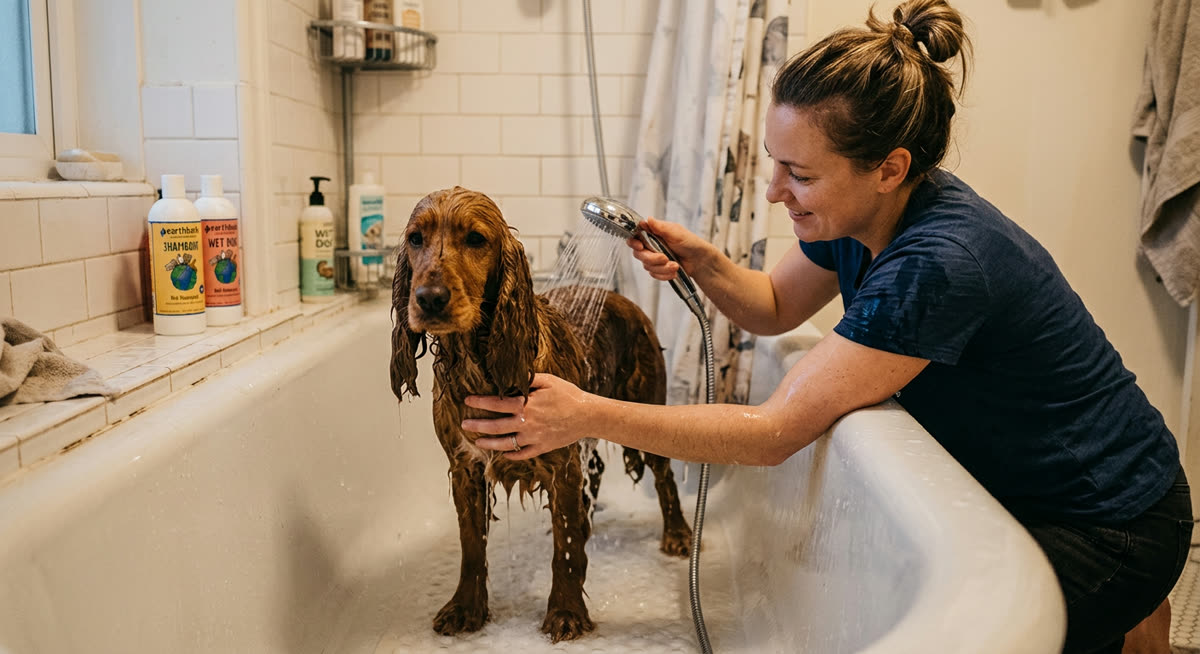
Once the tub itself is fine, run a trickle of water nearby while feeding treats, without wetting the dog. Next, wet just the paws, then the legs, rewarding at each stage. Use a handheld shower head on a gentle setting or a jug — the noise of a strong spray frightens many dogs. Keep the water lukewarm, around body temperature.
Step 4: Choose the right products and setup
Use a dog-specific shampoo, since human products upset the skin's pH balance. Have everything ready before your dog gets in: shampoo, towels, treats and a jug or shower attachment. Place a towel on the floor for after the bath. Keep the room warm so your dog does not get chilled.
- Dog shampoo, never human shampoo
- Two large towels within reach
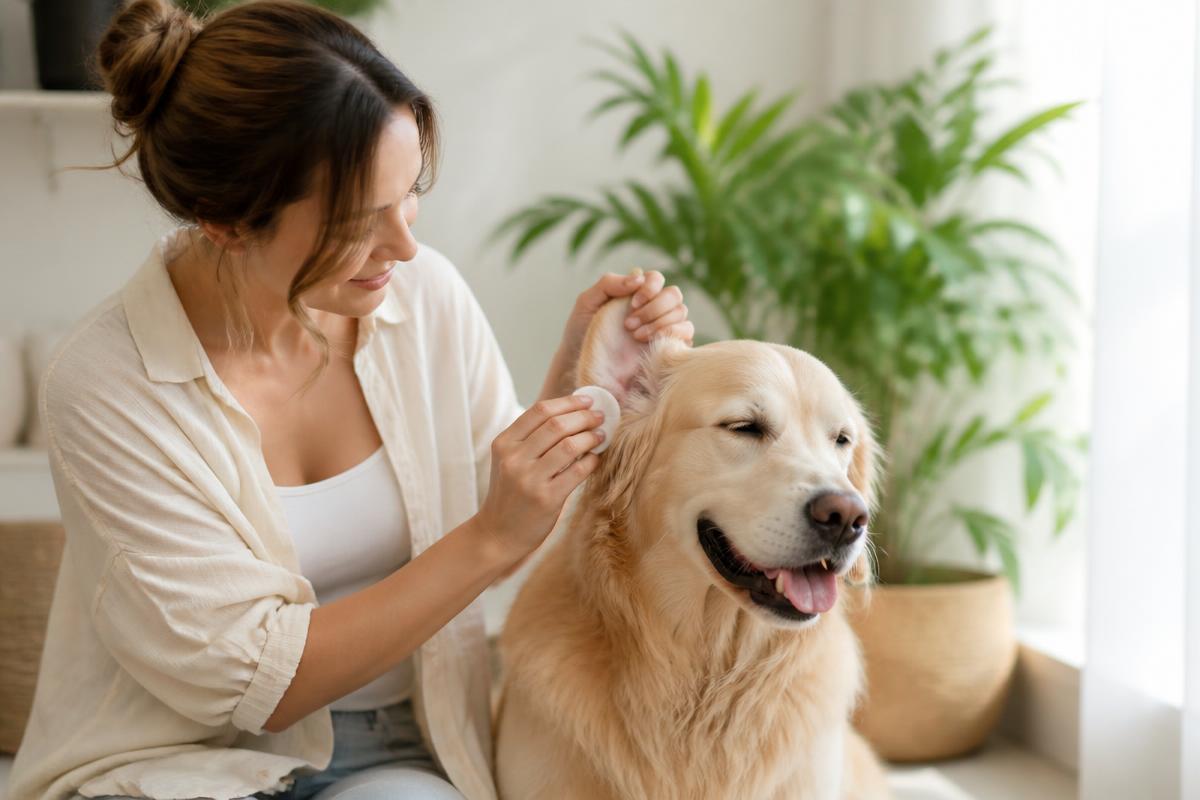
- Cotton wool balls to keep water out of ears
Step 5: Wash calmly and efficiently
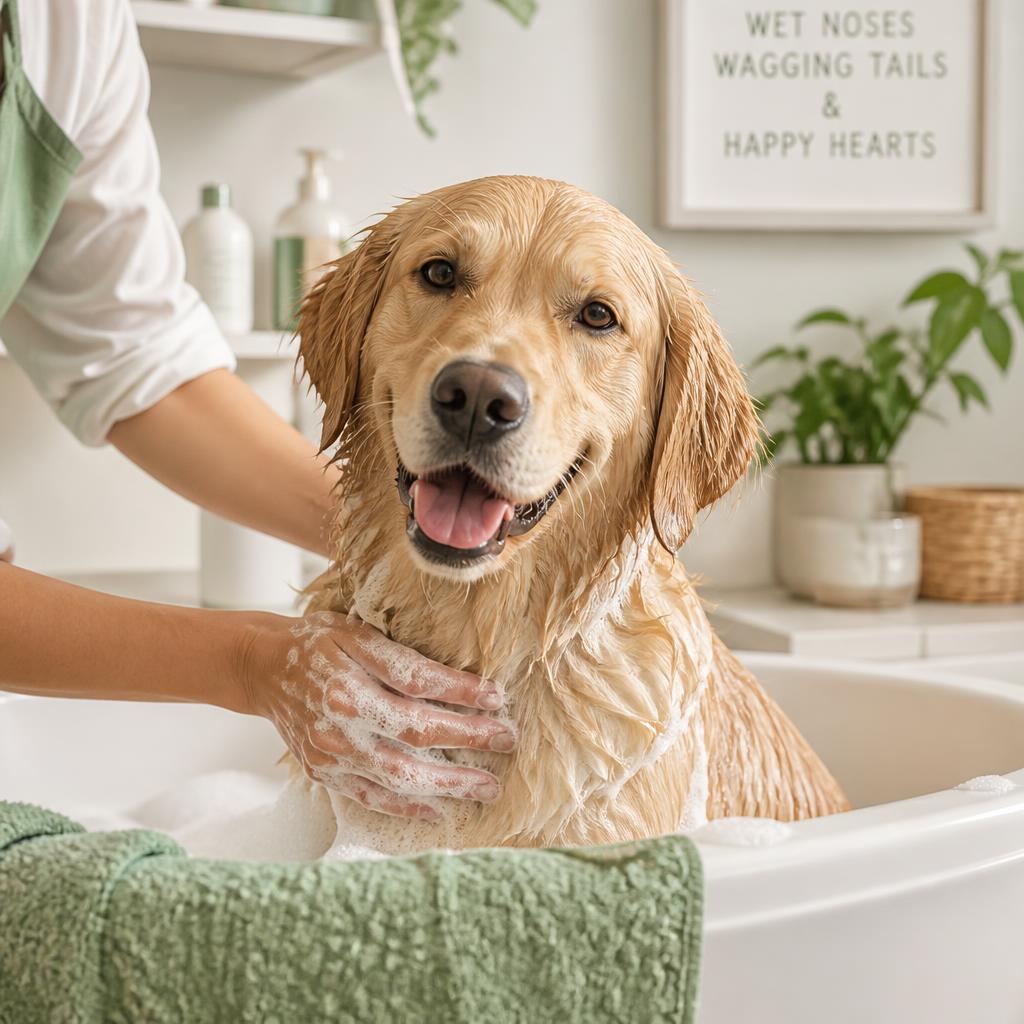
Wet the body first, avoiding the head, then lather gently and rinse thoroughly — leftover shampoo irritates skin. Speak in a calm, cheerful voice throughout. Clean the face with a damp cloth rather than pouring water over the head. Keep the first few baths short, even if the result is not perfect.
Step 6: Dry without drama
Many dogs fear hairdryers, so towel-dry thoroughly first. If you use a dryer, choose the lowest heat and speed setting and keep it at a distance, rewarding calm behaviour. Let your dog shake — it is natural and removes most of the water. Keep your dog in a warm room until fully dry, especially in winter.
Step 7: Troubleshoot common bath problems
If your dog panics, stop and go back to an earlier, easier step the next day. For dogs who try to jump out, a helper feeding treats keeps them anchored. If your dog is genuinely terrified, a professional groomer with experience in fearful dogs can help while you continue home practice. Never punish fear — it confirms the dog's belief that baths are terrible.
Step 8: Build a long-term routine
Most dogs need a bath every four to eight weeks, though muddy paws can be rinsed more often. Regular short, positive sessions work better than rare dramatic ones. End every bath with a favourite treat or game so the last memory is a good one. Over months, most dogs go from hating baths to tolerating them calmly.
Good to know: Brush your dog before the bath to remove loose hair and mats — wet mats tighten and become painful.
This guide was drafted with AI assistance and published by the Pawlito team. It has no formal source list yet. Spotted an error? Tell us and we'll correct it. Read our editorial policy.
Ask about this guide
Leave a comment or a question. Comments are public, so use a first name only and don't include emails, phone numbers or addresses. An automated assistant may reply straight away with general suggestions — it can't diagnose your pet.