How to Brush Out a Double-Coated Dog and Reduce Shedding
Build a gentle dog shedding brushing routine that removes loose undercoat, protects healthy fur, and keeps your home cleaner.
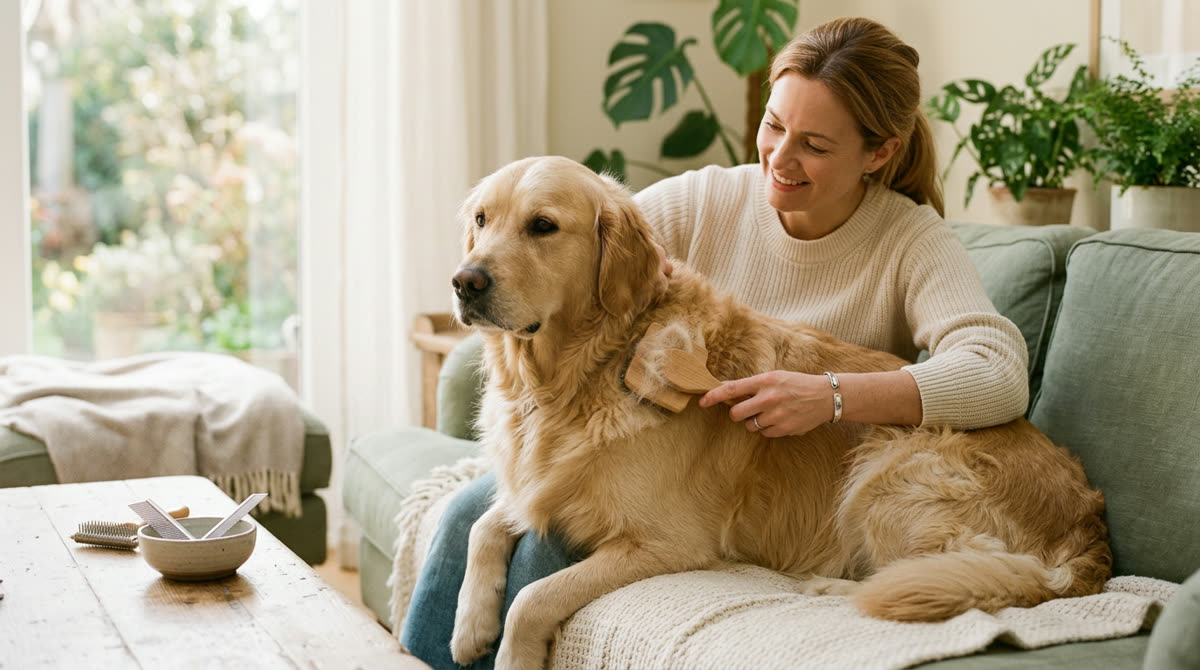
A calm, safety-first approachThis guide provides general education. Contact your veterinarian when symptoms are painful, persistent, or unusual.
- 1
Check the Coat and Skin Before Brushing
Before brushing a double-coated dog, spend 2–3 minutes checking the coat so you can distinguish ordinary loose undercoat from tangles or skin problems that need a different approach. A double coat has an outer layer of protective guard hairs and a softer, insulating undercoat; brushing should remove shed hair without stripping out healthy fur. Part the coat with your fingers at the shoulders, chest, flanks, rump, and behind the ears, looking for redness, sores, crusts, parasites, or tightly felted patches. Loose undercoat often lifts away in soft tufts, whereas a mat forms a compact clump that does not separate easily and may pull on the skin when moved. Stop and contact a veterinarian if you find painful skin, open wounds, unusual odor, bald patches, or excessive scratching, because grooming cannot address the underlying cause. If the coat is packed so densely that you cannot part it to see the skin, arrange an assessment with an experienced double-coat groomer rather than trying to force a brush through it. Take a quick photograph of any concerning area for your veterinarian and postpone brushing that spot until you have guidance.
- Check behind ears and beneath the collar.
- Inspect armpits, belly, and rear feathering.
- Look for redness, sores, or bald patches.
- Identify loose tufts versus tight mats.
Good to know: Heavy shedding alone does not establish that a dog has a skin problem, but shedding accompanied by discomfort or visible skin changes warrants veterinary advice.
- 2
Choose Tools That Preserve the Double Coat
For most medium- or long-haired double coats, assemble a soft or flexible-pin slicker brush, a rounded-tooth undercoat rake without cutting blades, and a metal comb with wide and narrow tooth spacing. Match the rake’s tooth length to the coat: it should reach through the undercoat without digging into the skin, and longer teeth are not automatically better. A short, dense double coat may respond better to a soft rubber grooming brush followed by a suitable comb than to the tools used on a heavily feathered dog. Test the brush lightly against your inner forearm and inspect it for bent pins, sharp edges, or damaged tooth tips before using it. Add a dog-specific detangling or grooming spray, several pea-sized treats, a towel, and a nonslip mat, following any product directions about application and drying. Avoid scissors, household hairbrushes, and aggressive bladed deshedding tools for routine brushing, since they can injure skin or cut healthy guard hairs when used incorrectly. The goal of a dog shedding brushing routine is controlled removal of already-loose fur, not producing the largest possible pile of hair.
- Flexible slicker or coat-appropriate rubber brush.
- Rounded, non-cutting undercoat rake.
- Metal finishing comb.
- Dog-specific grooming spray and small treats.
Good to know: Do not shave a double-coated dog simply to control shedding or summer heat; shaving removes protective hair and can lead to uneven regrowth. Ask your veterinarian about situations in which clipping is medically necessary.
- 3
Set Up a Calm, Nonslip Grooming Space
Choose a quiet, well-lit area with a washable floor, comfortable room temperature, and enough space to reach both sides of your dog without twisting their legs or neck. Place a rubber-backed mat or folded towel underfoot, and brush large dogs at floor level rather than lifting them onto an unstable table. Remove the collar or harness only in a securely enclosed space, since straps hide friction-prone areas and loose hair can collect beneath them. Let your dog sniff each tool, then pair one or two gentle strokes over the shoulder with a small treat before gradually extending the brushing interval. For a puppy, nervous dog, or first session, aim for just 2–5 minutes; a dog already comfortable with grooming may tolerate a 10–15-minute session with breaks. Watch for repeated head turns toward the brush, lip licking, a tucked tail, freezing, or attempts to leave, and pause instead of holding the dog down. Short, predictable sessions help prevent brushing from becoming a struggle, which makes regular undercoat maintenance more effective than an occasional prolonged grooming session.
- Use secure footing and good lighting.
- Keep tools and rewards within reach.
- Start with a comfortable shoulder area.
- Pause before your dog becomes overwhelmed.
Good to know: If your dog growls, snaps, or suddenly reacts to brushing that was previously comfortable, stop. Pain should be assessed by a veterinarian, and persistent handling concerns may need professional behavior support.
- 4
Brush the Undercoat in Small Sections
Start with a dry coat and, if the product label recommends it, apply a light mist of dog-specific grooming spray rather than soaking the fur. On medium- and long-haired dogs, use line brushing: gently lift a layer of hair with one hand and brush a narrow strip beneath it, working through sections roughly 1–2 inches wide. Begin near the lower shoulder or flank and move upward section by section, keeping each brush stroke in the direction the hair naturally grows. If a section has resistance near the ends, work through those ends first, then gradually begin your strokes closer to the skin rather than dragging from the roots through a snag. Use light pressure and a relaxed wrist, keeping the brush face aligned with the body instead of angling its pins into the skin. Follow with a few gentle passes of the rounded-tooth rake where the undercoat is thick, especially over the shoulders, sides, and rear quarters, but stop if the tool catches or your dog flinches. Clear collected fur from the tools whenever it blankets the pins, and move on once the section feels airy and the tool travels easily rather than brushing until no more hair appears.
Good to know: Repeated passes over one spot can cause brush irritation even when you never see a cut. Pinkening skin, tenderness, or a dog repeatedly turning toward the same area means it is time to stop.
- 5
Comb Gently and Handle Tangles Conservatively
After brushing each body section, check it with the wide-toothed side of a metal comb, sliding gently from near the skin toward the ends without forcing the teeth through resistance. A comb that glides comfortably helps confirm you reached the undercoat instead of merely smoothing the guard hairs on top. Behind the ears, under the front legs, around the collar line, and along rear feathering, use smaller sections of about ½–1 inch because these friction areas tangle easily. For a small, loose tangle, apply a dog-specific detangler as directed, support the hair between the tangle and skin, and separate the outer edges with your fingers before trying the comb again. If the tangle remains tight after a brief, gentle attempt, sits against the skin, or causes discomfort, leave it for a professional groomer rather than pulling harder or sawing through it with a dematting blade. Keep rakes and firm slicker pressure away from the face, genitals, nipples, and other delicate areas, using your fingers or a suitable gentle comb only where your dog is comfortable. Never cut a mat out with scissors, because skin can be drawn into the clump and may be impossible to distinguish from hair.
Good to know: Extensive matting, urine- or feces-soiled mats against the skin, or mats associated with sores need prompt professional attention. Contact a veterinarian when pain, inflammation, or wounds are present.
- 6
Bathe Only When Needed and Dry Thoroughly
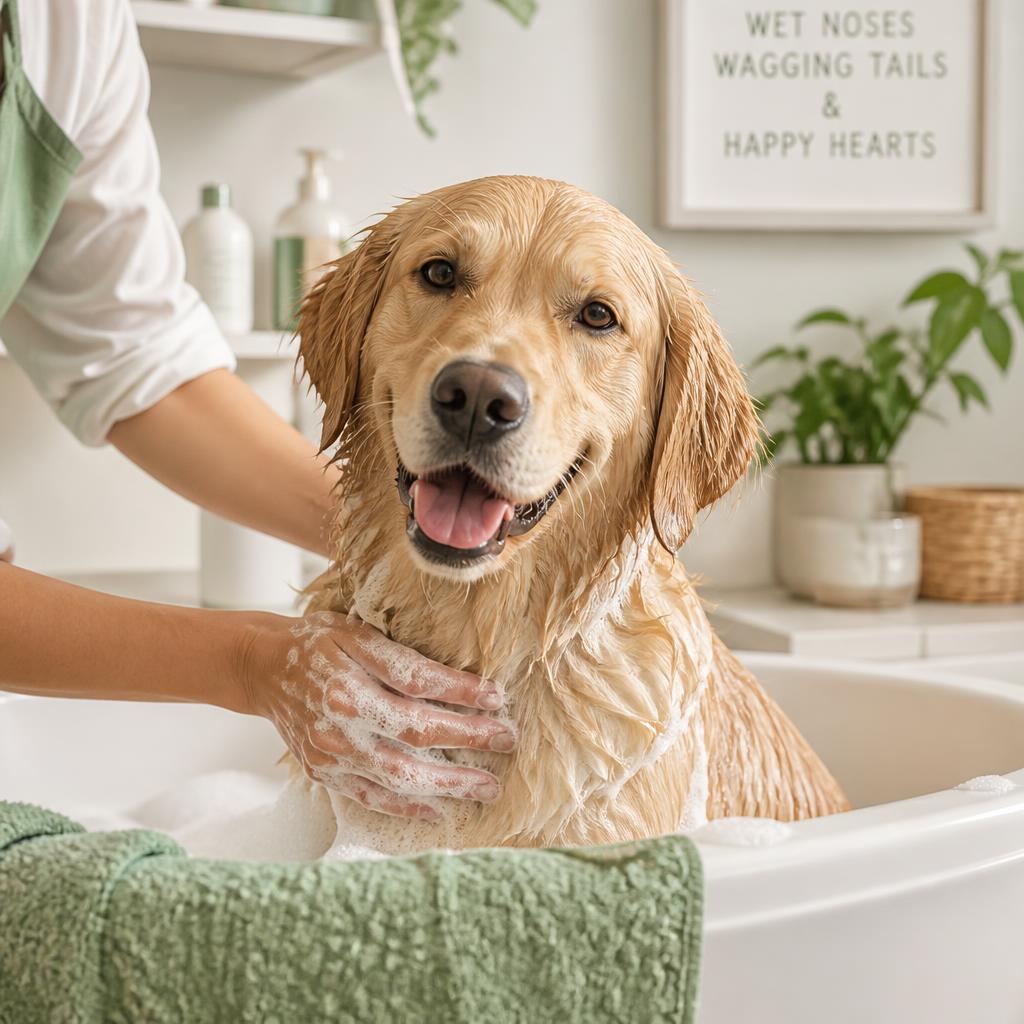
Bathing can help release loose undercoat during a seasonal shed, but it is optional and should follow removal of manageable tangles because washing can tighten existing mats. If your dog is dirty or due for a bath, use lukewarm water and a dog-formulated shampoo, following the label for dilution, contact time, and rinsing rather than substituting human shampoo or dish detergent. Work the cleanser through the coat with your fingers without scrubbing the hair into knots, and keep water and products away from the eyes and ear canals. Rinse systematically over the neck, chest, belly, legs, and rear until the water runs clear and no suds or slippery shampoo residue remain, since trapped product can irritate skin. Press water out with towels instead of rubbing vigorously, then dry the undercoat completely with a dog grooming dryer on an unheated or low-heat setting if your dog tolerates it. Keep the nozzle moving, check the air temperature against your hand often, and avoid directing airflow into the face, ears, or genitals; stop if your dog becomes distressed or too warm. Once the coat is dry down to the roots, perform a brief, gentle brush-and-comb check, or book a professional bath and blowout if the coat is too dense to dry safely at home.
- Remove manageable tangles before wetting.
- Use dog shampoo according to its label.
- Rinse beneath dense chest and belly fur.
- Check that the undercoat is fully dry.
Good to know: Never leave a dog unattended with a dryer or use a heated enclosed drying setup at home. A high-velocity dryer can be loud and powerful, so introduce it gradually or leave its use to a groomer.
- 7
Adjust the Routine to Seasonal Shedding
As a starting point, brush a comfortable, tangle-free double coat 2–3 times a week, adjusting the frequency to coat length, density, lifestyle, and your dog’s response. During a seasonal coat blow, try gentle 5–10-minute daily sessions instead of one exhausting weekly effort, dividing a large dog into shoulders and chest one day and flanks and rear quarters the next if necessary. Many double-coated dogs shed more noticeably in spring and fall, although indoor lighting, climate, and individual coat cycles can produce year-round shedding. If hair still comes out after several passes but the comb moves freely and the skin looks comfortable, end the session rather than repeatedly scraping the same area. When the brush removes little fur yet the coat still feels dense or clumpy, recheck your section size and tool suitability; surface-only brushing often misses shed undercoat trapped underneath. If sections remain inaccessible, tangles quickly return, or sessions routinely require restraint, ask a groomer experienced with your dog’s coat type to demonstrate technique and recommend an individualized maintenance schedule. Expect less loose hair around the house with consistent double-coat brushing, but not a completely shed-free dog, because normal hair replacement continues between grooming sessions.
- Begin with 2–3 brushing sessions weekly.
- Use shorter daily sessions during coat blow.
- Rotate body areas when your dog needs breaks.
- Stop once the coat is loose and combable.
- 8
Check Comfort and Track Changes After Grooming
Finish each session with a treat, access to fresh water, and a quick skin check over the areas you brushed most, noting redness, tenderness, or new licking. If irritation appears, stop grooming the affected area and contact your veterinarian if it persists, worsens, or is accompanied by pain, swelling, or broken skin; do not apply human creams or medicated products without veterinary guidance. Remove fur from brushes and combs after every use, clean them according to the manufacturer’s directions, and let them dry fully before storage so damp debris does not accumulate between the pins. Vacuum the grooming area and wash bedding according to its care label, often weekly during heavy shedding, to remove hair that brushing has already loosened. Support normal coat maintenance with a complete and balanced diet appropriate for your dog’s life stage and regular parasite prevention discussed with your veterinarian, rather than relying on supplements marketed as shedding cures. Keep a simple weekly note of brushing time, tangles, itching, and any change in shedding, since a sudden increase compared with your dog’s usual pattern is more informative than the size of one fur pile. Arrange veterinary advice for persistent or unexplained heavy shedding, bald patches, excessive licking, scabs, odor, or changes in thirst, appetite, energy, or weight instead of trying to solve these changes with more aggressive brushing.
Good to know: Bring your grooming notes and photographs to a veterinary appointment if coat changes develop. They can help show when the change started and whether it progressed despite a gentle, consistent routine.
Ask about this guide
Leave a comment or a question about your own pet and the Pawlito assistant replies right away with practical next steps.