How to Build a Backyard Sniff Trail for Your Dog
Create a rewarding backyard sniff trail with safe food finds, simple scent games, and easy adjustments for your dog’s confidence.
- Written by
- Pawlito Editorial Team · AI-assisted guide
- Professional review
- Not yet reviewed by a veterinarian
- Published
- Last updated
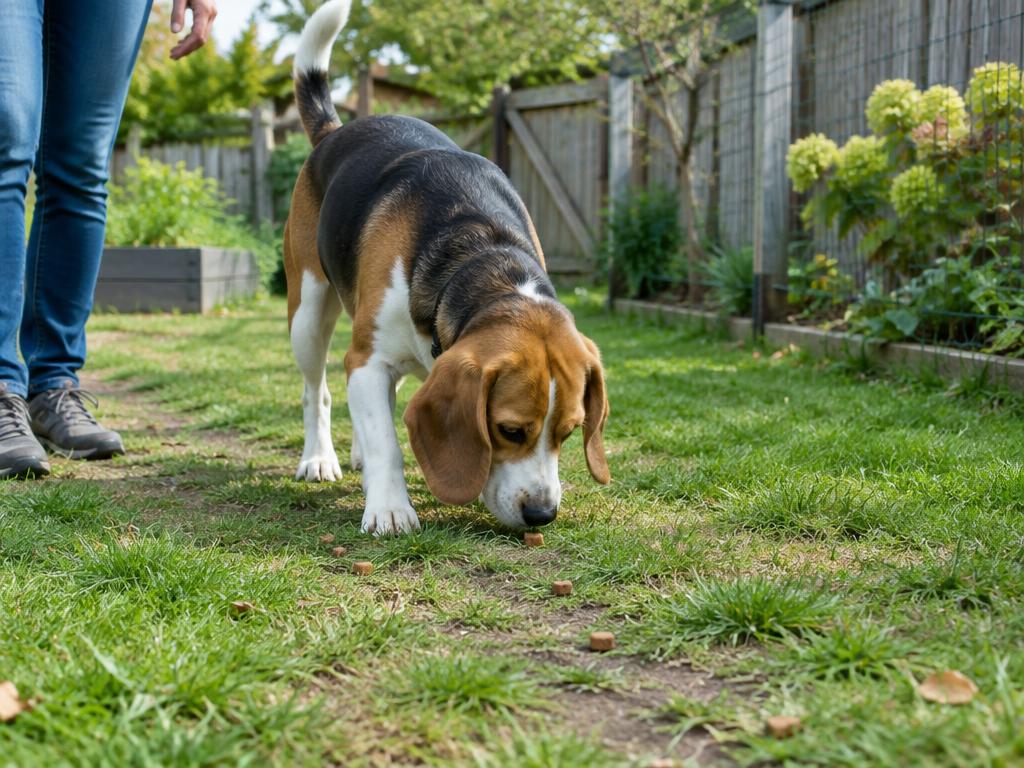
In this guide (7 steps)
Step 1: Inspect the search area first
Choose a quiet, enclosed section of your yard and inspect it at your dog's nose level. Remove sharp objects, mushrooms, fallen fruit pits, animal waste, and anything your dog might swallow. Avoid recently treated lawns, fertilizer, slug bait, and unknown plants. Check gates and keep other pets separate. Begin on short grass or a clean patio where rewards are easy to locate.
Good to know: For dogs that eat stones or mulch, use supervised searches in sturdy shallow dishes rather than scattering food.
Step 2: Choose rewards and simple equipment
Set aside a small portion of your dog's normal food or tiny treats that suit their usual diet. Count these rewards toward daily intake. Bring water and sturdy washable dishes if you want defined stations. Skip essential oils, perfumes, and concentrated scent products; a food trail needs none of them. Keep packaging and the spare reward supply out of reach.
- Choose small, easily chewed food pieces.
- Avoid skewers, string, wrappers, and sharp-edged containers.
Step 3: Lay a short and obvious trail
Begin with a straight trail only a few steps long. While your dog waits comfortably with another person, place several food pieces at close intervals. Make the first especially easy to see and finish with a small cluster rather than an oversized meal. Do not drag food over rough ground or leave meat juices behind. The rewards themselves provide the scent.
Good to know: If waiting causes distress, let your dog watch you place the first pieces and begin immediately.
Step 4: Let your dog control the search
Bring your dog to the first reward and give one gentle invitation, such as find it. Stand back rather than steering every movement. Allow sniffing, circling, and returning to earlier spots at their own pace. If a leash is necessary, attach it to a harness and keep it loose without tangling around furniture. Quiet observation is more helpful than repeated pointing or pulling.
Step 5: Increase difficulty in small increments
After several easy successes, widen the gap between a few rewards or add one gentle turn. Keep most of the trail familiar while changing a single feature. Later, place food in an open dish partly sheltered by grass. Do not hide it under heavy objects or inside anything your dog could shred and swallow. Return to an obvious route if searching becomes frantic.
- Change spacing, length, or hiding depth one at a time.
- Keep rewards reachable without jumping or squeezing into gaps.
Step 6: Adapt to weather and mobility
Choose cool conditions and avoid hot paving, ice, thunderstorms, and weather your dog finds uncomfortable. Wind can move odors away from food, so shorten the trail on breezy days. Older dogs and those with limited mobility may need level ground and closely spaced stations. Offer water and pause if your dog pants heavily, slows down, or seeks shade. Sniffing should not become an endurance task.
Good to know: A two-minute trail can be worthwhile; finish while your dog remains comfortable and interested.
Step 7: Finish calmly and collect leftovers
End with an easy final find, use a consistent phrase such as all done, and move to another activity. Walk the route to collect uneaten food, dishes, and equipment. Leftovers can attract wildlife, insects, and other pets or spoil outdoors. Note which surfaces and spacing worked best. In multi-dog homes, offer separate turns to reduce competition over scattered food.
This guide was drafted with AI assistance and published by the Pawlito team. It has no formal source list yet. Spotted an error? Tell us and we'll correct it. Read our editorial policy.
Ask about this guide
Leave a comment or a question. Comments are public, so use a first name only and don't include emails, phone numbers or addresses. An automated assistant may reply straight away with general suggestions — it can't diagnose your pet.