How to Car Travel Safely With Your Dog
Make every car journey calmer and safer for your dog with practical advice on restraints, rest stops, travel sickness and emergencies.
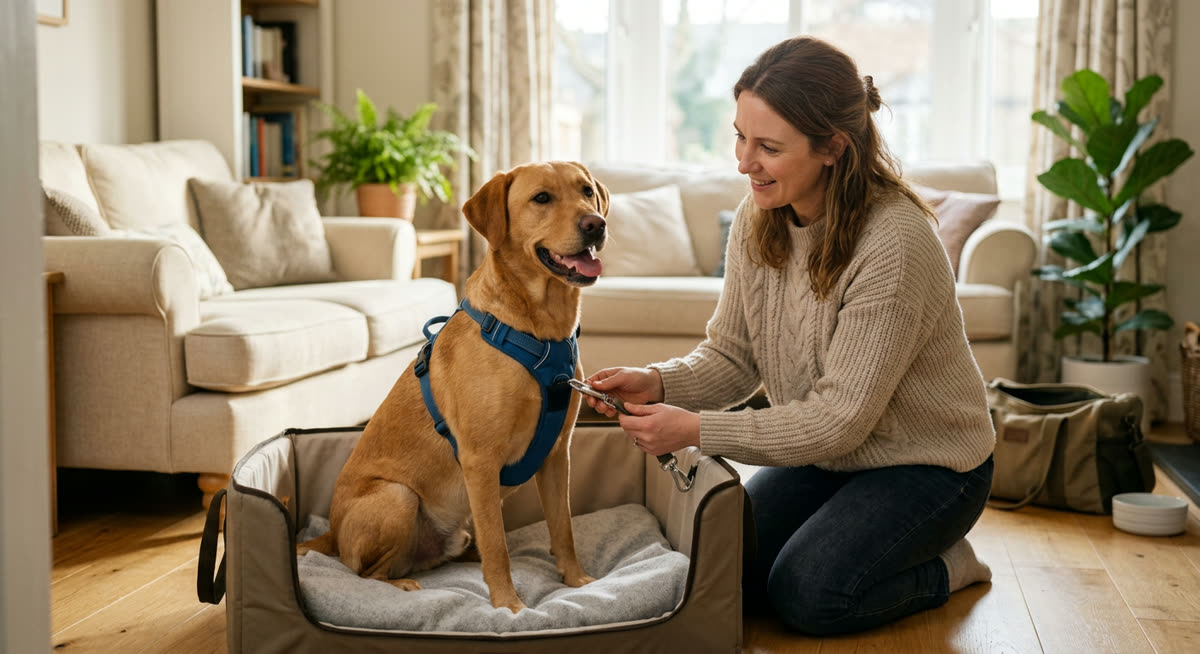
A calm, safety-first approachThis guide provides general education. Contact your veterinarian when symptoms are painful, persistent, or unusual.
- 1
1. Plan the journey around your dog’s needs
Before setting off, consider your dog’s age, mobility, health and experience of travelling, and choose the shortest practical route with safe stopping places. Contact your vet before a long journey if your dog is unwell, recovering from surgery, pregnant or regularly distressed by car travel. Plan a break roughly every two hours, allowing more frequent stops for puppies, older dogs and any dog that needs extra toilet or comfort breaks. In warm weather, travel during cooler parts of the day where possible, but do not rely on the time of day alone to keep the vehicle comfortable. Check that your dog’s microchip contact details are current and that their collar carries an identification tag with your name and address, as generally required in public places in the UK. Save your usual vet’s number and the details of an emergency practice near your destination so you can find help quickly.
- Choose safe, dog-friendly stopping places
- Check identification and microchip details
- Save veterinary contact numbers
- Allow time for extra breaks
Good to know: Download your route and veterinary contact details before travelling through areas with unreliable mobile coverage.
- 2
2. Choose a suitable restraint
Use a properly fitted car harness, securely anchored travel crate or suitable carrier so your dog cannot distract the driver or move freely around the vehicle. The Highway Code says dogs should be suitably restrained, but restraint products vary in the protection they offer during a collision. Look for independent crash-test evidence relevant to your dog’s weight and the exact product model, rather than relying on a general claim that an item is crash-tested. Fit a travel harness around the chest and body according to its instructions, and never attach a vehicle restraint to your dog’s collar. Choose a crate that allows your dog to stand naturally, turn around and lie down comfortably, then secure it using the attachment method specified by its manufacturer. A dog guard can help prevent access to the passenger area, but it does not necessarily protect the dog in a crash and should not be treated as equivalent to a crash-tested restraint.
- Check the product’s weight and size limits
- Follow the specified fitting instructions
- Inspect straps, stitching, clips and anchors
- Never use a collar as a restraint attachment
Good to know: Check compatibility with your car before buying, because a restraint is only useful when it can be installed correctly.
- 3
3. Prepare a secure, comfortable travel space
Position your dog on a rear seat or, for a suitably secured crate, in a ventilated luggage area that is open to the cabin, following the vehicle and restraint instructions. Never put your dog in a separate, enclosed boot, and avoid the front passenger seat because an active airbag can cause serious injury. Remove loose objects from the dog’s space and secure luggage so it cannot slide, fall onto the crate or become a projectile during sudden braking. Use a washable, non-slip liner that does not interfere with the harness or crate fittings, and keep ventilation openings clear of bedding and bags. Pack drinking water, a bowl, a lead, poo bags, cleaning supplies and any food needed for the journey in an easily accessible bag. Cool or warm the cabin before loading your dog, and check that air reaches their actual travel position rather than assuming the temperature beside the driver is representative.
- Water and a stable drinking bowl
- Lead, identification tag and poo bags
- Spare bedding and cleaning supplies
- Food and veterinary contact details
- Securely packed luggage
Good to know: Keep the dog’s travel bag separate from your main luggage so you can reach essentials without unpacking beside a road.
- 4
4. Build confidence before a longer trip
Introduce the harness or crate at home first, rewarding your dog for approaching it and settling without forcing them into position. Next, practise sitting in the stationary car with the engine off, keeping sessions brief and staying beside your dog. Once they seem comfortable, secure them correctly and run the engine for a short session in an open-air location, never inside a garage or other enclosed space. Progress to a very short drive with a second adult observing your dog if possible, then gradually increase the duration over several successful sessions. Watch for repeated lip licking, trembling, drooling, panting unrelated to warmth or attempts to escape, and return to an easier stage if these appear. If your dog remains frightened or cannot settle despite gradual practice, ask your vet for advice and discuss whether qualified behaviour support would help.
Good to know: Make some practice drives end at a quiet walking spot so the car does not predict only unfamiliar or stressful destinations.
- 5
5. Load your dog calmly and check every attachment
Before departure, give your dog a relaxed toilet walk and time to settle rather than putting them straight into the car after vigorous exercise. Avoid a large meal immediately before travelling, and ask your vet about suitable feeding arrangements if your dog is very young, has a medical condition or often becomes travel sick. Load from the pavement side wherever possible, keeping your dog on a lead until they are contained or attached to their travel restraint. Use a stable, non-slip ramp for a dog that cannot comfortably get into the car, and do not encourage jumping if it causes hesitation or discomfort. Check that the harness fits as instructed, the attachment is secure, the crate door is latched and no strap can tighten around the neck or become tangled around a leg. Before closing the door, check for trapped paws, tails or leads, then confirm that your dog cannot reach the driver or move into an unsafe position.
- Offer a toilet break before loading
- Load away from passing traffic
- Check harness connections or crate latches
- Keep straps clear of legs and neck
- Check paws and tail before closing doors
- 6
6. Drive smoothly and take controlled rest stops
Accelerate gently, leave extra braking distance and take bends smoothly to reduce sudden movement and help your dog remain balanced. Keep the cabin comfortably cool with air circulating to your dog, and never let them put their head out of a window because debris and sudden movements can cause injury. Keep windows secure against escape and use child locks or window locks where your dog could operate the controls. At planned breaks, park well away from moving traffic, attach a lead before releasing the restraint or opening the crate, and let your dog out under close control. Offer fresh water and a quiet opportunity to toilet and stretch, then collect any waste and check the travel area before continuing. Never leave your dog alone in a parked car, even briefly or with windows open, and arrange human toilet or food stops so someone can stay safely with the dog outside the vehicle.
Good to know: If you are travelling alone, plan stops around places where your dog can accompany you rather than assuming you can leave them in the car.
- 7
7. Respond early to travel sickness or distress
If your dog starts drooling heavily, repeatedly swallowing, whining, trembling or vomiting, find a safe place to stop rather than reaching back while driving. Once parked, check ventilation, restraint fit and whether they need a toilet break, then offer a calm pause away from traffic if it is safe to unload. Do not scold your dog for vomiting or struggling, as these behaviours may reflect discomfort or fear rather than disobedience. Clean soiled bedding once the dog is safely contained elsewhere, and replace it with a dry liner before considering whether to continue. Contact your vet if signs recur, vomiting is repeated, your dog seems unusually quiet or uncomfortable, or you are unsure whether continuing is safe. Do not give human travel-sickness tablets, sedatives or other remedies unless your vet has specifically advised their use for your dog.
- Stop safely before checking your dog
- Check airflow and restraint fit
- Replace wet or soiled bedding
- Seek veterinary advice for recurring problems
Good to know: Record when symptoms start and how long they last so your vet has a useful history when discussing future journeys.
- 8
8. Know what to do in an emergency
Treat heavy or worsening panting, excessive drooling, weakness, confusion or collapse as urgent warning signs, particularly in warm conditions, and stop safely to seek emergency veterinary advice. If overheating is suspected, move your dog to a cooler, shaded place as soon as this is safe and begin cooling immediately while someone contacts a vet, or call on speakerphone if you are alone. Pour water that is cooler than your dog over their body while keeping it away from their nose and mouth, use airflow to support cooling, and do not wrap them in wet towels. Offer drinking water only if they are alert and able to swallow, without forcing them, and follow the vet’s instructions for prompt transport even if they appear to improve. After a collision, contact a vet urgently even if your dog has no obvious injury, and avoid unnecessary handling while keeping them safely contained. If the car breaks down, follow road-service instructions and prioritise human safety; on a motorway, tell the recovery service you have a dog and do not attempt an unsafe roadside unloading.
Good to know: Keep a spare lead accessible from the passenger compartment so you do not need to search through luggage during an emergency.
- 9
9. Help your dog settle and prepare for next time
On arrival, park securely and attach your dog’s lead before opening their crate or disconnecting the travel restraint. Offer a quiet toilet walk and fresh water, then give them somewhere calm to rest away from busy entrances and unfamiliar animals. Check the skin beneath the harness for rubbing and watch for stiffness, limping or reluctance to move, contacting your vet if you notice pain or persistent changes. Let your dog settle before returning to their usual feeding routine, and seek veterinary advice if vomiting, unusual tiredness or distress continues after the journey. Clean and dry the crate, liners and harness according to their care instructions, then inspect all restraint components for damage before storing them. Note which route, break schedule and setup worked best, and keep future practice trips short enough for your dog to build on a comfortable experience.
- Unload on a lead in a secure place
- Offer water, a toilet break and rest
- Check for rubbing or discomfort
- Clean and inspect travel equipment
Ask about this guide
Leave a comment or a question about your own pet and the Pawlito assistant replies right away with practical next steps.