How to Check Your Dog for Fleas
Use a flea comb and a simple paper test to spot fleas early, and know when to talk to your veterinarian.
- Written by
- Pawlito Editorial Team · Pet Care Writers
- Professional review
- Not yet reviewed by a veterinarian
- Published
- Last updated
In this guide (6 steps)
Step 1: Know the signs
Frequent scratching, chewing at the skin, red bumps or hair loss around the tail base can suggest fleas. Some dogs show few signs, so regular checks help.
Step 2: Gather supplies
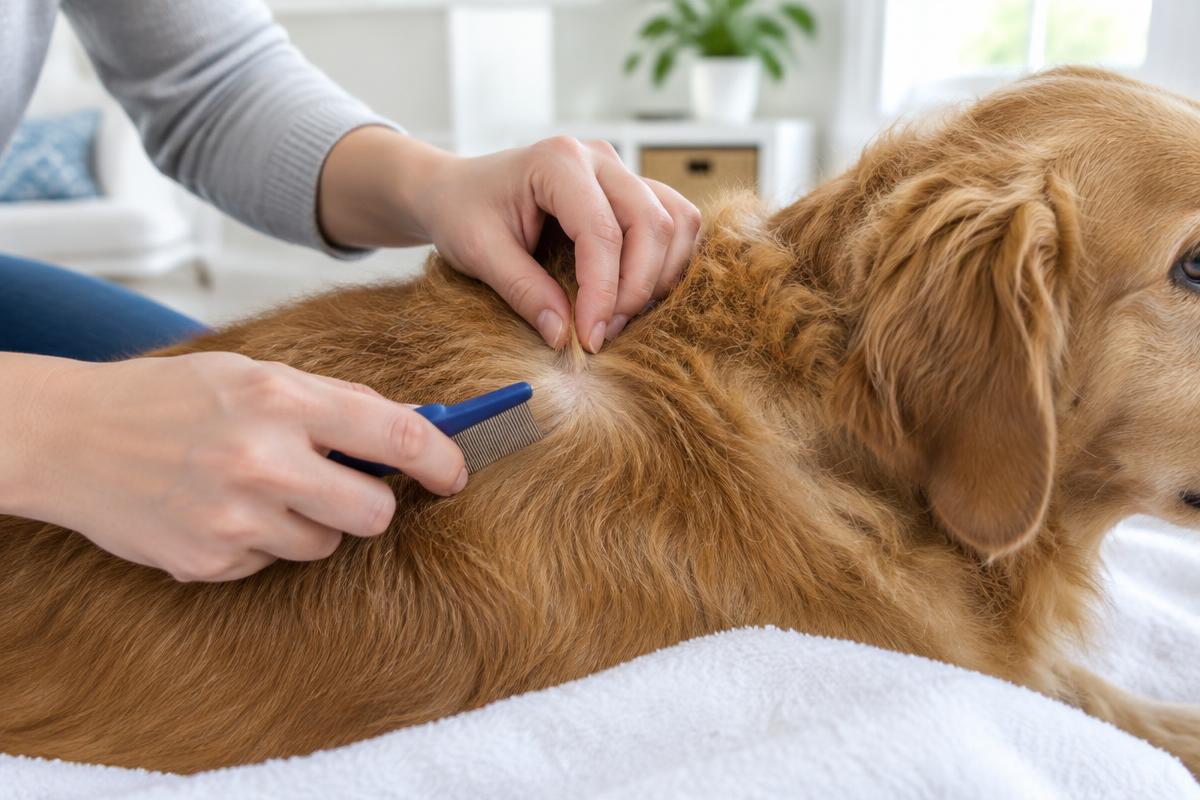
You need a fine-toothed flea comb, a white towel or paper towel, a small bowl of soapy water and treats. Work in good light.
Step 3: Comb key areas
Have your dog stand or lie on the white towel. Comb along the back, the base of the tail, belly and armpits. Dip the comb into soapy water after each stroke to trap anything collected.
Step 4: Do the wet paper test
Tap any dark specks onto damp white paper. Flea dirt turns reddish-brown as it dissolves because it contains digested blood. Ordinary dirt stays dark.
Good to know: Check every pet in the household; fleas easily spread between animals.
Step 5: Talk to your veterinarian
If you find fleas or flea dirt, ask your veterinarian for a suitable treatment for your dog's age, weight and health. Never use cat or dog products on the wrong species.
Step 6: Treat the home too
Wash bedding on a hot cycle and vacuum floors and furniture often. Follow your veterinarian's advice on ongoing prevention.
This guide was drafted with AI assistance and published by the Pawlito team. It has no formal source list yet. Spotted an error? Tell us and we'll correct it. Read our editorial policy.
Ask about this guide
Leave a comment or a question. Comments are public, so use a first name only and don't include emails, phone numbers or addresses. An automated assistant may reply straight away with general suggestions — it can't diagnose your pet.