How to Choose the Right Hamster Wheel
Learn how to choose a hamster wheel with the right size, safe running surface, and stable fit so your hamster can exercise comfortably.
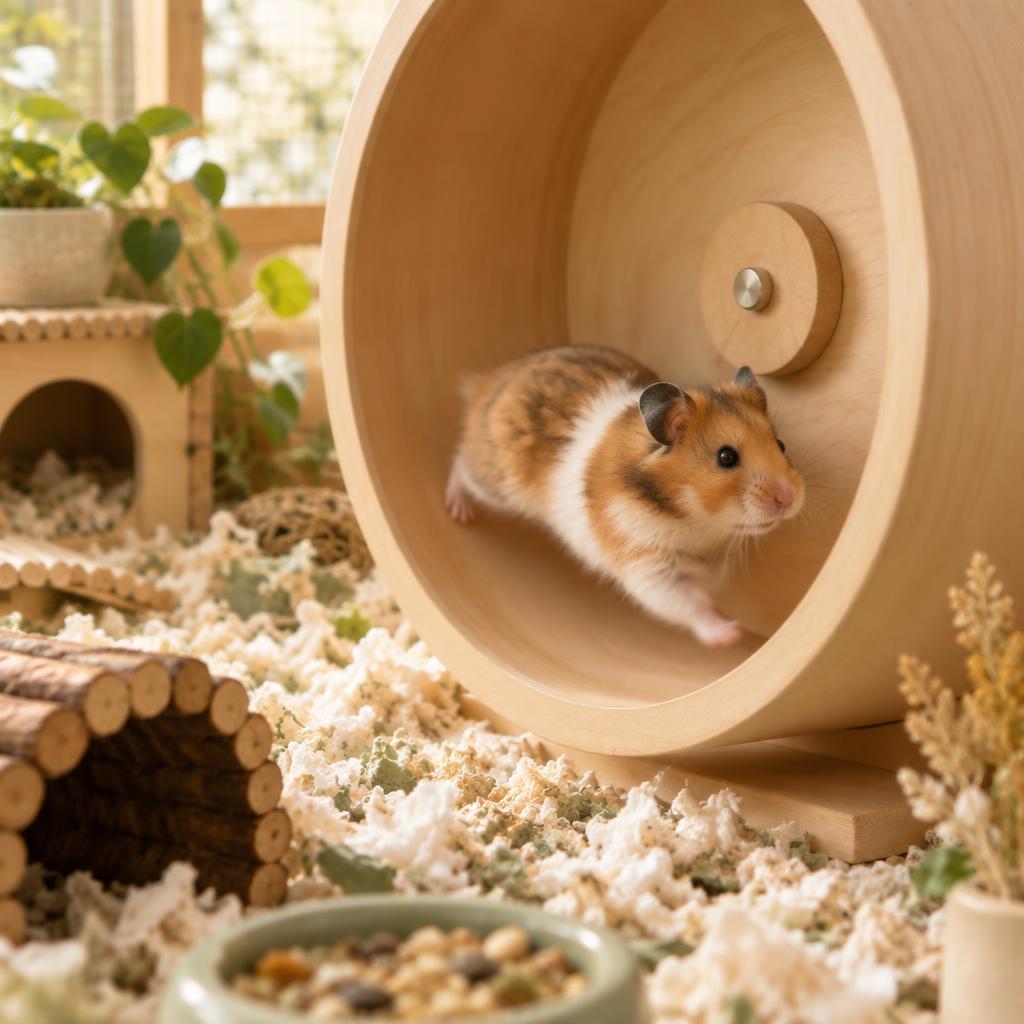
A calm, safety-first approachThis guide provides general education. Contact your veterinarian when symptoms are painful, persistent, or unusual.
- 1
Step 1: Start with your hamster’s size and needs
The best way to choose a hamster wheel is to start with the hamster who will use it, rather than the accessories pictured on the packaging. Syrian hamsters generally need substantially larger wheels than dwarf hamsters, but individuals within the same species also vary in size. Observe your hamster walking naturally and note their approximate body length without stretching, restraining, or waking them for measurements. If your hamster is still growing, plan for their adult size instead of buying a small wheel that will soon need replacing. Age and mobility matter too, because a high entrance or a wheel that takes considerable effort to turn may be difficult for some hamsters. For a hamster with an injury, reduced mobility, or any medical concern, ask a veterinarian experienced with small mammals for guidance before changing their exercise setup. Write down your hamster’s species, approximate size, and any access needs so you can compare products against practical requirements rather than appearance.
- Identify the species
- Allow room for adult growth
- Observe normal movement
- Note any access difficulties
Good to know: A photograph taken through the enclosure while your hamster is naturally active can help you compare body size with a wheel’s usable dimensions.
- 2
Step 2: Choose a diameter that supports a straight back
Look for a wheel large enough for your hamster to run with a comfortably straight back, without being forced into an upward curve or lifting their head awkwardly. As a shopping starting point, Syrian hamsters commonly need an internal running diameter of around 28–30 centimeters or more, and larger individuals may need 30–33 centimeters or larger. Many dwarf hamsters do well with an internal diameter around 20–25 centimeters, but their posture and ability to turn the wheel should guide the final choice. These ranges are not guarantees of fit, and a product labeled for hamsters may still be much too small for your individual pet. Check the internal running diameter rather than assuming that the advertised measurement excludes the frame, stand, or outer rim. When choosing between two sizes, favor the larger suitable option provided it turns easily, remains stable, and fits safely in the enclosure. Confirm the fit after installation by observing actual running, because a size chart cannot show whether your hamster is comfortable in that particular model.
- Check internal running diameter
- Allow a straight running posture
- Watch for an upward-curved back
- Confirm the wheel turns easily
Good to know: Buy from a seller with clear dimensions and a reasonable return policy so you can exchange a wheel that does not suit your hamster.
- 3
Step 3: Inspect the running surface and openings
Choose a wheel with a continuous, solid running surface that supports the whole foot rather than leaving toes to catch in openings. Avoid wire-rung and mesh wheels, even when marketed for small pets, because these surfaces can trap feet and cause injuries. The track should offer enough traction for controlled movement without sharp ridges, abrasive patches, or deep grooves that could catch small toes. Check that the usable running width lets your hamster move comfortably without rubbing against the sides or balancing along a narrow strip. Inspect the entrance, rim, central hub, and accessible moving parts for sharp edges, projecting hardware, or gaps that could trap limbs or fur. Long-haired hamsters need particular attention around exposed axles and hubs, where loose coat may become caught. Choose a conventional upright wheel as the primary running option rather than treating a running saucer as an equivalent replacement, since a saucer can encourage curved running and needs its own careful fit assessment.
- Solid, continuous running track
- Comfortable usable width
- No wire rungs or mesh
- No sharp edges or trapping gaps
- No accessible fur-catching axle
Good to know: Look closely at customer photos of the inside track and hub; promotional images often show the wheel’s color more clearly than its safety details.
- 4
Step 4: Check resistance, balance, and stability
A wheel should move smoothly under your hamster’s effort without sticking, scraping, or rocking from side to side. Before installation, rotate it gently by hand and listen for grinding or repeated rubbing that could indicate a damaged or poorly aligned assembly. Hand testing can reveal obvious problems, but it does not prove that a small hamster will be able to start and control the wheel comfortably. Check that the wheel sits squarely on its axle and that the stand has a broad, secure base rather than relying on lightweight feet that tip easily. For enclosure-mounted models, confirm that the fixing system is compatible with the enclosure and does not leave sharp hardware accessible to your pet. Do not add improvised weights, brakes, or axle modifications to compensate for a wheel that performs poorly, because these can introduce new hazards. Treat quiet operation as a useful bonus rather than the main buying criterion, since a silent wheel is not automatically spacious, stable, or safe.
- Smooth rotation without scraping
- Minimal wobble
- Secure, compatible fixings
- Stable base
- No improvised mechanical changes
Good to know: Keep the receipt and assembly instructions until you have watched your hamster comfortably start, run in, and leave the wheel.
- 5
Step 5: Choose materials you can keep clean
Select a wheel material that you can inspect and clean reliably, especially because some hamsters urinate while running. Smooth, sturdy plastic is often straightforward to wipe down, but damaged plastic must be replaced if chewing creates sharp edges or loose pieces. Wooden wheels can provide a comfortable surface, although untreated wood may absorb urine and become difficult to clean thoroughly. Cork-lined tracks also need regular checks for persistent dampness, lifting edges, chewing damage, and material that no longer dries properly. Follow the manufacturer’s care instructions and avoid adding paints, sealants, adhesives, or household coatings unless their suitability for this specific pet-use application has been established. Favor designs that allow access to the whole track without forcing you to soak bearings or dismantle inaccessible mechanical parts. If a wheel retains strong odor or contamination despite appropriate cleaning, replace the affected part or the whole wheel rather than masking the problem with fragrance.
- Accessible track for cleaning
- Sturdy, intact materials
- No lifting liners or sharp damage
- Clear cleaning instructions
- Replacement parts when available
Good to know: A removable track or replaceable liner can make maintenance easier, but check that replacements are actually available before buying.
- 6
Step 6: Measure the enclosure and install securely
Measure the wheel’s complete installed height, width, and depth, including its stand, mounting hardware, and the space needed for unobstructed rotation. A wheel that fits inside an empty enclosure may not fit safely once bedding, a platform, and the lid are in place. Position a freestanding wheel on a secure, weight-bearing platform or other stable support that cannot shift when your hamster burrows underneath or nearby. Preserve suitable deep bedding elsewhere rather than reducing the whole enclosure’s bedding depth just to accommodate the wheel. Leave clearance around moving parts so the wheel cannot rub against the enclosure, catch bedding, or pinch your hamster against a nearby object. Arrange the entrance for easy access without a steep climb, and avoid raised positions where stepping out could lead to a fall. Check that the wheel and its support do not create an escape route to the lid, vents, or other openings, then test stability again after completing the enclosure layout.
- Measure the full installed footprint
- Use a stable, supported base
- Keep moving parts clear
- Provide easy, low-risk access
- Check for new escape routes
Good to know: Cut a cardboard template of the wheel’s footprint for planning, but remove the template before installing the wheel.
- 7
Step 7: Let your hamster try it without pressure
Introduce the wheel when your hamster is naturally awake and allow them to investigate it at their own pace. Never place your hamster inside and spin the wheel, chase them onto it, or wake them repeatedly to demonstrate how it works. Watch from a little distance so your presence does not discourage a cautious hamster from exploring the new object. During voluntary running, look for a comfortably straight back, an uncramped head position, secure footing, and enough room across the track. Notice whether your hamster can start and stop without repeatedly slipping, struggling, or being carried around by the wheel’s momentum. If the fit or movement looks wrong, remove an unsafe wheel and replace it promptly with a suitable option rather than waiting for your hamster to adapt. Seek veterinary advice if you notice limping, bleeding, persistent difficulty moving, or other medical concerns, and avoid assuming that equipment changes alone will resolve them.
- Allow voluntary exploration
- Observe back and head position
- Check footing and running width
- Watch starts and stops
- Respond promptly to unsafe movement
Good to know: A short video recorded without flash during your hamster’s usual active period can help you review posture without hovering over the enclosure.
- 8
Step 8: Maintain the wheel and reassess the fit
Once the wheel is working well, make a quick daily check for urine, stuck bedding, loose parts, chewing damage, and anything that interferes with rotation. Spot-clean as needed and carry out more thorough cleaning according to the material and manufacturer’s instructions, rinsing away cleaning residue and allowing surfaces to dry completely. Do not spray fragrances, essential oils, or household lubricants onto the wheel, and use only manufacturer-approved maintenance methods that keep substances inaccessible to your hamster. Recheck running posture as a young hamster grows and whenever you change the wheel’s position, stand, or track liner. Keep a safe wheel available during your hamster’s normal active periods rather than removing it simply because nighttime running is inconvenient. Remember that a wheel complements, rather than replaces, a spacious enclosure with deep bedding, hiding places, suitable enrichment, and opportunities to forage. If your hamster’s usual activity changes suddenly or they stop using a previously comfortable wheel, check the equipment and contact a veterinarian about persistent changes or any accompanying signs of illness.
- Check rotation and condition daily
- Clean and dry the running track
- Reassess fit during growth
- Replace damaged components promptly
- Monitor changes in normal activity
Good to know: Keep a brief note of cleaning dates, repairs, and fit checks so recurring problems are easier to spot.



Ask about this guide
Leave a comment or a question about your own pet and the Pawlito assistant replies right away with practical next steps.