How to Clean a Rabbit's Litter Area Daily
Keep your rabbit’s litter area clean, dry and inviting with a gentle daily routine that also helps you spot changes worth discussing with your vet.
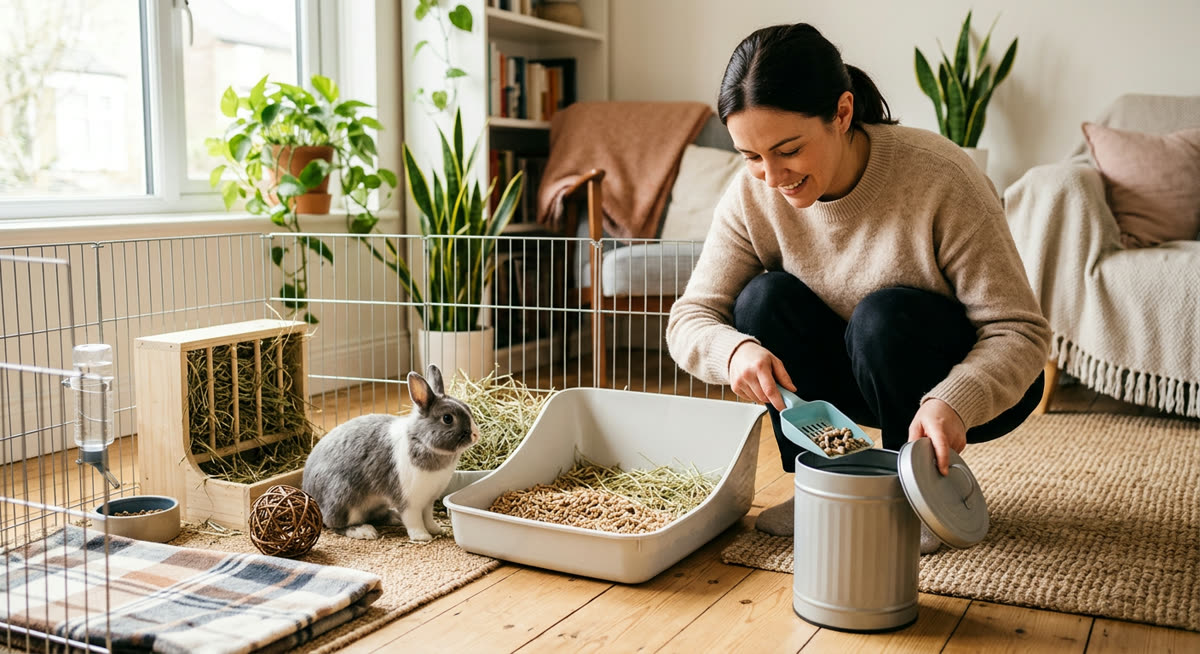
A calm, safety-first approachThis guide provides general education. Contact your veterinarian when symptoms are painful, persistent, or unusual.
- 1
1. Gather your supplies and make the area safe
Set aside a few minutes each day to clean the litter area, ideally at a time when your rabbit is usually relaxed. Gather a litter scoop, rubbish bag, dedicated brush, absorbent cloths and fresh rabbit-safe litter before you begin. Choose unscented, non-clumping paper-based litter, and avoid clay litter, silica crystals, sawdust and aromatic cedar or pine shavings. Have warm water ready, along with a rabbit-safe cleaning product if needed, and check its dilution, contact-time and rinsing instructions. Keep cleaning products, open rubbish bags and buckets where your rabbit cannot reach them. Wear household gloves if you wish, cover any cuts on your hands and plan to wash your hands thoroughly afterwards.
- Dedicated scoop and cleaning brush
- Unscented, non-clumping paper litter
- Warm water and clean drying cloths
- Rabbit-safe cleaner if needed
- Rubbish bag and fresh feeding hay
Good to know: Keep a dedicated cleaning kit beside the enclosure, securely out of reach, so daily maintenance is easy to start.
- 2
2. Check the litter area before disturbing it
Look over the tray before scooping so you can notice changes that cleaning might hide. Compare the number and size of droppings with your rabbit’s usual output, and check whether the amount of wet litter seems noticeably different. Note any loose stool, unusual mucus, suspected blood or uneaten soft caecotrophs, which rabbits normally eat directly from their bottoms. Rabbit urine can vary in colour, so do not try to diagnose a problem from its appearance alone. If your rabbit is eating less, passing fewer or smaller droppings, straining or showing discomfort, contact your vet promptly rather than waiting for the next clean. A rabbit that stops eating or passing droppings, has watery diarrhoea or seems very unwell needs urgent veterinary advice.
- Usual number and size of droppings
- Changes in wet patches
- Loose stool or uneaten caecotrophs
- Appetite, posture and comfort
Good to know: Photograph an unusual finding before removing it so you can show your vet without delaying the clean.
- 3
3. Give your rabbit a calm place to wait
Encourage your rabbit into a familiar, secure part of their enclosure or a rabbit-proofed exercise area while you work. Use a small handful of their normal hay to invite them across rather than chasing or lifting them unnecessarily. Provide a non-slip surface, a hiding place and access to drinking water during the clean. Keep bonded companions together wherever practical, and avoid disrupting their shared space more than necessary. If your rabbit stays nearby, make sure a barrier prevents access to cleaning liquid, dirty litter and the wet tray. Place a spare clean litter tray in the waiting area if the job may take longer than a few minutes.
Good to know: An identical spare tray lets you swap trays quickly, which is especially useful for rabbits who dislike changes to their routine.
- 4
4. Remove dirty litter, droppings and spoiled hay
Lift out any hay holder that blocks access, taking care not to scatter dirty material into the feeding area. Remove all urine-soaked litter, droppings and hay that is damp or contaminated with urine or faeces. For a straightforward daily reset, empty the tray completely into a rubbish bag, holding it low to minimise dust. If you normally spot-clean a larger tray, keep only litter that is genuinely clean and dry, and empty the whole tray whenever moisture or odour remains underneath. Sweep up scattered litter and droppings around the tray with a dedicated brush rather than brushing them into nearby bedding. Seal the waste promptly, dispose of it according to your local council’s guidance and never flush litter down the toilet.
- Remove every wet patch
- Discard contaminated hay
- Check the bottom layer for dampness
- Sweep the surrounding floor
- Bag waste without shaking out dust
- 5
5. Wash the tray and clean the surrounding surface
Rinse an emptied tray with warm water and scrub its base, corners and rim using your dedicated brush. For stubborn urine deposits, use a little plain white vinegar diluted with an equal amount of water, then scrub gently and rinse thoroughly. Never mix vinegar with bleach or any other cleaning product. If you use a rabbit-safe cleaner, follow the label exactly, including the contact time and any instructions to rinse surfaces afterwards. Wipe the floor, washable mat and any nearby wall where urine has splashed, using a method suitable for the material. Avoid fragranced sprays, essential oils and deodorising powders, and ask your vet about an appropriate disinfection routine if infection is suspected or confirmed.
- Scrub corners and the tray rim
- Remove urine deposits gently
- Follow cleaner contact times
- Never mix cleaning products
- Clean splashes beyond the tray
Good to know: Use a utility sink or a dedicated washing bowl where possible, and clean the washing area afterwards rather than sharing food-preparation equipment.
- 6
6. Dry everything and rebuild the litter area
Rinse away cleaning residues, then dry the tray thoroughly with a clean cloth before adding fresh litter. Check that the floor and any mat underneath are dry too, because trapped moisture can keep the area damp even when the tray looks clean. Spread an even, absorbent layer of rabbit-safe litter across the base, following the product’s guidance and adding enough to absorb your rabbit’s usual urine output. Keep the surface stable and easy to step onto, without exposed wire grids, puppy pads or plastic liners that your rabbit could chew. Add fresh feeding hay in a safe holder beside or above one end of the tray, or place a small fresh pile at a dry end if that suits your rabbit. Make sure your rabbit can reach the hay comfortably without climbing, stretching awkwardly or becoming caught in the holder.
Good to know: Concentrate a little extra litter in the corner your rabbit usually urinates in, while keeping the walking surface level.
- 7
7. Return the tray and check how your rabbit uses it
Put the clean tray back in its usual position so your rabbit does not have to search for their toilet area. Ensure it sits flat and cannot slide as your rabbit steps in or out. Check that it is large enough for your rabbit to turn around comfortably and sit fully inside while eating hay. Invite your rabbit back calmly and let them inspect the area without placing them into the tray or holding them there. Watch briefly to see whether they can enter easily and whether their hindquarters remain inside when they urinate. If the entrance seems difficult, offer a sturdy, lower-entry tray and discuss any new difficulty moving with your vet.
- Tray returned to its familiar position
- Stable base with no sliding
- Room to turn and sit fully inside
- Comfortable entry and exit
- Fresh hay within easy reach
- 8
8. Troubleshoot odour, dampness and accidents
If a strong urine smell remains after cleaning, check beneath the tray, along floor edges and inside any nearby absorbent bedding for missed wet patches. Replace damp mats or bedding rather than covering the smell with fragrance, and improve ventilation without exposing your rabbit to draughts. If the tray becomes saturated before the next daily clean, remove wet litter more often, increase its absorbency or provide an additional tray. For repeated accidents beside the tray, check its size and position, and consider placing another tray in the spot your rabbit has chosen. Do not punish your rabbit for accidents, and contact your vet if a previously reliable rabbit suddenly changes toilet habits or seems to urinate more often. A wet or dirty bottom, repeated uneaten caecotrophs, or sore-looking feet also warrants prompt veterinary advice; visible fly eggs or maggots require emergency veterinary attention.
- 9
9. Finish with hygiene checks and a quick later tidy
Rinse and dry your cleaning tools, store them separately from food equipment and put every cleaning product away securely. Remove your gloves if worn and wash your hands with soap and water. Check that your rabbit has plentiful fresh hay, clean drinking water and a dry resting area away from the toilet corner. Later in the day, remove newly soaked litter and contaminated hay if necessary, especially in a shared tray or during warm weather. Check your rabbit’s bottom at least daily, and at least twice daily in warm weather, because flystrike can develop quickly. Keep a brief note of any changes in droppings, wet litter or tray use so you can describe them accurately to your vet if they persist or occur alongside other concerns.
Good to know: Link the daily clean to a regular feeding or water-changing time so the routine is easier to maintain.
Ask about this guide
Leave a comment or a question about your own pet and the Pawlito assistant replies right away with practical next steps.