How to Crate Train a Puppy in One Week
Make crate training a puppy a positive first-week experience with a day-by-day plan for naps, nights, potty breaks, and calm alone time.
A calm, safety-first approachThis guide provides general education. Contact your veterinarian when symptoms are painful, persistent, or unusual.
- 1
Prepare a Safe Crate and a Flexible One-Week Plan
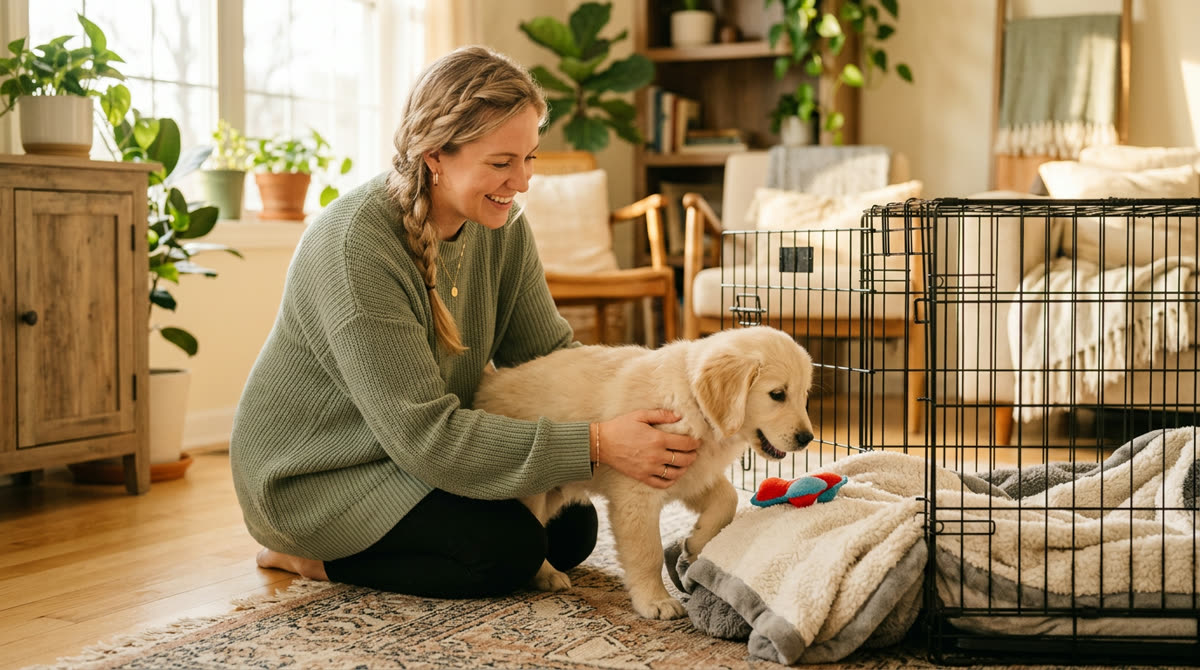
Start crate training a puppy with a realistic goal: seven days can establish a positive routine, but comfortable overnight sleep and longer periods alone often take several weeks or more. Choose a secure, well-ventilated crate that lets your puppy stand without crouching, turn around easily, and lie on their side with their legs comfortably extended; an adjustable divider can keep an adult-size crate appropriately sized as they grow. Put it near family activity but outside busy walkways, away from direct sunlight, heaters, electrical cords, and anything your puppy could pull through the bars. Use a flat, washable mat if your puppy does not chew fabric, remove collars and harnesses before confinement, and provide fresh water in a securely attached bowl that cannot easily tip. Gather pea-sized treats, part of the daily kibble allowance, an enzymatic pet-urine cleaner, and a simple log for meals, potty trips, naps, and training sessions. Plan for an adult to remain available during the first few days, and arrange a puppy-proofed pen or safe room with water whenever your puppy cannot yet tolerate the crate. Follow the daily sequence below at your puppy’s pace rather than treating each day as a deadline, repeating an easier stage whenever their body language shows they need more practice.
- Check that doors, latches, and divider panels are secure.
- Keep the crate clear of cords, curtains, and loose fabric.
- Remove collars, tags, harnesses, and leashes before confinement.
- Prepare a safe alternative for absences beyond current comfort.
Good to know: A larger crate is not automatically more comfortable, but a smaller one is never an appropriate way to prevent accidents. Fit the crate to your puppy’s body and provide frequent toilet breaks.
- 2
Day 1: Build a Positive Open-Door Association
Secure the crate door fully open so it cannot swing shut, then let your puppy investigate while you sit nearby without pushing, pulling, or placing them inside. Begin with treats just outside the entrance, progress to the threshold, and toss them farther inside only when your puppy approaches with a loose body and willingly follows. Run four to six sessions lasting one to three minutes, ending while your puppy is still interested rather than waiting for them to become tired or frustrated. Feed meals at the entrance initially, moving the bowl a few inches deeper at subsequent meals if your puppy remains comfortable eating. Allow your puppy to come out whenever they choose, because discovering that the crate does not trap them helps build the confidence needed for later door-closing exercises. If they stretch forward while keeping their back feet outside, freeze, or refuse food they normally enjoy, move the reward closer to the entrance and make the next repetition easier. For naps and the first night, keep the crate beside you or near your bed, but use a nearby puppy-proofed pen if a closed crate would cause distress rather than forcing the overnight milestone.
- Keep the door secured open.
- Reward voluntary approaches and entries.
- Offer meals at a comfortable distance.
- Finish before your puppy loses interest.
Good to know: Do not lure your puppy inside and unexpectedly shut the door behind them. Early surprises can make treats and the crate entrance seem suspicious.
- 3
Day 2: Introduce Brief Door Closures
After a toilet break, invite your puppy into the crate with a treat and introduce a short cue such as “crate” just as they step inside, rather than repeating the word while they hesitate. Once they enter readily, move the door slightly, reward calm behavior, and reopen it before progressing to a fully closed door. Start with closures of about one second while you remain directly beside the crate, deliver a treat through the bars, and open the door again without requiring a sit or another formal behavior. Across three to five sessions of two to four minutes, vary successful repetitions between roughly one and ten seconds instead of making every attempt longer. Look for normal breathing, soft eyes, a relaxed posture, and an ability to eat comfortably; taking treats alone does not prove that a puppy feels safe. If your puppy paws at the door, becomes rigid, or starts escalating vocalization, calmly end the repetition and return to a shorter closure or an open door next time. Introduce a release word such as “okay” as you open the door, but never wait through mounting distress just to obtain a moment of silence.
Good to know: The aim is to open the door before your puppy feels worried, not to teach them to endure worry. Avoid banging on the crate, spraying water, or using bark-control devices.
- 4
Day 3: Practice Short, Relaxed Daytime Stays
Schedule daytime practice after a toilet trip and five to ten minutes of gentle sniffing, play, or basic training, when your puppy is ready to settle but not overstimulated. Sit beside the crate and build from a successful ten-second closure toward approximately thirty seconds, one minute, and then two or three minutes, repeating durations as needed rather than completing every increase in one session. Offer a puppy-appropriate rubber food toy containing a small portion of their normal food, choosing a size and design recommended for their current age and chewing strength. Supervise new toys closely and remove anything your puppy can break apart, swallow, or catch their jaw in; avoid bones, rawhide, and hard chews that may damage teeth. Reward relaxed choices such as lying down or resting their chin, then let the puppy out while they are still comfortable and take them directly to the toilet area if they have slept. If they fall asleep naturally, remain nearby and let them rest, but remember that sleeping beside you does not demonstrate readiness to stay awake alone. Aim for three or four easy practice opportunities today, with generous time outside the crate for companionship, exploration, play, and age-appropriate socialization.
- Toilet first, then offer gentle activity.
- Keep early closed-door sessions short.
- Supervise every unfamiliar food toy.
- Reward relaxation rather than stillness caused by fear.
Good to know: Do not try to exhaust a puppy into accepting confinement. Overtired puppies can become more frantic, mouthy, and difficult to settle.
- 5
Day 4: Coordinate Crate Time With Potty Breaks and Nights
Continue your puppy’s nighttime routine from the first evening, but use today to review the log and adjust crate sessions around their actual toilet pattern rather than relying on an age-based bladder formula. Many eight- to twelve-week-old puppies need an opportunity to toilet every thirty to sixty minutes while awake, as well as immediately after waking, shortly after meals or a substantial drink, and after active play. Take your puppy to the same appropriate toilet area on leash, wait quietly for about three to five minutes, and reward promptly after they finish so the reward clearly follows toileting in the right place. If nothing happens, return to close supervision and try again in ten to fifteen minutes instead of assuming that your puppy can manage a long crate stay. At bedtime, offer one final toilet trip and keep the crate close enough to hear early stirring; very young puppies may initially need planned overnight outings about every two to three hours, adjusted to their individual pattern and veterinary advice. Keep nighttime outings dim, quiet, and focused on toileting, then return to the sleeping area without starting a game or withholding reassurance if your puppy is unsettled. Never restrict water simply to avoid accidents, and if your puppy cannot settle in the closed crate overnight, use the safe nearby pen while continuing easier daytime training.
- Toilet immediately after waking.
- Add trips after meals, drinks, and play.
- Record overnight waking and successful toilet trips.
- Keep nighttime breaks calm and brief.
Good to know: Ask your veterinarian which outdoor toilet locations are suitable before vaccinations are complete. Avoid heavily used dog-toilet areas unless your veterinarian advises that they are appropriate.
- 6
Day 5: Add Distance and Tiny Out-of-Sight Absences
Once your puppy remains relaxed with you beside the closed crate, stand up and sit down again, rewarding calm behavior before attempting to walk away. Next, take one step away and return, then try two or three steps while keeping the total confinement time comfortably within a duration your puppy already handles. Introduce an out-of-sight interval of just one second by stepping around a doorway, returning before your puppy shows concern and gradually working toward several seconds. Change only one difficulty at a time—distance, duration, or visibility—because making all three harder together can overwhelm a puppy who previously seemed confident. Use a phone or pet camera to check for pacing, panting unrelated to heat, repeated lip licking, or persistent attention to the exit, since silence alone does not mean relaxation. Keep departures and returns calm and friendly, and avoid saving every crate session for the moment you leave the house. If you must be away longer than your puppy can comfortably manage, arrange a trusted caregiver or use a safe setup suited to their toilet and social needs rather than turning a necessary absence into an endurance test.
Good to know: A puppy may enjoy the crate but dislike being separated from you. If distress begins as soon as you move away, return to easier distance exercises instead of simply adding more crate time.
- 7
Day 6: Troubleshoot Whining, Accidents, and Refusal
When your puppy whines, first check the time since their last toilet trip, whether they recently woke, and whether they might be thirsty, uncomfortable, frightened, or too warm. For new, persistent, or escalating whining, calmly provide a toilet opportunity and reassess the setup rather than assuming they are trying to manipulate you. A brief sound followed by a relaxed return to resting may need no intervention, but sustained barking, drooling, frantic escape attempts, or repeated biting of the bars mean you should end confinement safely and make future sessions substantially easier. After an accident, move your puppy to a safe spot, clean the crate and affected bedding with an enzymatic product according to its contact-time instructions, and shorten the next interval between toilet trips. If your puppy refuses to enter, return to open-door meals and voluntary exploration, checking for a slippery tray, rattling divider, uncomfortable bedding, or a location that is too isolated. Stop training and contact a veterinarian if you notice repeated accidents despite frequent breaks, painful or frequent urination, blood in urine or stool, vomiting, diarrhea, unusual lethargy, or possible injury; straining without producing urine warrants urgent veterinary attention. For recurring confinement or separation distress without obvious physical symptoms, consult your veterinarian and a qualified reward-based behavior professional rather than trying to solve the problem with longer sessions or punishment.
- Check toilet needs before changing the training plan.
- End sessions that involve escalating distress.
- Clean accidents thoroughly without scolding.
- Seek veterinary advice for symptoms or sudden changes.
Good to know: Never punish an accident or force your puppy back into a soiled crate. Eating less, becoming unusually quiet, or repeatedly refusing a favorite reward can also signal that the session is too difficult.
- 8
Day 7: Rehearse a Realistic Daily Routine
On the final day of the first week, combine the skills your puppy already knows into a predictable sequence of toilet break, meal or gentle activity, another toilet opportunity when needed, and a short crate rest. If your puppy is consistently relaxed for five to ten minutes, try a modest increase toward ten to fifteen minutes, and consider longer intervals only after repeated easy successes. Some puppies may comfortably manage a twenty- to thirty-minute daytime session by this point, while others are still learning that a closed door is safe, and neither outcome should be treated as a deadline failure. Practice at two or three ordinary times of day so the crate becomes a familiar resting option rather than a signal that the household is about to disappear. Use a camera for any brief departure from the home, attempt it only after successful out-of-sight practice indoors, and remain close enough to return promptly if your puppy becomes distressed. Count the whole day’s confinement, including naps and nighttime, because a puppy who sleeps in the crate still needs substantial waking time outside it for movement, learning, and social contact. Finish the week by noting the longest genuinely relaxed awake session, typical overnight toilet needs, and any situations that still require an easier approach.
- Enters willingly without being pushed.
- Remains relaxed when the door closes.
- Tolerates the current distance and duration.
- Receives toilet breaks before accidents occur.
- Has plenty of positive experiences outside the crate.
Good to know: The best measure of success is how your puppy feels, not the number of minutes on a timer. A relaxed five-minute session is more useful than thirty minutes of distress.
- 9
Maintain Progress Beyond the First Week
Continue crate training a puppy with one or two easy practice sessions daily, while also allowing voluntary open-door access whenever the surrounding area is safe. Increase awake confinement in small, flexible increments only after several relaxed repetitions, mixing shorter successes between longer attempts instead of increasing the duration every time. Keep alone-time practice separate from sleeping practice, because a puppy who rests well overnight beside your bed may still need gradual teaching to remain comfortable when you leave. Review crate fit weekly during rapid growth, adjust the divider before space becomes restrictive, and inspect the latch, tray, bedding, and toys for damage each day. Maintain responsive toilet breaks and caregiver support rather than treating any age-based rule as permission for a full workday in a crate. Expect temporary setbacks after travel, illness, schedule changes, or a frightening noise, and return to the last comfortable training stage instead of forcing your puppy through the regression. If progress repeatedly stalls or your puppy continues to show distress despite shorter sessions and a comfortable setup, arrange a veterinary review and individualized behavior support, remembering that a safe pen or puppy-proofed room may be the better management option.
Good to know: A crate should remain a safe resting place, never a punishment or a substitute for exercise, companionship, and training. Comfortable confinement is a useful life skill, not a requirement to spend most of the day behind a closed door.
Ask about this guide
Leave a comment or a question about your own pet and the Pawlito assistant replies right away with practical next steps.