How to Help a Dog With Separation Anxiety at Home
Help ease dog separation anxiety with safe home routines, gradual alone-time training, and clear guidance on when to call your veterinarian.
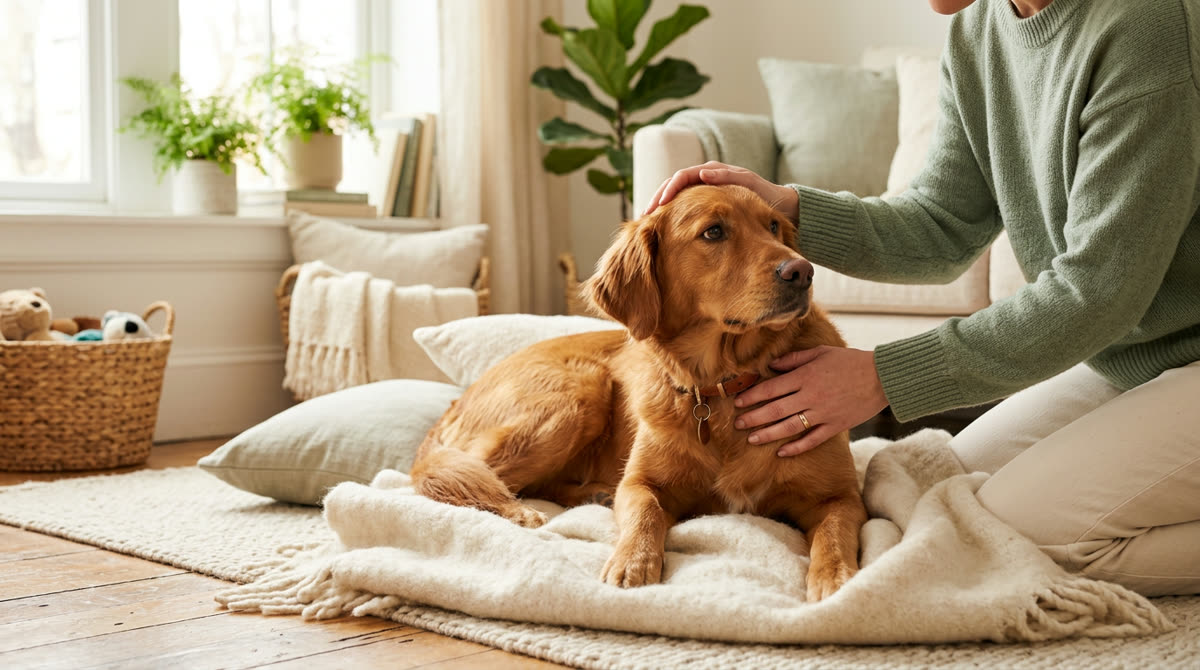
A calm, safety-first approachThis guide provides general education. Contact your veterinarian when symptoms are painful, persistent, or unusual.
- 1
Recognize distress and establish a baseline
Start by observing what happens before, during, and after an ordinary departure, because dog separation anxiety involves distress about being left rather than simply unwanted behavior. Signs can include pacing when you pick up your keys, persistent barking or howling, drooling, trembling, toileting, or scratching at doors and windows. If you already have footage from a pet camera or phone, note when the first subtle change appears; becoming rigid and staring at the exit can matter as much as obvious vocalizing. If you do not have footage, record only a brief, necessary absence or a tiny practice departure, and return at the first sign of distress rather than deliberately finding out how long your dog will panic. Keep a log for 3–7 days that includes departure cues, who stayed home, the duration of each absence, and your dog’s behavior, without postponing help if symptoms are severe. Similar behavior can have other explanations, including outside noises, confinement distress, or medical problems, so observations alone cannot confirm separation anxiety. Arrange a veterinary appointment, especially when the behavior is new, suddenly worse, or accompanied by appetite, drinking, toileting, mobility, or sleep changes.
- Record the first stress sign and its timing.
- Note whether another familiar person prevents distress.
- Track appetite, toileting, and sleep changes.
- Save short video clips for your veterinarian.
Good to know: A quiet dog is not necessarily a comfortable dog: freezing, panting without exertion, and refusing a normally valued treat may also signal distress.
- 2
Prevent panic during unavoidable absences
While you build coping skills, reduce or temporarily avoid absences that exceed your dog’s current comfort level, because repeated frightening experiences can undermine gradual training. List the times you must leave over the next 7 days, then arrange coverage through a trusted friend, household member, pet sitter, or suitable daycare where your dog genuinely relaxes. Some dogs are comfortable with any familiar person, while others become distressed when one particular person leaves, so verify the arrangement with observation rather than assuming company solves the problem. For a dog who panics within minutes, a midday dog-walker visit will not protect the hours before and after that visit, although a walker may still help with exercise and toileting. If complete coverage is impossible, reduce the frequency and duration of unsupported absences as much as you can and ask your veterinarian about additional treatment support. Secure exits, remove cords and accessible rubbish, and block access to objects your dog has tried to chew or swallow, without introducing a barrier that triggers further panic. Never punish barking, destruction, or accidents after returning home, because punishment does not teach safe alone time and can add fear to departures and reunions.
- Map essential departures on a weekly calendar.
- Trial a sitter while you remain nearby.
- Confirm daycare is enjoyable, not overwhelming.
- Keep a backup caregiver’s contact details available.
Good to know: Do not crate a panicking dog to protect the house. Biting bars or forcing an escape can cause broken teeth, torn nails, and other serious injuries.
- 3
Create a comfortable home-alone setup
Choose a dog-proofed room or familiar open area where your dog already rests, with comfortable bedding, fresh water, safe ventilation, and a temperature appropriate for their health and coat. Use a crate only if your dog voluntarily relaxes there and remains comfortable when the door closes; confinement is not a treatment for separation anxiety. Position a camera to show both the resting area and the main exit, then test the live feed before relying on it during training. If passing people or traffic trigger vigilance, close blinds or move the resting spot away from street-facing windows, while keeping any background sound low enough for normal conversation. Before a planned session, offer a toilet break and an appropriate sniffing walk—for example, 15–30 minutes for a healthy adult accustomed to that amount—then allow roughly 10–20 minutes to settle. Introduce a correctly sized food-stuffable rubber toy while you are present, using part of the daily food allowance, and supervise several uses to check that your dog does not tear off or swallow pieces. Enrichment can make an already manageable absence more pleasant, but a toy that is abandoned when you leave is useful information about stress, not a reason to offer increasingly irresistible food and stay away longer.
- Provide water and an established resting place.
- Check camera coverage and connection quality.
- Remove small objects, cords, and toxic items.
- Test enrichment under supervision first.
- Adjust exercise for age, health, and weather.
Good to know: Never leave a tether attached to furniture or expose your dog to dangling cords. Avoid unattended bones, chews, or toys that could splinter, lodge in the throat, or be swallowed.
- 4
Practice relaxed distance while you stay home
Help your dog develop comfortable independence in tiny, voluntary increments while you are still at home, rather than suddenly shutting them in another room. Place a mat or bed about 1–2 feet from your chair and quietly reward relaxed choices, such as lying down with loose muscles, instead of repeatedly asking for a rigid stay. Once your dog is comfortable, shift your position slightly or take one step away for a second, then return before they become concerned. Practice for about 1–3 minutes at a time, once or twice daily if your dog remains interested and relaxed, and stop before the exercise becomes frustrating. Progress from a small movement to standing up, taking several steps, and briefly moving out of view, changing only one part of the exercise at a time. If your dog springs up, becomes tense, or follows anxiously, shorten the distance or duration; following you by itself is not misbehavior and should not be punished. These exercises can support confidence, but they do not replace carefully graded departures, and you do not need to withhold affection or ban your dog from furniture to treat dog separation anxiety.
Good to know: Reward genuine comfort rather than obedience alone. A dog who holds a stay while trembling is completing a cue, not learning to feel safe.
- 5
Make departure cues less alarming
Identify the specific actions that predict your departure, such as putting on work shoes, lifting a handbag, picking up keys, or opening the garage door. Start with the mildest cue and perform a small version without leaving—for example, touch your keys, set them down, and return to reading. Begin with just 2–4 repetitions spread across the day, allowing your dog to return fully to their usual relaxed behavior between repetitions. If lifting the keys causes pacing or panting, reduce the exercise to moving your hand toward them or practice farther from your dog rather than repeatedly provoking the full reaction. As individual cues become uneventful, combine only two easy actions, such as putting on shoes and then sitting at the kitchen table. Keep normal life predictable enough for rest, but vary these harmless practice moments so that every coat movement does not become a reliable warning of isolation. Do not complete your entire departure routine over and over while your dog becomes increasingly vigilant, because the purpose is to make cues safe and boring rather than force your dog to tolerate escalating fear.
- 6
Begin departures below your dog’s stress threshold
Start actual alone-time practice when your dog is settled, their basic needs are met, and you can watch the camera continuously without distractions. Choose a departure easier than the shortest absence your dog has already handled comfortably: this might mean touching the doorknob, opening and closing the door, or stepping outside for only 1 second. If 1 second outside triggers distress, return to an easier doorway exercise rather than imposing a minimum absence length. For a dog who is clearly comfortable at the starting point, an illustrative session might include absences of 1, 2, 1, and 3 seconds, with at least 30–60 seconds between repetitions and longer if needed for complete relaxation. Return while your dog is still comfortable; if stress appears unexpectedly, come back promptly rather than waiting outside for silence or trying to reward only a pause in barking. Keep the whole session around 3–5 minutes initially, with only a few repetitions, and end sooner if your dog starts monitoring your movements more closely. Greet your dog calmly and kindly on return, without either creating a highly excited reunion or deliberately ignoring a dog who seeks reassurance.
- Watch live video throughout each absence.
- Start with seconds—or an easier doorway action.
- Return before pacing, vocalizing, or exit scratching.
- Allow full recovery between repetitions.
- Log behavior as well as elapsed time.
Good to know: Avoid “cry it out” training. Prolonged exposure to a frightening absence can intensify distress, and barking stopping does not prove that your dog has relaxed.
- 7
Increase alone time in small, flexible increments
Increase duration only after several comfortable repetitions across more than one session, using your dog’s behavior rather than a calendar deadline to decide when to advance. Look for loose posture, normal breathing, the ability to disengage from the door, and ordinary resting or exploration; sleep is welcome but is not required for success. At very short durations, an increase may be only 1–2 seconds, while later increases can be somewhat larger if the camera shows continued comfort. Mix easier departures among slightly harder ones—for example, a dog comfortable around 30 seconds might practice 15, 25, 10, and 30 seconds rather than face a longer absence every time. Change one challenge at a time, because adding a locked door, a different exit, a car starting, and extra duration in the same trial makes setbacks harder to interpret. Once brief departures are reliably comfortable, introduce real-life details separately, such as carrying your bag or leaving at a different time of day, while temporarily shortening the absence. Begin with no more than one focused departure session per day, add rest days if vigilance builds, and expect meaningful improvement to take weeks or months rather than assuming every dog will reach a target by a fixed date.
- Increase only when body language stays relaxed.
- Include shorter, easy repetitions.
- Add one new departure detail at a time.
- Keep caregiver coverage for longer absences.
Good to know: Thirty calm seconds does not establish readiness for a five-minute errand. Treat each increase as a small test of comfort, not proof that your dog should now cope with a large jump.
- 8
Respond to setbacks and seek professional support
If your dog starts panting without heat or exertion, pacing, whining, drooling, scratching the exit, or repeatedly abandoning food, stop increasing difficulty and end the departure promptly. At the next session, return to a clearly easier version your dog previously handled, and consider taking a rest day if they remain unusually watchful or unsettled. Review the log for changes such as construction noise, poor sleep, visitors, illness, or a new work schedule, because the same duration can feel different under different conditions. Arrange veterinary help promptly if distress is intense, basic practice triggers panic, your dog cannot tolerate necessary daily absences, or careful training is not producing a comfortable starting point. Stop home departure trials and contact a veterinarian immediately for self-injury, suspected toxin or foreign-object ingestion, broken teeth, or bleeding, and seek emergency veterinary care for breathing difficulty, collapse, or other severe symptoms. Your veterinarian can assess possible medical contributors and discuss whether additional treatment, including prescribed medication when appropriate, belongs alongside behavior work; never give human medication or select calming products without veterinary advice. For hands-on guidance, ask for referral to a board-certified veterinary behaviorist or an appropriately credentialed, reward-based professional experienced with separation cases, and avoid anyone recommending shock, spray collars, punishment, or forced prolonged isolation.
- Shorten practice after the first stress signs.
- Check for health or household changes.
- Share videos and your training log with the vet.
- Choose a professional who uses gradual, reward-based methods.
Good to know: Do not use sedating effects or reduced barking as the sole measure of success. The goal is a dog who feels safer, not simply one who moves or vocalizes less.
- 9
Maintain progress and plan for routine changes
Once your dog tolerates useful stretches of alone time, continue occasional easy practice departures instead of making every absence the longest one they can currently manage. Match real errands to the duration and departure conditions your dog has demonstrated comfortably, and leave a time buffer so traffic or queues do not turn a short outing into an unplanned challenge. Keep checking the camera during new or longer absences, because a calm first few minutes does not guarantee comfort for the entire period. Review your log weekly at first, noting both duration and quality of relaxation, and share updates with your veterinarian or behavior professional on the follow-up schedule you agree together. Before a move, return to office work, holiday disruption, or loss of a household companion, arrange extra support and restart with shorter departures if your dog’s confidence changes. Continue appropriate exercise, sniffing opportunities, predictable meals, toilet breaks, and social contact, while remembering that even a dog without separation distress should not be expected to remain alone indefinitely. Successful home treatment for dog separation anxiety means building dependable comfort within your dog’s individual limits, with a practical backup plan and professional support whenever those limits change.
Good to know: Keep a small emergency care plan with your sitter’s number, your veterinarian’s details, and your dog’s currently comfortable alone-time range so an unexpected schedule change does not erase hard-won progress.
Ask about this guide
Leave a comment or a question about your own pet and the Pawlito assistant replies right away with practical next steps.