How to Exercise a High-Energy Dog Indoors
Channel your dog’s indoor energy into safe movement, scent games and short training sessions, then help them switch off and settle.
A calm, safety-first approachThis guide provides general education. Contact your veterinarian when symptoms are painful, persistent, or unusual.
- 1
1. Match the session to your dog’s needs
Plan a mixture of gentle movement, sniffing and training rather than trying to exhaust your dog with nonstop running. Consider their age, size, usual activity level and any restrictions your vet has given you before choosing games. For puppies, older dogs, flat-faced breeds and dogs with existing health conditions, ask your vet which activities and session lengths are suitable. Start with a three-to-five-minute activity block, then pause and assess your dog’s breathing, movement and willingness to continue. Avoid vigorous play immediately after a large meal, and ask your vet about meal-to-exercise timing if you are unsure what suits your dog. Treat indoor sessions as a supplement to suitable outdoor walks, toileting opportunities and exploration, not a permanent replacement for them.
- Check for existing exercise restrictions
- Choose a short first activity
- Set aside part of the daily food allowance
- Allow time for rest and toileting
Good to know: Plan to finish while your dog is still moving comfortably and responding to you, rather than waiting for them to become exhausted.
- 2
2. Create a cool, non-slip activity space
Choose a cool, well-ventilated room with enough clear floor space for your dog to turn without hitting furniture. Cover slippery sections with secure, non-slip rugs or mats, checking that the edges cannot bunch up under moving paws. Move cables, breakables, shoes and small objects out of reach, and block access to stairs, balconies and open windows. Keep children and other pets outside the activity area, particularly when food or exciting toys are involved. Put fresh water within easy reach and prepare a quiet resting spot away from the action. Select sturdy toys that are too large to swallow, removing any with loose stuffing, damaged seams or detachable pieces.
- Secure rugs and mats
- Clear sharp corners and obstacles
- Close escape routes
- Separate other pets and children
- Check toys for damage
Good to know: Walk the route yourself before starting, looking for anything your dog could knock over, skid on or reach while excited.
- 3
3. Warm up with calm, controlled movement
Begin with two or three minutes of easy walking around the cleared room, letting your dog follow you at a comfortable pace. Use a familiar cue or a small food reward to guide them through wide turns rather than tight spins. If your dog knows a hand target, present your palm at nose height and take a few steps between touches. Reward steady walking and a relaxed pace instead of encouraging bouncing, sprinting or repeated sharp changes of direction. Watch for stiffness, limping, reluctance to turn or unusual breathlessness, and stop if any appear. Contact your vet for advice about new movement difficulties or exercise intolerance rather than trying to work through them.
Good to know: Keep your own movements slow and predictable during the warm-up, because rushing around can turn a controlled activity into a chase.
- 4
4. Start with a simple scent-search game
Ask your dog to wait briefly, or have another adult hold them comfortably, while you place three small pieces of their usual food in plain sight on a clean mat. Release them with a consistent phrase such as ‘find it’ and let them search without repeatedly pointing at each piece. Once they understand the game, place food just out of sight beside a sturdy chair leg or inside an open, shallow cardboard box. Keep every hiding place at floor level and away from electrical cables, cleaning products and places where paws could become trapped. Count the pieces you hide so you can collect anything your dog misses, and include those rewards within their daily food allowance. Supervise throughout, removing cardboard immediately if your dog starts tearing off or swallowing pieces.
- Begin with visible food
- Use easy, floor-level hiding places
- Count hidden pieces
- Remove uneaten food afterwards
Good to know: Increase only one difficulty at a time, such as using a slightly less visible hiding place, so your dog can keep succeeding.
- 5
5. Add short training games that involve movement
Choose two familiar skills, such as touching your hand and walking to a mat, and alternate between them over a short distance. Mark the correct response with a consistent word such as ‘yes’, then offer a small reward while all four paws are on the floor. With a second adult, practise taking turns calling your dog across the room, leaving enough space for a comfortable walk or gentle trot. Have only one person call at a time, and reward the arrival before the other person gives their cue. Keep each round to about one or two minutes, avoiding repeated sit-to-stand drills or tricks that require balancing upright on the hind legs. If your dog hesitates, looks away or stops responding, simplify the task or take a break instead of repeating the cue more loudly.
Good to know: Use a short distance and predictable turns for indoor recall games, so enthusiasm does not become skidding or crashing into people.
- 6
6. Offer controlled tug or a rolling retrieve
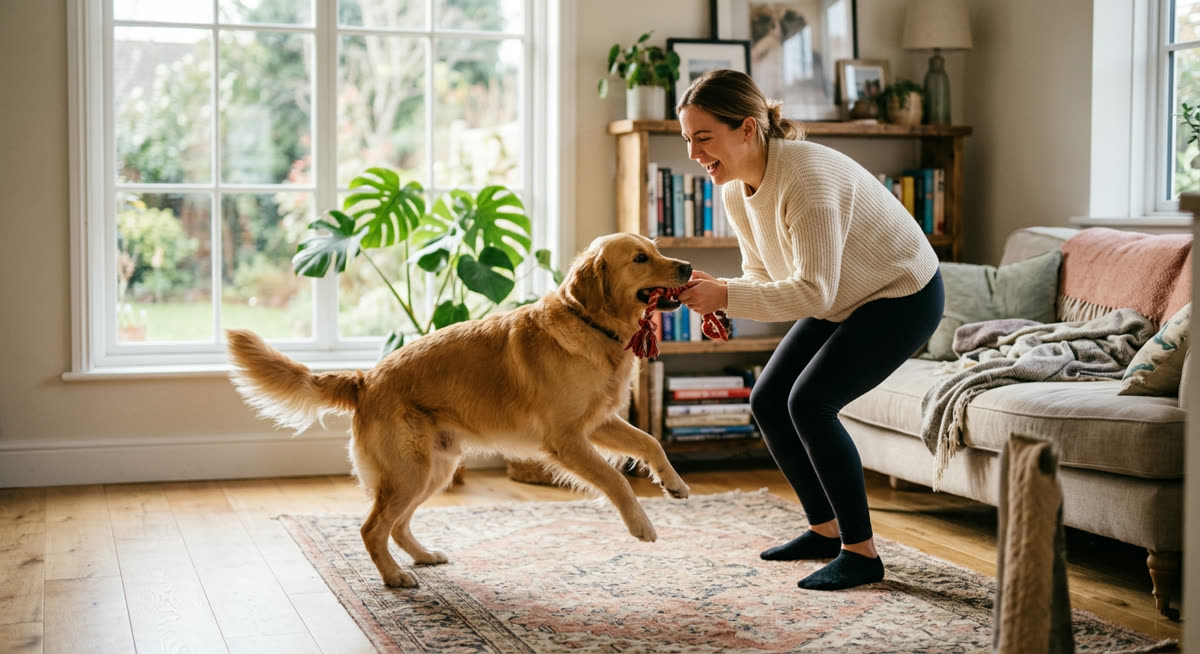
If your dog enjoys tug, invite them to take a long, soft toy while you hold the other end away from their mouth. Keep the toy low enough for all four paws to remain grounded, and use gentle movement without jerking, twisting or lifting your dog. Pause after a few seconds and use a familiar release cue, offering a food trade if needed rather than pulling the toy from their mouth. For a dog who prefers retrieving, roll a suitable toy a short distance along a non-slip surface instead of throwing it through the air. Reward bringing the toy back, and avoid chasing your dog or reaching into their mouth if they choose to keep it. Stop the game if teeth touch skin, movements become frantic or your dog freezes or guards the toy, and seek help from a qualified, reward-based behaviour professional if guarding recurs.
- Keep paws on the floor
- Use gentle, short play rounds
- Practise a calm release or trade
- Roll toys instead of throwing
- Never force a toy from the mouth
Good to know: Keep a second similar toy nearby so you can offer a voluntary swap without turning retrieval into a contest.
- 7
7. Build a low-impact indoor circuit
Arrange two or three simple stations, such as walking around a stable chair, crossing a flat mat and touching your hand at the finish. Leave generous gaps so your dog can move naturally without squeezing through furniture or making sharp turns. Guide them through each station separately before linking the stations into one short circuit. Keep the route entirely at floor level, leaving out jumps, stair runs, unstable cushions and furniture climbing. Complete one or two easy circuits, then offer a pause and check that your dog still looks comfortable and interested. Change the order of familiar stations on another day rather than making the course faster, higher or more physically demanding.
- Use stable household objects
- Leave wide turning spaces
- Keep every station at floor level
- Teach stations one at a time
- Pause between short rounds
Good to know: For a small room, use just a mat and a hand target; a useful circuit does not need lots of equipment or distance.
- 8
8. Adjust when excitement or frustration builds
Pause if your dog starts grabbing clothing, barking repeatedly, crashing into objects or struggling to respond to cues they normally know. Put the exciting toy away calmly, reduce your own movement and offer a quiet break rather than adding more activity to tire them out. If they remain comfortable and interested, restart with an easier scent search or a single familiar training task. Make future sessions shorter or simpler if your dog regularly loses focus, and avoid scolding them for struggling with the setup. End exercise and contact your vet if you notice persistent heavy panting that does not ease with rest, coughing, limping or unusual weakness. Seek emergency veterinary help for collapse, difficulty breathing, or pale or blue gums, and do not resume activity while waiting for advice.
Good to know: Change one variable at a time, such as the length of the session or the excitement of the toy, so you can identify what helps your dog stay comfortable.
- 9
9. Cool down and build a sustainable routine
Finish with a minute or two of slow walking or gentle sniffing, then guide your dog towards their quiet resting area. Leave fresh water available and let them rest without being disturbed by children, other pets or another invitation to play. Once they are relaxed, check their paws for soreness and inspect the play area for damaged toys, food or loose cardboard. Note which activities held their interest and whether their breathing and behaviour returned to their usual resting pattern. Spread a few short sessions across the day if they suit your dog, balancing them with sleep, appropriate outdoor activity and regular toileting breaks. If your dog remains persistently restless despite a balanced routine, or their activity level changes suddenly, contact your vet before increasing the workload.
- Offer water and a quiet rest
- Check paws and equipment
- Clear leftover food and debris
- Record games that worked well
- Protect uninterrupted sleep
Good to know: Use the same calm finishing cue each time, then put the equipment away to make the end of the session predictable.
Ask about this guide
Leave a comment or a question about your own pet and the Pawlito assistant replies right away with practical next steps.