How to Groom a Long-Haired Guinea Pig
Keep your long-haired guinea pig comfortable and tangle-free with gentle brushing, safe trimming and a simple daily grooming routine.
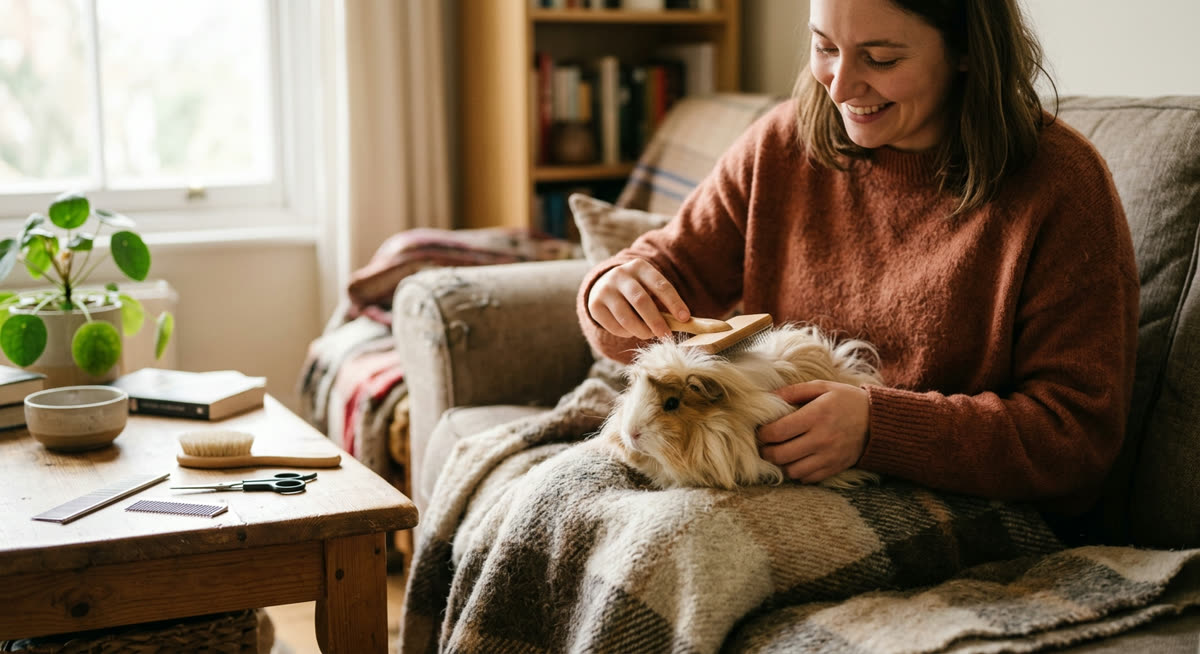
A calm, safety-first approachThis guide provides general education. Contact your veterinarian when symptoms are painful, persistent, or unusual.
- 1
1. Check your guinea pig is ready for grooming
Choose a quiet time when your guinea pig is awake and settled, rather than waking them or interrupting a meal. Before lifting them, watch how they move and check that they are eating and behaving as usual. Look over their coat for wet patches, bedding caught in the hair and tangles around the rump. If they are unusually withdrawn, appear painful, have stopped eating or are passing noticeably fewer droppings, contact your vet promptly rather than starting a grooming session. For a guinea pig that seems well, begin with a brief stroke and offer a little of their usual hay or a familiar piece of vegetable. Plan to work in short sessions, stopping before they become restless rather than trying to perfect the whole coat at once.
- Normal appetite and behaviour
- No obvious pain or distress
- Quiet surroundings
- Time for breaks
Good to know: For a guinea pig new to grooming, make the first session a minute or two of gentle handling and a few brush strokes.
- 2
2. Prepare your tools and a secure grooming area
Set up on the floor in a warm, draught-free room, away from other pets and sudden noise. Lay a clean towel over a non-slip mat so your guinea pig has a steady surface beneath their feet. Gather a soft brush, a wide-toothed comb with smooth, rounded teeth, spare towels and a damp cloth before bringing them over. If a small hygiene trim is needed, have rounded-tip grooming scissors available, but leave sharp-pointed scissors and tools that slice through mats out of the kit. Keep a shallow tray nearby for removed hair and dirty bedding so loose strands do not collect around your guinea pig. Ask a calm adult to help if you cannot safely support your guinea pig and use a grooming tool at the same time.
- Non-slip mat and clean towels
- Soft brush and rounded-tooth comb
- Damp cloth and spare towel
- Rounded-tip scissors, if needed
- Tray for loose hair
Good to know: Choose tools small enough to work around the hips and shoulders without pulling neighbouring sections of hair.
- 3
3. Position and support them gently
Lift your guinea pig with one hand supporting the chest and the other supporting the hindquarters, then bring them close to your body. Set them on the prepared towel with all four feet supported and allow a moment for sniffing and settling. Rest a hand lightly around the shoulders or alongside the body without pressing on the chest or belly. Let them sit in a natural position, turning their whole body gently when you need to reach the other side. To inspect underneath, ask your helper to support them upright briefly with the hindquarters supported, rather than laying them on their back. If they repeatedly try to escape, freeze tensely or chatter their teeth, return them to their enclosure and try a shorter session later.
Good to know: Keep sessions at floor level even with a calm guinea pig, as a sudden wriggle can turn a lap or table into a fall risk.
- 4
4. Brush the coat in small sections
Start with an easy area along the back or shoulder, using short, light strokes that follow the natural direction of the coat. Part the long hair with your fingers so you can work through one narrow section at a time. Support each section near its base without tugging on the skin, and gently loosen the ends before working closer to the body. Use the soft brush for loose hair, then pass the wide-toothed comb through the section only when it moves without resistance. Work gradually over both sides and the rump, checking behind the front legs and around the hind legs where friction can create knots. Keep tools away from the eyes, ears, nipples and genital area, and do not repeatedly brush one patch if the skin begins to look irritated.
- Follow the coat’s natural direction
- Work from the ends towards the body
- Support hair to reduce pulling
- Stop when the comb catches
Good to know: For curly-coated guinea pigs, separate curls gently with your fingers first and avoid forcing a comb through dense curls.
- 5
5. Deal with tangles without pulling the skin
When you find a small, loose tangle, put the comb down and gently tease apart the outer strands with your fingertips. Hold the hair between the tangle and the skin to reduce pulling, and work from the outside of the knot inwards. Try the wide-toothed comb again only after the strands have loosened enough for it to pass comfortably. Stop if the knot is tight against the skin, feels like a solid pad or causes your guinea pig to flinch or protest. Do not slide scissors under a mat or cut across it, because delicate skin can be pulled up inside the hair where you cannot see it. Arrange help from your vet or a groomer experienced with guinea pigs for close mats, and contact your vet if the area is sore, wet or heavily soiled.
Good to know: Treat a tangle that will not loosen easily as a reason to pause, not a reason to brush harder.
- 6
6. Shorten trailing hair only where it is safe
Once the coat is tangle-free, check whether hair trails on the floor or collects urine and droppings around the rear. If you are confident and your guinea pig remains still, ask your helper to support them while you trim only the free-hanging ends with rounded-tip grooming scissors. Keep the blades well away from the body, with the tips pointing away from your guinea pig, and make small cuts rather than taking off a large section. A comb can help separate loose ends from the body, but it is not a guarantee against cutting skin and should never be forced beneath a tangle. Leave a protective covering of hair, and do not attempt close trimming around the genitals, nipples, feet or skin folds at home. Stop immediately if your guinea pig moves, and ask an experienced guinea pig groomer or your vet to handle any area you cannot see and access safely.
- Trim only loose, visible ends
- Use small, controlled cuts
- Keep blades away from the body
- Stop at the first wriggle
- Leave close work to a professional
- 7
7. Spot-clean dirty areas and dry thoroughly
For a small patch of urine or soft droppings on the coat, hold a cloth dampened with lukewarm water against the affected hair to soften the residue. Wipe gently in the direction of the hair, repeating with a clean part of the cloth rather than pulling dried material off. Avoid routine full-body baths, which can be stressful and leave a guinea pig chilled if the coat stays damp. If a larger wash seems necessary, or dirt is stuck close to sore skin, ask your vet how to clean the area safely before proceeding. After spot-cleaning, blot with a dry towel and replace it as it becomes damp, keeping your guinea pig in a warm, draught-free space until the coat is dry. Avoid hairdryers and direct heaters, and contact your vet if the rear keeps becoming wet or dirty rather than relying on repeated washing.
- Use lukewarm water
- Soften residue before wiping
- Keep the face and ears dry
- Blot rather than rub
- Dry before returning to the enclosure
Good to know: Check the layers nearest the skin with your fingertips, as the surface can feel dry while the undercoat remains damp.
- 8
8. Check for problems that need veterinary help
As you finish, part the coat gently and look for redness, scabs, bald patches, swelling or broken skin without scraping or picking at anything. Contact your vet if you notice these changes, repeated scratching or signs that touching a particular area hurts. Do not apply human creams, essential oils or flea products intended for other animals, and do not try to identify or treat a skin condition yourself. If you accidentally nick the skin, stop grooming, hold clean gauze against the area with gentle pressure and contact your vet for advice, urgently if bleeding persists. Eggs or maggots in the coat, particularly around a dirty rear, require immediate veterinary attention; do not delay while trying to groom them all out. If your guinea pig becomes weak, has difficulty breathing or seems severely distressed at any point, stop handling them unnecessarily and seek urgent veterinary care.
- 9
9. Settle them back and establish daily aftercare
Return your fully dry guinea pig to a clean enclosure with fresh hay, water and their usual companion if they are normally housed together. Remove damp bedding and soiled material from sleeping and toileting areas so the newly groomed hair does not immediately pick up moisture again. Watch that your guinea pig settles, moves comfortably and resumes normal eating, contacting your vet promptly if they do not. Check a long-haired coat every day and give it a gentle daily brush or finger-comb, adjusting the length of the session to the coat and your guinea pig’s tolerance. Include a daily rear-end check, with more frequent checks during warm weather or whenever soiling is a concern. Wash and dry grooming tools after use, and arrange regular nail checks with your vet or an experienced handler rather than attempting an unfamiliar nail trim at the end of a tiring session.
- Fresh hay and water available
- Damp bedding removed
- Eating and movement checked
- Daily coat and rear-end checks
- Tools cleaned and dried
Good to know: A short daily tidy is usually easier on your guinea pig than allowing knots to build up before a long grooming session.
Ask about this guide
Leave a comment or a question about your own pet and the Pawlito assistant replies right away with practical next steps.