How to Set Up a Guinea Pig Cage for Two
Create a safe guinea pig cage setup for two with the right cage size, bedding, feeding stations, hideouts, and easy cleaning routines.
A calm, safety-first approachThis guide provides general education. Contact your veterinarian when symptoms are painful, persistent, or unusual.
- 1
Choose enough space for a compatible pair
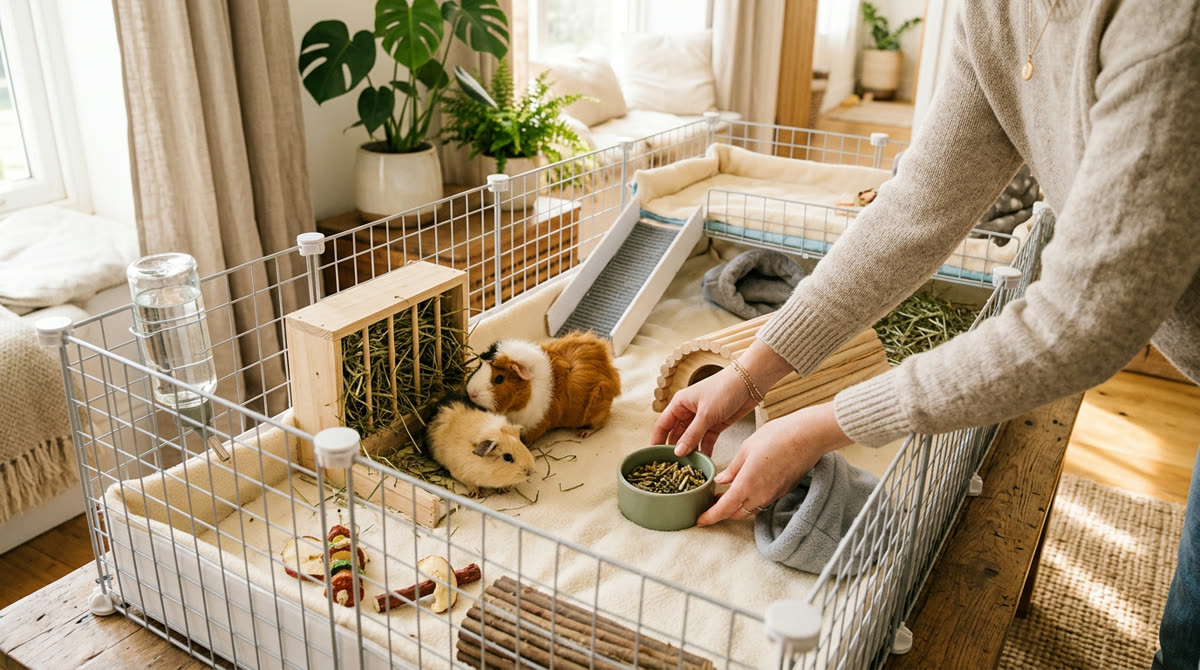
A guinea pig cage setup for two starts with a large, uninterrupted floor area: aim for at least 10.5 square feet of usable space, preferably 12–16 square feet or more, rather than relying on the package’s “suitable for two” claim. A rectangular enclosure measuring 30 by 60 inches internally provides 12.5 square feet, while one measuring 36 by 64 inches provides 16 square feet; shelves, lofts, and separate exercise pens do not replace this main living area. For two males, choose the larger end of that range or beyond because extra room makes it easier to avoid each other and reduces competition around resources. Measure the actual interior before purchasing, then sketch where two feeding areas, at least two hideouts, and an open running route will fit without creating narrow bottlenecks. Choose an already bonded pair when possible, and have a guinea-pig-experienced veterinarian or reputable rescue verify their sexes rather than trusting a pet-shop label. Do not house an intact male with a female, and keep a recently neutered male away from females for the veterinarian’s recommended interval, commonly six weeks, because fertility can persist after surgery. If one guinea pig is a new arrival, arrange separate quarantine housing and ask your veterinarian about an appropriate quarantine period, often two to three weeks, before beginning introductions.
- Measure usable interior floor space, not the product’s outer dimensions.
- Favor a broad, single-level layout over a tall cage.
- Allow extra floor space for two males.
- Confirm both guinea pigs’ sexes before shared housing.
Good to know: A larger cage supports compatibility, but it cannot make an incompatible pair safe together; keep a secure backup enclosure available.
- 2
Pick a cool, quiet indoor location
Place the enclosure in a well-ventilated indoor room with a stable temperature around 65–75°F, away from direct sunlight, radiators, fireplaces, and air-conditioning vents. Use a thermometer at cage height, especially near windows, because a sunny patch can overheat the enclosure even when the rest of the room feels comfortable. Temperatures approaching or exceeding 80°F deserve immediate attention, particularly in humid conditions, so plan reliable room cooling rather than depending on a fan blowing directly at the animals. Choose a location where your guinea pigs can hear normal household activity but are not beside loud speakers, slamming doors, a washing machine, or constant foot traffic. Keep the cage away from cooking fumes, smoke, aerosols, and fragranced products, and provide daylight with a normal dark period rather than leaving bright lights on overnight. If you elevate the enclosure for easier cleaning, use a sturdy stand that supports its entire footprint and cannot tip when someone leans against it. Keep dogs, cats, and unsupervised young children out of the room, and leave enough access around the enclosure to remove both guinea pigs quickly in an emergency.
- Check temperature at cage height.
- Avoid sunbeams, drafts, fumes, and noisy appliances.
- Use a stable, fully supported base.
- Keep electrical cords outside chewing reach.
Good to know: If a guinea pig becomes weak, drools, or breathes rapidly in a warm room, move them to a cooler area and contact a veterinarian immediately; do not use an ice bath.
- 3
Assemble a secure, solid-bottom enclosure
Choose a spacious solid-bottom cage or a properly assembled cubes-and-corrugated-plastic enclosure, often called a C&C cage, rather than a wire-floor cage that can injure feet. For a DIY enclosure, use rigid corrugated polypropylene for the waterproof tray, with sides approximately 4–6 inches high to help contain bedding and protect nearby flooring. Secure every grid connection with the manufacturer’s connectors and additional cable ties where appropriate, trimming tie ends flush and positioning them beyond chewing reach. Choose grids specifically suitable for guinea pigs, avoiding large openings, particularly the roughly 2-inch openings found on some storage grids, because a head can become trapped. Babies and very small guinea pigs need finer safe mesh or solid barriers designed to prevent entrapment, even when an adult could safely use the same enclosure. As a practical starting point, use walls at least 14 inches high, assess escape risks, and add a securely fastened, well-ventilated lid if climbing, other animals, or access from above is a concern. Before adding bedding, run your hand carefully over the interior to find sharp edges, exposed fasteners, gaps, or unstable sections, and keep the main layout single-level unless any optional ramp is broad, gently sloped, nonslip, and fitted with protective sides.
- Solid, waterproof floor with no exposed wire.
- Secure connections and no sharp cable-tie ends.
- Grid openings appropriate for the smallest resident.
- No unguarded drops or steep ramps.
Good to know: A lightweight cage lid is not protection from a determined cat or dog; preventing those animals from accessing the room is the safer arrangement.
- 4
Install absorbent, low-dust bedding
For loose bedding, spread approximately 2–3 inches of unscented, low-dust paper bedding across the tray, making sure both guinea pigs can move comfortably without constantly contacting the hard base. If you prefer fleece, choose a purpose-made guinea pig liner with an absorbent core or place suitable fleece over a fully covered absorbent layer; fleece alone does not absorb urine effectively. Prepare new fleece according to its care instructions, usually by washing without fabric softener until a few drops of water pass through rather than bead on the surface. Fit liners flat against the floor, secure accessible edges as needed, and remove any fabric with holes, loose threads, or exposed padding that a guinea pig could chew or become caught in. Add smaller washable pads beneath hay racks, inside favorite hideouts, and under water bottles, since these areas usually become wet before the rest of the enclosure. Avoid cedar, non-kiln-dried pine, scented bedding, clumping cat litter, and dusty sawdust, which can introduce irritating fumes, dust, or ingestion hazards. Press a clean paper towel firmly against several bedding areas during your daily check, replacing wet sections immediately rather than waiting for odor or a scheduled cleaning day.
- Unscented, low-dust paper or properly prepared fleece.
- An absorbent layer beneath ordinary fleece.
- Extra pads at hay stations and water sources.
- No loose threads, damp patches, or exposed padding.
Good to know: Skip disposable absorbent pads with exposed plastic or gel filling; if you use them beneath a liner, they must remain completely inaccessible to chewing.
- 5
Create two complete feeding and drinking stations
Set up two feeding areas in different parts of the cage so one guinea pig cannot easily control all the hay, water, and pellets from a single doorway or corner. Provide unlimited grass hay, such as timothy, orchard grass, or meadow hay, using two generous piles or safe low holders that allow comfortable access without trapping heads or limbs. Avoid hanging hay balls and fabric feeders with small holes, and keep fresh hay above the wet bedding layer while accepting that some hay will become bedding and need replacing. Install two water bottles with spouts at a comfortable standing head height, then check each bottle morning and evening for flow, leaks, and a falling water level rather than assuming a full bottle is working. Offer a heavy, shallow water bowl as an additional option if either animal is unfamiliar with bottles, placing it on a stable surface and refreshing it whenever contaminated. For healthy adults, a common starting ration is about 1/8 cup of plain guinea pig pellets and approximately 1 cup of varied leafy vegetables per guinea pig daily, introduced gradually and adjusted with veterinary advice for age, weight, pregnancy, or medical needs. Choose pellets formulated for guinea pigs with stabilized vitamin C, include a vitamin-C-rich vegetable such as bell pepper, avoid seed-and-dried-fruit mixes, and do not add vitamin supplements to drinking water unless specifically directed by your veterinarian.
- Two generous, continuously available hay supplies.
- Two working water bottles, checked twice daily.
- Separate heavy pellet dishes.
- Fresh vegetables divided between both feeding areas.
Good to know: Do not restrict hay to keep the cage tidy; constant access supports normal digestion and tooth wear, and hay should make up most of a guinea pig’s diet.
- 6
Add hideouts without blocking escape routes
Provide at least one roomy hideout per guinea pig, plus a third resting option if space allows, so resting does not depend on sharing a single shelter. Choose hideouts with two generously sized exits, especially for a newly introduced pair, because a dominant guinea pig can trap a companion inside a one-door house. Select an opening each guinea pig can pass through without squeezing, and make sure the shelter is large enough for the animal to turn around comfortably. Position houses and tunnels along the perimeter while keeping a clear central route and enough space between furnishings for the animals to pass without being forced into close contact. Add simple enrichment such as an open-ended cardboard tunnel, a plain cardboard box with two large doors cut into it, or untreated pet-safe wooden chews, removing staples, tape, and damaged pieces. Scatter a small part of their normal hay or vegetable allowance around the enclosure to encourage foraging, and rotate one enrichment item at a time rather than constantly rearranging every familiar landmark. Never provide exercise wheels or exercise balls, which are unsuitable for guinea pigs, and avoid treating extra furniture as an improvement if it leaves too little open floor space for running.
Good to know: Photograph the finished layout before the guinea pigs move in; if chasing becomes concentrated around one corner, the image can help you identify and remove a bottleneck.
- 7
Move the pair in with careful supervision
For an already bonded pair, transfer both guinea pigs into the completed enclosure together and add a little clean, dry familiar bedding or a familiar washable item to make the new surroundings less abrupt. For unfamiliar guinea pigs, complete the recommended quarantine first and arrange introductions in a spacious, neutral, escape-proof pen rather than placing a newcomer directly into the resident’s cage. Provide several hay piles and open-ended shelters in that introduction space, keep a towel and rigid barrier nearby, and choose a time when you can supervise continuously for several hours without rushing. Sniffing, rumbling, mounting, and brief chasing can occur during introductions, but watch closely to confirm that both animals can disengage and neither is becoming exhausted or repeatedly cornered. Stop immediately if there is biting, a locked-on fight, injury, or relentless harassment; use a towel or barrier rather than bare hands to separate them, and seek veterinary attention for wounds. Once they are consistently calm together in neutral territory, move them into the thoroughly cleaned shared cage with duplicated resources, remembering that no fixed number of minutes guarantees compatibility. Continue close observation through the first day and frequent checks over the next several days, and seek help from an experienced guinea pig rescue or veterinarian if one animal remains excluded from food, water, or shelter.
- Bonded pair: transfer together with a familiar clean item.
- Unfamiliar pair: quarantine first, then use neutral territory.
- Keep a towel and separation barrier within reach.
- Confirm both animals can eat, rest, and move away.
Good to know: Do not bathe guinea pigs together or force them into a small carrier to make them bond; fear and confinement do not establish a safe relationship.
- 8
Build a daily and weekly cleaning routine
Spot-clean at least once daily, allowing roughly 10–15 minutes to remove droppings, wet bedding, soiled hay, and uneaten vegetables before they spoil. Replace small fleece pads every day or whenever damp, and change full liners as soon as moisture or odor persists, often every two to three days depending on their absorbency and the pair’s habits. With loose bedding, remove saturated patches daily and plan a complete bedding change and enclosure clean about once a week, sooner if the base becomes damp or smells of ammonia. Move the guinea pigs together into a secure temporary pen with hay, water, and shelter while cleaning, rather than leaving them loose on a table or in a small closed box. Wash the tray, dishes, and washable accessories with warm water and a little unscented detergent, rinse thoroughly, and dry completely before adding fresh bedding. For mineral deposits, a 1:1 mixture of white vinegar and water can help loosen residue, but it is not a reliable disinfectant, must be rinsed away, and must never be mixed with bleach or other cleaners. Clean bottles and drinking tubes daily with appropriately sized brushes, follow fabric-care instructions without using fabric softener, and use veterinarian-recommended disinfection procedures if illness occurs.
- Daily: remove wet spots, droppings, and spoiled food.
- Daily: wash water containers and inspect their spouts.
- Every few days: replace fleece as its condition requires.
- About weekly: clean the tray and refresh all loose bedding.
Good to know: Persistent odor usually means retained moisture, inadequate absorbency, or too much time between changes—not a need for scented sprays or deodorizing powders.
- 9
Check comfort and adjust the setup
During the first week, spend at least 5–10 minutes morning and evening watching both guinea pigs use the cage, noting whether each can reach hay, drink, rest, and travel without being blocked. Weigh each animal individually once a week using a digital kitchen scale that measures in grams, ideally at the same time of day, and keep separate records because a shared food bowl can hide reduced intake in one guinea pig. A continuing downward trend or an unexplained loss of around 50 grams merits prompt veterinary advice, although smaller losses also matter in a small animal or when other symptoms are present. If either guinea pig eats less, stops eating, produces markedly fewer droppings, struggles to breathe, becomes unusually lethargic, or seems painful, stop routine setup troubleshooting and contact a veterinarian promptly; breathing difficulty or collapse is an emergency. For nonurgent layout problems, move a bottle that drips, add another absorbent pad, separate feeding stations farther apart, or replace a guarded one-door hideout rather than repeatedly rearranging the entire cage. If squabbling continues, increase usable floor space and remove chokepoints, but maintain separate secure housing and seek experienced help if either animal is being injured or persistently prevented from eating. Recheck grid security, chewed edges, bedding condition, and the fit of tunnels every week, then reassess the whole guinea pig cage setup whenever the pair grows, ages, or develops mobility needs.
Good to know: Guinea pigs often conceal illness, so do not assume hiding, reduced appetite, or fewer droppings are simply part of settling into a new home.
Ask about this guide
Leave a comment or a question about your own pet and the Pawlito assistant replies right away with practical next steps.