How to Feed Guinea Pigs the Right Amount of Hay, Veg and Vitamin C
Build a balanced guinea pig diet with unlimited hay, measured vegetables, reliable vitamin C, and simple checks that keep feeding on track.
A calm, safety-first approachThis guide provides general education. Contact your veterinarian when symptoms are painful, persistent, or unusual.
- 1
Set a feeding baseline for your guinea pig
A balanced guinea pig diet starts with unlimited grass hay, a measured serving of fresh vegetables, a small portion of suitable pellets, and a reliable daily source of vitamin C. For a healthy, fully grown guinea pig, use about 1 cup of vegetables and 1/8 cup, or 2 tablespoons, of plain guinea pig pellets per day as a starting point, while checking the pellet label and your veterinarian’s advice. These are daily amounts per animal, not amounts to offer at every meal, and they may need adjusting for body condition or a particular product’s calorie content. Before changing the menu, weigh your guinea pig on a digital kitchen scale that reads in grams, using a stable container with the scale reset to zero. Record the weight, approximate age, current foods, and whether another guinea pig shares the enclosure, because competition can hide how much each animal actually eats. Guinea pigs under about 6 months old, pregnant or nursing animals, and those with dental, urinary, or other health concerns need individualized advice rather than a standard adult feeding plan. If your guinea pig is already eating less, losing weight, or producing fewer droppings, contact a veterinarian before treating the problem as a simple portion-size issue.
- Record a starting weight in grams.
- Calculate daily portions for each guinea pig.
- Check the pellet label and use-by date.
- Identify life-stage or medical feeding needs.
Good to know: Never fast a guinea pig to encourage healthier eating or weight loss; continuous access to suitable food is essential for normal gut function.
- 2
Keep grass hay available around the clock
Offer clean grass hay at all times, with enough available that your guinea pig never has to wait for the next refill. Timothy, orchard grass, and meadow hay are suitable everyday choices for most adults, and mixing two types can encourage interest without replacing the high-fiber foundation of the diet. Hay should make up the large majority of what your guinea pig eats, often described as roughly 80% of the diet, but this is not a reason to weigh out or limit a daily hay ration. Start with a generous, loose pile at least as large as your guinea pig’s body, check it morning and evening, and add more whenever the clean supply runs low. Place hay in an easily reached feeding area or a safe rack beside a solid resting surface, removing wet or urine-soaked material each day because contaminated hay quickly becomes unappealing. Choose hay that smells fresh and feels dry, and discard any batch that is musty, damp, moldy, or excessively dusty; alfalfa is richer in calcium and protein and is generally not the main hay for healthy adults. Long periods of hay chewing support normal tooth wear and gut movement, so avoid substituting pellets, hay cubes, or vegetable snacks for freely available long-strand hay.
- Provide unlimited timothy, orchard, or meadow hay.
- Refill before all the clean hay is gone.
- Remove damp and soiled hay daily.
- Store spare hay somewhere dry and ventilated.
- Avoid racks with openings that can trap a head or limb.
Good to know: For guinea pigs that like to sit in their hay, offer a separate clean feeding pile as well as a foraging pile. Do not reduce hay access simply because some gets wasted.
- 3
Measure a balanced daily vegetable serving
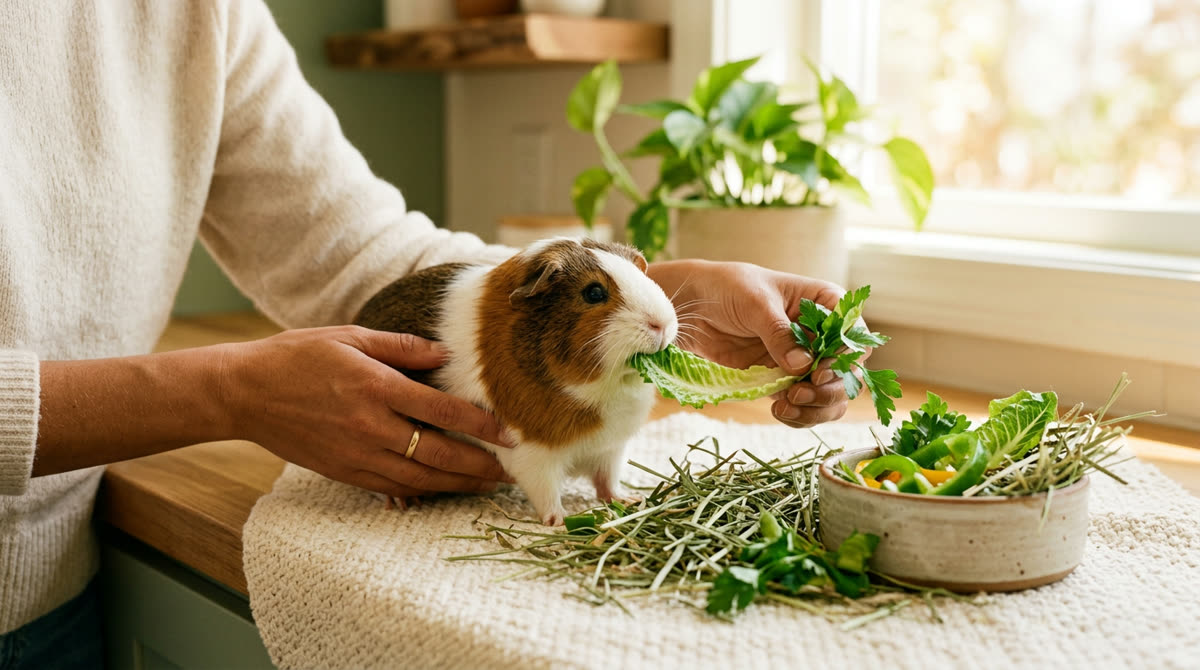
For an adult already accustomed to fresh produce, measure approximately 1 cup of mixed vegetables per day, loosely filled rather than compressed, and divide it into two roughly 1/2-cup meals if convenient. Use leafy vegetables such as romaine, green-leaf lettuce, red-leaf lettuce, or a small amount of cilantro as the foundation, then include bell pepper as a useful vitamin C source. A practical daily mix is about 3/4 cup of loosely torn leafy greens plus 1/4 cup of chopped bell pepper and another tolerated vegetable, such as zucchini or cucumber. Cup measurements are approximate because different cuts pack differently, so use consistent preparation and watch weight, appetite, and droppings rather than chasing an exact vegetable gram target. Rotate spinach, parsley, and kale in smaller portions instead of making these relatively calcium-rich greens the bulk of every salad, particularly if your veterinarian has recommended a urinary-health feeding plan. Wash produce under running water, remove spoiled areas and tough stems or cores, and serve manageable pieces without oil, salt, dressing, or seasoning. Carrot, sweet fruit, and other sugary extras should stay occasional treats rather than daily staples, because they can displace hay and add calories without providing the same sustained chewing benefits.
- Measure about 1 loosely filled cup per adult daily.
- Include leafy greens and a vitamin C-rich vegetable.
- Wash produce and remove spoiled material.
- Keep fruit and carrot portions small and occasional.
Good to know: An inexpensive measuring cup is more reliable than estimating a 'small bowl,' especially when several household members feed the same pet.
- 4
Introduce vegetables gradually and avoid unsafe foods
If your guinea pig has never eaten vegetables, or its history is unknown, do not jump straight to the full adult serving on the first day. Start with about 1 teaspoon of one suitable vegetable alongside its familiar hay and pellets, then watch appetite and droppings for 24 to 48 hours before increasing the amount. Build toward the normal serving over roughly 1 to 2 weeks as tolerated, introducing only one new ingredient at a time so a problem is easier to trace. For an animal already eating a varied salad, introduce a new vegetable in a similarly small portion rather than replacing the whole bowl at once. Do not offer onion, garlic, leeks, chives, avocado, rhubarb, chocolate, dairy products, or processed human snacks, and keep houseplants and unidentified garden plants out of reach. Avoid lawnmower clippings, which can heat and spoil quickly, and introduce hand-picked grass only gradually when you know it is free of pesticides, roadside contamination, and animal waste. If a new food is followed by mildly softer droppings, stop that ingredient and retain familiar hay and foods, but contact a veterinarian promptly if the change persists or comes with reduced appetite, fewer droppings, lethargy, or diarrhea.
Good to know: A simple food diary with the ingredient, amount, and date helps distinguish a poorly tolerated addition from several simultaneous diet changes.
- 5
Provide a dependable daily source of vitamin C
Guinea pigs cannot make their own vitamin C, so a suitable guinea pig feeding plan must supply it every day rather than relying on occasional fruit treats. Common maintenance guidance for healthy adults is approximately 10 to 30 milligrams per kilogram of body weight daily from all dietary sources, meaning a 1-kilogram guinea pig needs roughly 10 to 30 milligrams, while pregnancy, illness, or other circumstances can change requirements. Bell pepper is a useful contributor: a weighed 25-gram portion of raw red pepper commonly supplies around 25 to 35 milligrams, whereas the same weight of green pepper generally contains less, although variety, storage, and freshness affect the amount. Fortified guinea pig pellets also contribute, but vitamin C declines with age and exposure to heat, air, and moisture, so do not assume an old bag provides its original labeled level. If reliable food intake is uncertain, ask your veterinarian whether a plain, guinea-pig-appropriate oral vitamin C supplement is needed, and check the milligrams per tablet or milliliter rather than confusing a liquid’s volume with its vitamin content. Offer any recommended supplement directly as directed and confirm that the intended animal consumes it; do not put vitamin C in the water bottle, where it degrades and may change the taste enough to reduce drinking. Avoid multivitamins, sugary gummies, and unapproved high-dose products, and seek veterinary care for poor appetite, reluctance to move, swollen joints, or unusual bleeding rather than assuming vitamin C alone will correct the problem.
- Include a reliable vitamin C source every day.
- Check supplement strength in milligrams.
- Keep fortified pellets fresh and properly stored.
- Confirm individual intake in shared enclosures.
- Keep drinking water plain.
Good to know: Vitamin C targets describe total daily intake, not an automatic supplement dose to add on top. Ask your veterinarian to review the whole menu if you are unsure whether it meets your pet’s needs.
- 6
Measure pellets and refresh plain water
Choose uniform pellets labeled specifically for guinea pigs, preferably grass-hay-based for healthy adults, because rabbit food does not provide the same nutritional formulation or dependable vitamin C fortification. A common adult starting portion is 1/8 cup per guinea pig per day, but follow product guidance and veterinary recommendations when pellet density, body condition, or life stage calls for a different amount. Measure the entire daily portion once and split it between meals if desired, rather than repeatedly topping up a bowl that looks empty. Avoid muesli-style mixes containing seeds, corn, dried fruit, or brightly colored pieces, since guinea pigs can select the tastiest components and leave a less balanced ration behind. Buy an amount you can use within the manufacturer’s recommended freshness period, record when the package was opened, and store it cool and dry in its original bag inside a clean, pest-resistant container. Provide fresh, plain water continuously in a working bottle, a heavy tip-resistant bowl, or both, checking bottles at least twice daily by touching the spout to confirm that water flows. Wash bowls daily and clean bottles and spouts regularly with an appropriate brush, because a full-looking bottle can still be blocked and water intake varies with temperature, produce consumption, and the individual animal.
- Use plain pellets formulated for guinea pigs.
- Measure one total daily pellet allowance.
- Avoid seed, fruit, and cereal mixes.
- Refresh water and check bottle flow daily.
Good to know: Do not refill pellets just because your guinea pig wheeks for them. If it has finished its measured portion, check that plenty of appealing hay remains available.
- 7
Build a routine and protect each animal’s share
Use a predictable schedule, such as a morning hay refill and half the vegetables, followed by an evening hay refresh and the remaining vegetables, while keeping hay and water available between meals. Give the measured pellets once daily or divide them between those same feeding times, and use a written checklist if more than one person provides food. Remove uneaten vegetables after about 1 to 2 hours, sooner in hot conditions, and wash the dish before the next serving so wilted or contaminated leftovers do not accumulate. In a pair or group, calculate vegetable and pellet totals per guinea pig, then spread them across several feeding points rather than putting everything in one easily guarded bowl. Provide at least one accessible feeding place per animal, ideally with an extra hay station, and leave enough space that a timid guinea pig can eat without being cornered. Watch each animal eat for 5 to 10 minutes during a daily meal, looking for steady chewing, interest in hay, and successful access to any individually offered vitamin C source. If one guinea pig consistently steals food, offer measured items at opposite ends of the enclosure or use a brief supervised barrier during the meal, while ensuring both animals retain hay access and can return to their normal social routine promptly.
Good to know: An empty shared bowl proves that someone ate, not that everyone did. Individual observation and weight records are especially important in bonded pairs.
- 8
Troubleshoot picky eating without restricting hay
If your guinea pig leaves much of its hay but rushes to pellets and vegetables, first check whether oversized concentrated-food portions or frequent treats are reducing its interest in hay. Offer a fresh batch or a different grass-hay texture, position it near a favored resting or toileting area, and maintain the measured adult pellet allowance rather than adding another handful. Make routine pellet changes gradually over about 7 to 14 days by mixing increasing amounts of the new food into the old, provided your guinea pig is otherwise eating normally. Do not assume hay refusal is stubbornness if your pet drops food, chews unusually slowly, drools, selects only soft pieces, or loses weight, because these signs warrant veterinary assessment. Contact a guinea-pig-experienced veterinarian immediately if eating stops, overall intake clearly decreases, or droppings become markedly fewer or smaller, and do not wait overnight to see whether hunger fixes the problem. Watery diarrhea, a swollen or painful-looking abdomen, pronounced weakness, or breathing difficulty also require urgent veterinary care rather than home diet experiments. While arranging help, keep familiar hay and water accessible and follow professional instructions, but do not give leftover medication, force water into the mouth, or begin syringe-feeding a bloated or poorly swallowing animal without veterinary direction.
- Check hay freshness and access first.
- Review excess pellets, treats, and vegetable portions.
- Watch for drooling, dropped food, or slow chewing.
- Treat reduced eating or droppings as urgent.
- Keep a guinea-pig-experienced veterinarian’s details handy.
Good to know: A guinea pig may still accept a favorite treat while eating far too little overall. Treat-taking does not rule out a serious feeding problem.
- 9
Review weight, droppings, and portions regularly
Weigh each healthy adult once a week on the same scale at roughly the same time of day, recording the result alongside any menu changes. During a planned diet transition, more frequent checks can be useful, but daily weighing and feeding adjustments for a sick guinea pig should follow your veterinarian’s guidance. Compare trends rather than one reading, because bladder and gut contents can change weight, yet a repeated downward trend or an unexplained loss of around 50 grams deserves a prompt call even if your pet still appears interested in food. Check daily that droppings are plentiful and normally formed, the mouth and chin remain dry, and hay consumption stays steady; any appetite reduction makes a weight change more urgent. If an otherwise well adult is gaining excess weight, ask your veterinarian to assess body condition before cautiously adjusting calorie-dense pellets and treats, never by rationing grass hay or removing essential vitamin C sources. Reassess portions as your guinea pig matures and whenever health needs change, and arrange a routine veterinary check at least annually, or more often if advised, to discuss nutrition and dental health. Keep the successful routine simple—unlimited grass hay, measured varied vegetables, dependable daily vitamin C, modest suitable pellets, and fresh water—because consistent intake and early attention to changes matter more than an elaborate menu.
- Log each guinea pig’s weight weekly.
- Check appetite and droppings every day.
- Review pellet and supplement freshness regularly.
- Discuss weight trends and diet at veterinary visits.
Good to know: Weight thresholds are not a reason to wait: reduced eating, reduced droppings, or an obviously unwell guinea pig needs prompt veterinary advice even before measurable weight loss occurs.

Ask about this guide
Leave a comment or a question about your own pet and the Pawlito assistant replies right away with practical next steps.