How to Feed Your Bird a Healthy Diet
Why seed-only diets fall short, and how to transition your bird to pellets, vegetables, and balanced variety.
A calm, safety-first approachThis guide provides general education. Contact your veterinarian when symptoms are painful, persistent, or unusual.
- 1
Understand what birds really need
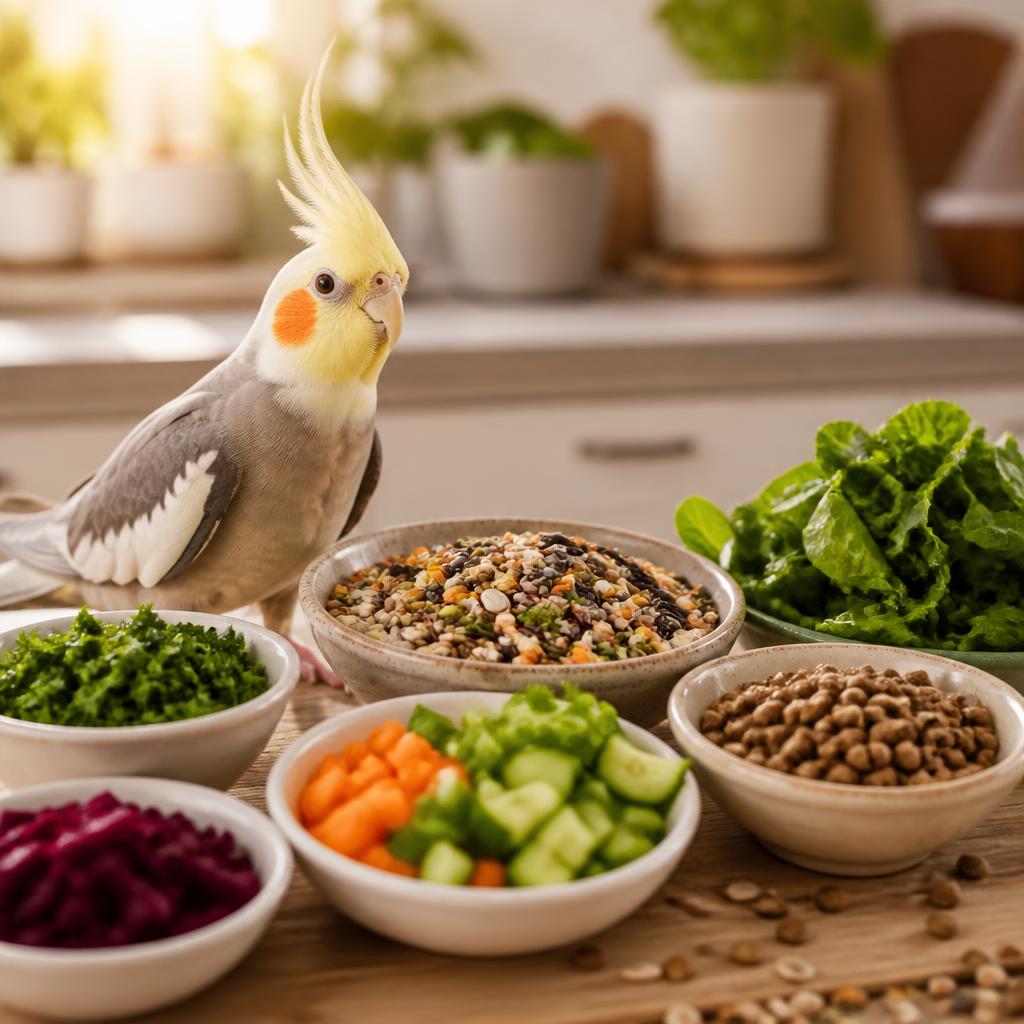
All-seed diets are high in fat and low in vitamins, and are a leading cause of illness in pet birds. A balanced diet centers on quality pellets with daily fresh vegetables and small amounts of fruit.
- 60–70% formulated pellets
- 20–30% fresh vegetables and leafy greens
- Fruit and seeds as occasional treats only
- 2
Know the dangerous foods
Avocado, chocolate, caffeine, alcohol, onion, garlic, and fruit pits are toxic to birds. Salt and fatty human snacks cause serious harm over time.
Good to know: When in doubt about a food, don’t offer it — check with an avian vet first.
- 3
Transition off seeds gradually
Mix pellets into the seed bowl, slowly shifting the ratio over two to four weeks. Offer fresh foods in the morning when birds are hungriest, and weigh your bird weekly during the change to catch any weight loss early.
- 4
Make healthy food fun
Chop vegetables finely, skewer greens through cage bars, or hide pellets in foraging toys. Birds eat more adventurously when they see you eating the same foods.


Ask about this guide
Leave a comment or a question about your own pet and the Pawlito assistant replies right away with practical next steps.