How to Help Your Dog Cope With Fireworks
Prepare a safe den, plan walks and noise cover, and support a frightened dog through fireworks nights without forcing exposure.
- Written by
- Pawlito Editorial Team · Pet Care Writers
- Professional review
- Not yet reviewed by a veterinarian
- Published
- Last updated
In this guide (6 steps)
Step 1: Know the dates and plan ahead
Check local event calendars for likely fireworks nights and put them in your diary. Planning lets you adjust walks, feeding and visitors before the noise starts. If your dog has shown strong fear in past years, speak with your veterinarian well in advance about a support plan.
Step 2: Create a quiet den
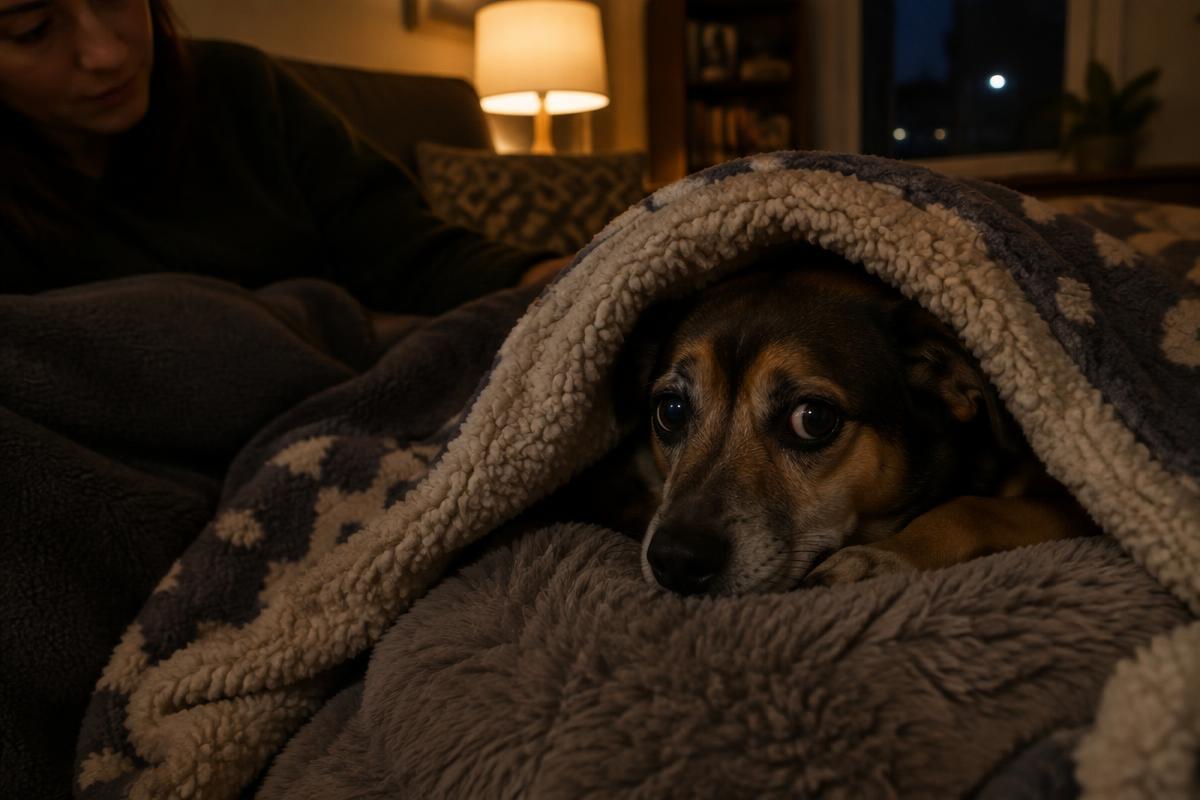
Choose an inner room with few windows. Set up a covered crate with the door open, or a bed under a table draped with blankets. Add familiar bedding and a chew. Let your dog use it freely for days beforehand so it already feels safe and familiar.
Step 3: Walk and feed earlier
Take your dog for a toilet break and walk in daylight, before fireworks typically begin. Use a secure harness and check ID tags and microchip details, since frightened dogs can bolt. Feed dinner a little earlier so they are settled when the noise begins.
Step 4: Cover the noise and flashes
Close curtains, shut windows and doors, and turn on calm music, white noise or the television at a moderate volume. Keep lights on so flashes are less noticeable. Make sure every outer door stays closed and warn household members not to leave gates open.
Good to know: Comforting a scared dog does not reinforce fear. Calm, gentle presence helps.
Step 5: Let your dog choose how to cope
Some dogs hide, some want to be close to you. Allow either. Offer a lick mat or chew if they are interested, but never pull a dog out of a hiding spot. Stay relaxed yourself and avoid punishing any accidents or barking.
Step 6: Work on sound comfort for next year
Outside fireworks season, some owners use very quiet recordings paired with treats, increasing volume slowly over weeks. Stop if your dog shows any worry. For dogs with severe noise fear, a veterinarian or qualified behaviour professional can help build a safer plan.
This guide was drafted with AI assistance and published by the Pawlito team. It has no formal source list yet. Spotted an error? Tell us and we'll correct it. Read our editorial policy.

Ask about this guide
Leave a comment or a question. Comments are public, so use a first name only and don't include emails, phone numbers or addresses. An automated assistant may reply straight away with general suggestions — it can't diagnose your pet.