How to Help Your Dog Lose Weight Safely
A vet-friendly plan for safe, steady canine weight loss through portion control, smarter treats and the right exercise.
- Written by
- Pawlito Editorial Team · AI-assisted guide
- Professional review
- Not yet reviewed by a veterinarian
- Published
- Last updated
In this guide (8 steps)
Step 1: Confirm your dog is actually overweight
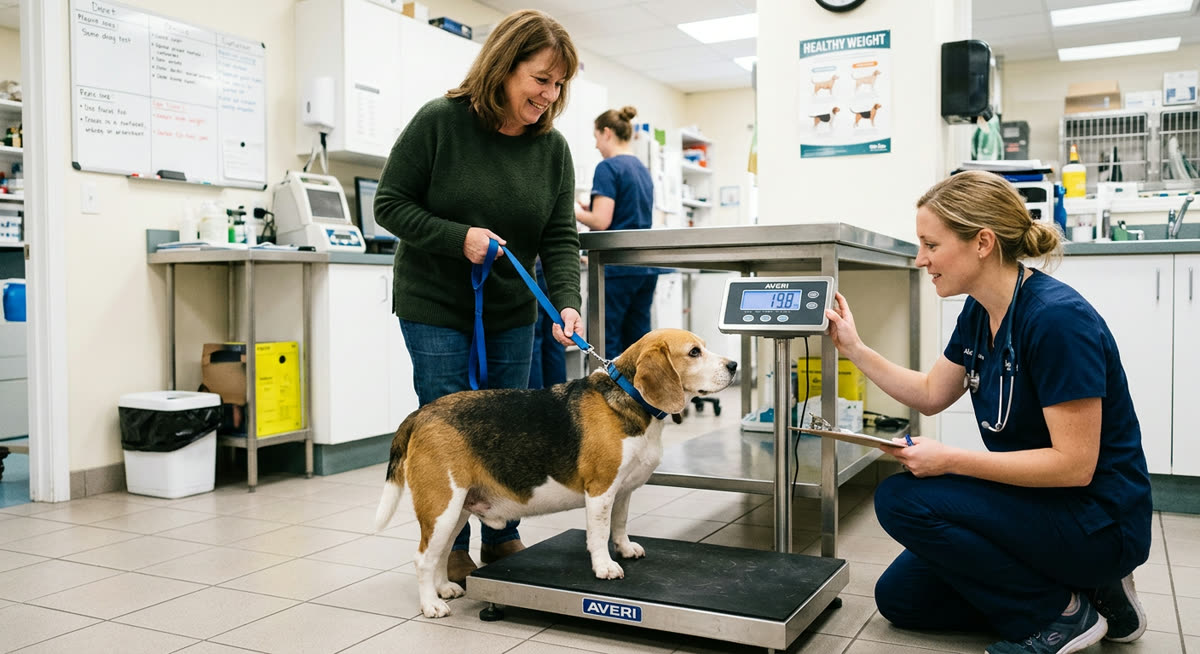
Before changing anything, check your dog's body condition. You should be able to feel the ribs easily under a thin layer of fat, see a waist from above and a tummy tuck from the side. If you are unsure, ask your vet to assess your dog and give you a target weight. A vet check also rules out medical causes of weight gain, such as thyroid problems.
Good to know: Weigh your dog at the same time of day, on the same scales, for consistent readings.
Step 2: Measure every meal precisely
Guesswork is the biggest cause of overfeeding. Use kitchen scales to weigh each meal in grams, following the feeding guide for your dog's target weight, not their current weight. Divide the daily amount into two or three meals. Write the portion size down so everyone in the household feeds the same amount.
Step 3: Cut treats the smart way
Treats should make up no more than ten percent of daily calories. Swap high-calorie treats for small pieces of carrot, cucumber or green beans — most dogs love the crunch. Break training treats into pea-sized pieces; dogs care about frequency, not size. Count treats as part of the daily food allowance and reduce meals slightly on heavy training days.
- Swap biscuits for vegetable pieces
- Use part of the daily kibble ration as training rewards
- Ask family members to log every treat given
Step 4: Choose the right food
If portion control alone is not enough, ask your vet about a weight-management food. These are formulated to be filling with fewer calories, so your dog does not feel starved. Change foods gradually over seven to ten days to avoid stomach upset. Avoid crash diets — rapid weight loss is dangerous for dogs.
Step 5: Increase exercise gradually
An overweight dog cannot suddenly run for an hour. Add five to ten minutes to daily walks each week, building up slowly. Swimming is excellent low-impact exercise for heavy dogs if available. Play sessions in the garden, sniffing walks and gentle games all burn calories. Watch for heavy panting or lagging behind, and rest when needed.
Step 6: Track progress every two weeks
Weigh your dog fortnightly and record the result. Safe weight loss is around one to two percent of body weight per week. If nothing changes after a month, reduce portions by ten percent or add more activity. Take monthly photos from above and the side — visual progress is motivating when the scales move slowly.
Step 7: Handle begging and food obsession
A dieting dog may beg more at first. Never feed from the table, and give your dog a puzzle feeder or frozen stuffed toy while the family eats. Extra affection and play often satisfy a dog who is actually bored rather than hungry. Stay consistent — one person sneaking treats can undo a week of progress.
Step 8: Maintain the healthy weight for life
Once your dog reaches the target weight, increase food slightly to a maintenance amount and keep weighing monthly. Weight creeps back on easily, so keep the measuring habit forever. Regular vet weight checks, ideally every six months, catch any regain early. Your reward is a more energetic dog with a longer, healthier life.
Good to know: Studies show lean dogs live up to two years longer than overweight ones.
This guide was drafted with AI assistance and published by the Pawlito team. It has no formal source list yet. Spotted an error? Tell us and we'll correct it. Read our editorial policy.

Ask about this guide
Leave a comment or a question. Comments are public, so use a first name only and don't include emails, phone numbers or addresses. An automated assistant may reply straight away with general suggestions — it can't diagnose your pet.