How to Introduce a Basket Muzzle to Your Dog Comfortably
Use voluntary, reward-based practice to build comfort with a properly fitted basket muzzle without force or rushed fastening.
- Written by
- Pawlito Editorial Team · AI-assisted guide
- Professional review
- Not yet reviewed by a veterinarian
- Published
- Last updated
In this guide (7 steps)
Step 1: Choose appropriate equipment and support
A basket muzzle can be useful for carefully planned situations, but it must fit your individual dog. Choose a design that allows a full pant, drinking, and rewards where practical. Fabric grooming muzzles that hold the mouth shut are unsuitable for ordinary walks. Ask a veterinarian or qualified reward-based professional for fitting help, especially for short-nosed dogs or dogs with bite histories.
Good to know: Muzzles do not make unsafe interactions safe and must never replace distance, supervision, or behavior support.
Step 2: Let the muzzle predict good things
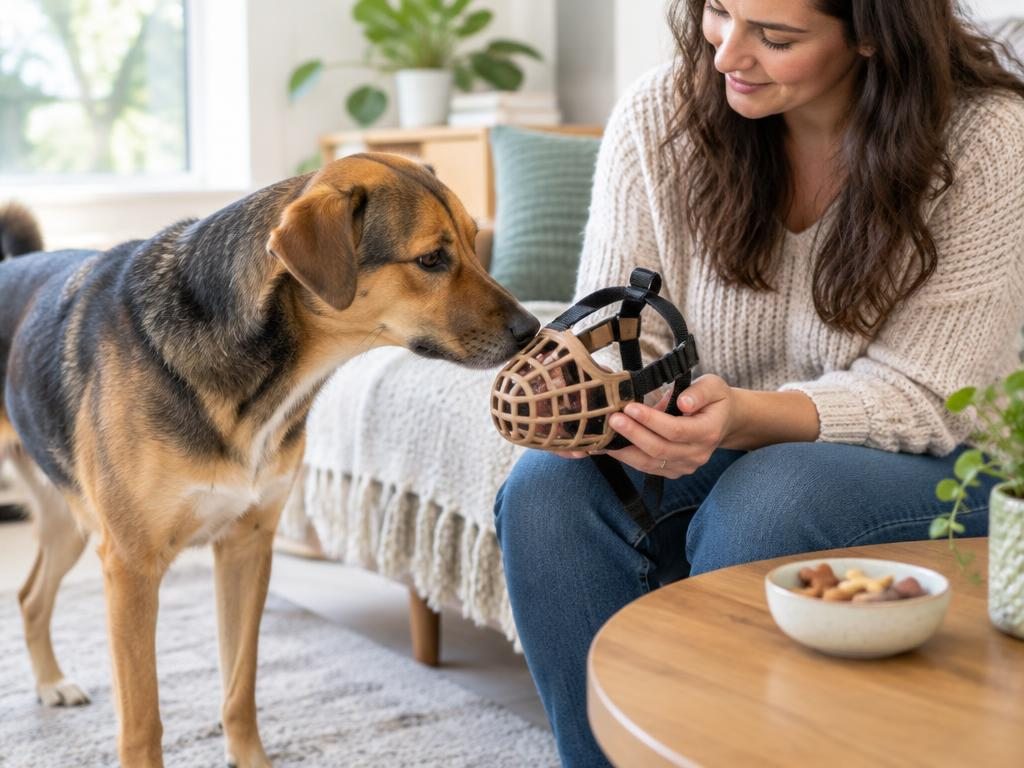
Hold the muzzle at a comfortable distance and reward your dog for noticing it. Put it away between repetitions. Gradually bring it closer only while your dog stays loose and willing to eat. A dog that backs away, freezes, or stops taking familiar food needs more space. Never corner your dog or slide the muzzle on while they are distracted.
Step 3: Invite a voluntary nose entry
Present the open basket and offer a reward through the front so your dog can put their nose in briefly. Keep the straps out of the way. Let them pull out immediately, then repeat. The goal is choosing to enter, not being held there. If the opening worries them, reward approaching the rim before asking for any nose entry.
Step 4: Build time before touching straps
Reward several short nose entries, then add a tiny pause before delivering food. Gradually offer a second reward while the nose remains inside. Keep the muzzle steady rather than pressing it toward the face. End before your dog pulls back in distress. If they start pawing or rubbing, shorten the exercise and reassess whether the shape or rim is uncomfortable.
Step 5: Introduce fastening as a separate step
First practice touching the loose straps near the neck and making the fastening sound away from your dog. Pair each with rewards. Only after these actions are comfortable, fasten briefly while your dog voluntarily keeps their nose in, reward, and unfasten. Check the manufacturer’s fit instructions. Straps should prevent accidental removal without pinching skin, compressing the eyes, or restricting breathing.
Step 6: Add gentle movement in a calm room
With a comfortable fit, invite a few steps, give rewards, and remove the muzzle while your dog remains calm. Gradually practice ordinary indoor movement, then a quiet outdoor space. Do not introduce crowded walks or stressful veterinary handling in the same session. Stop if breathing, panting, vision, or movement seems restricted, and obtain fitting advice before trying again.
Good to know: Never leave a muzzled dog unattended or allow muzzle wear during unsupervised play.
Step 7: Use the muzzle within a wider safety plan
Keep positive practice separate from difficult situations so the muzzle does not predict only stress. Maintain safe distance from triggers and tell handlers what your dog needs. Avoid heat and exertion beyond your dog’s tolerance. If your dog needs a muzzle urgently, contact your veterinarian or behavior professional rather than rushing conditioning or attempting risky handling at home.
This guide was drafted with AI assistance and published by the Pawlito team. It has no formal source list yet. Spotted an error? Tell us and we'll correct it. Read our editorial policy.

Ask about this guide
Leave a comment or a question. Comments are public, so use a first name only and don't include emails, phone numbers or addresses. An automated assistant may reply straight away with general suggestions — it can't diagnose your pet.