How to Introduce Your Dog to a Life Jacket
Help your dog feel comfortable in a properly fitted life jacket through gentle practice on land before supervised water outings.
- Written by
- Pawlito Editorial Team · AI-assisted guide
- Professional review
- Not yet reviewed by a veterinarian
- Published
- Last updated
In this guide (7 steps)
Step 1: Choose a canine jacket for the activity
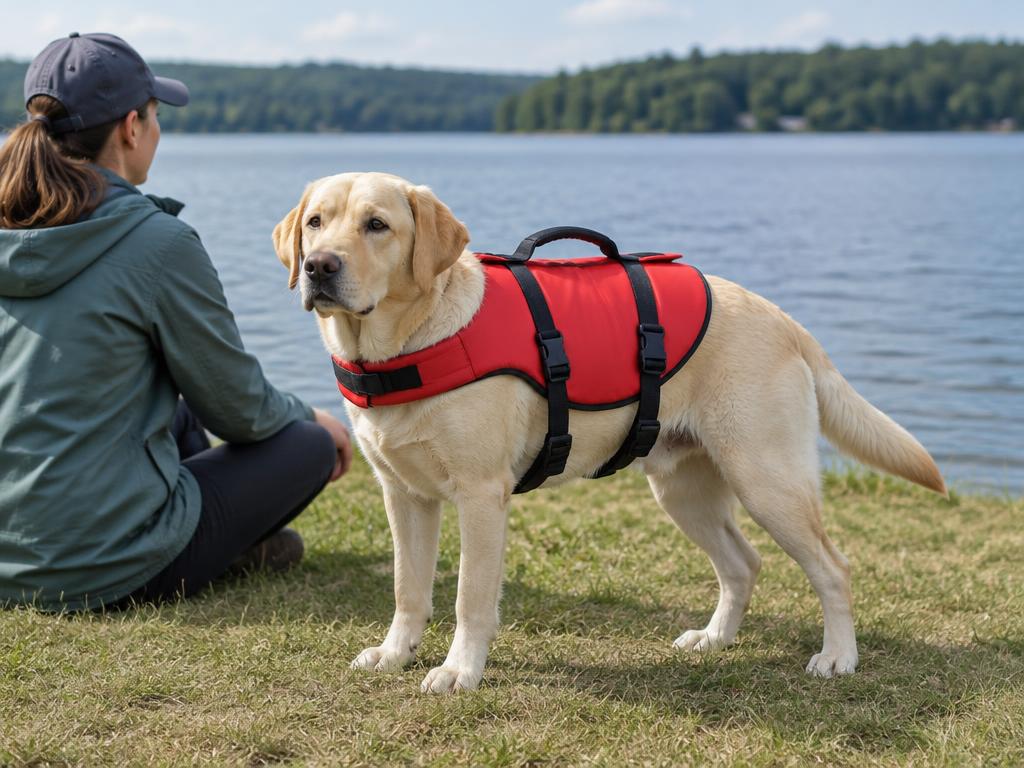
Select a jacket designed for dogs using the manufacturer's measurements and weight guidance. Look for adjustable straps, secure fastenings, visible coloring, and a handle intended for assistance. Designs fit different body shapes differently. The jacket should support flotation without blocking breathing or movement. It does not make swimming automatically safe and cannot replace close supervision, suitable conditions, or boating precautions.
Good to know: Ask your veterinarian about suitable water activities if your dog has breathing, mobility, or other health concerns.
Step 2: Make unfamiliar equipment rewarding
Introduce the jacket in a quiet, dry place. Set it at a comfortable distance and reward looking toward it or approaching voluntarily. Allow sniffing before draping it over your dog. Move it slightly and offer another reward if your dog remains comfortable. Keep sessions brief and allow leaving. Never chase, corner, or lure your dog so close that they feel trapped.
- Begin with the jacket stationary.
- Increase distance if your dog freezes, backs away, or repeatedly turns away.
Step 3: Practice contact before fastening
Briefly touch the jacket to a shoulder or back, reward, and remove it. Gradually rest it in position for a second or two. Practice buckle sounds separately if they startle your dog. For over-the-head designs, reward voluntary movement toward the opening without pulling the head through. Return to easier contact when tension appears and spread practice over several sessions if necessary.
Good to know: Use a nonslip surface so new equipment is not paired with unstable footing.
Step 4: Fasten and assess the fit
Fasten according to the instructions, keeping skin and fur clear of buckles. Adjust straps so the jacket stays secure without constricting the chest or abdomen; follow the manufacturer's guidance rather than a universal finger rule. Confirm comfortable breathing, shoulder movement, sitting, and lying down. Check that it cannot easily twist or slide off. Recheck after movement and remove it if rubbing occurs.
Step 5: Build comfortable movement on land
Invite a few steps, rewarding relaxed movement. Progress to short walks and gentle turns on level ground. Keep early wear periods brief, especially in warm weather because jackets can retain heat. Do not force running or stairs to prove the fit. Watch for shifting, straps rubbing the armpits, and dangling ends. Adjust or change the design if movement remains uncomfortable.
- Secure loose strap ends using the intended keepers.
- Inspect the skin between practice periods.
Step 6: Approach shallow water voluntarily
Choose a permitted entry with firm footing, little current, and an easy exit. Avoid steep banks, waves, boat traffic, and contamination warnings. Let your dog enter voluntarily where they can stand comfortably. Stay close enough to assist without pulling them deeper. Leave before fatigue or worry builds. Never throw a dog into water or assume a jacket always keeps the face clear.
Good to know: Practice finding and using the exit before considering movement beyond standing depth.
Step 7: Supervise and maintain equipment
Watch continuously for struggling, coughing, unusual posture, or attempts to escape. Guide your dog back to safety immediately if something looks wrong and seek veterinary advice for concerning signs after exposure. Use the handle only as directed; avoid unnecessary suspension. Rinse and dry the jacket according to its instructions, inspect seams and buckles, and recheck fit as size or coat changes.
This guide was drafted with AI assistance and published by the Pawlito team. It has no formal source list yet. Spotted an error? Tell us and we'll correct it. Read our editorial policy.
Ask about this guide
Leave a comment or a question. Comments are public, so use a first name only and don't include emails, phone numbers or addresses. An automated assistant may reply straight away with general suggestions — it can't diagnose your pet.