How to Introduce a New Puppy to an Older Dog
Help your puppy and older dog build a calm relationship with safe first meetings, separate spaces and a gradual routine that respects both dogs.
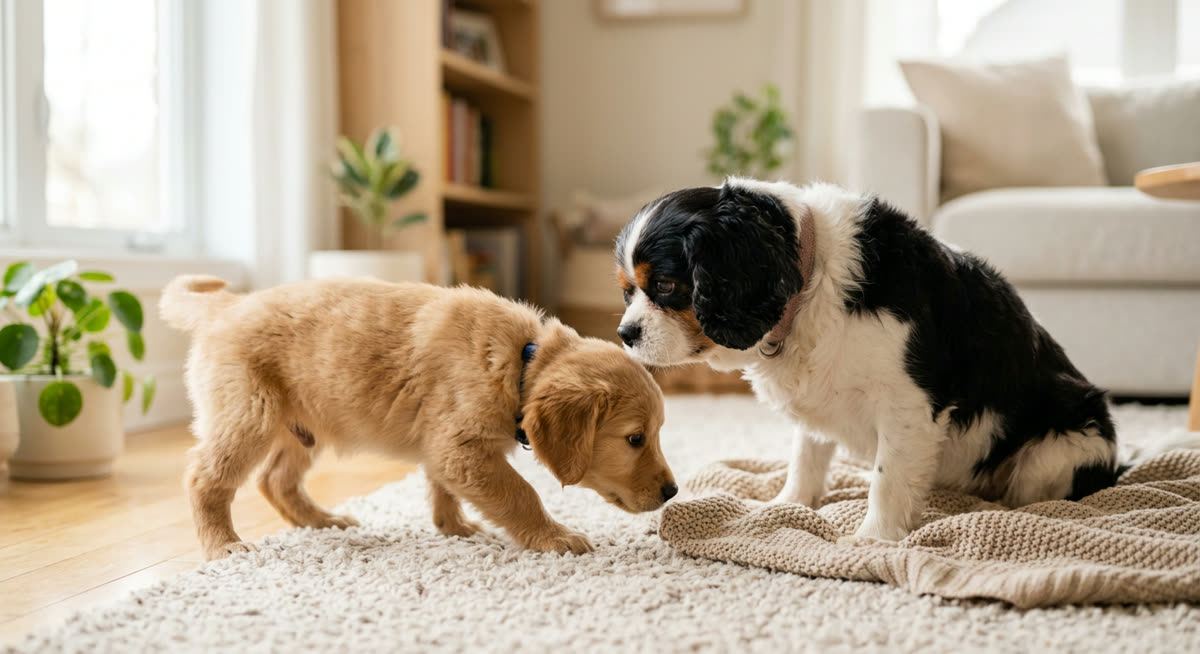
A calm, safety-first approachThis guide provides general education. Contact your veterinarian when symptoms are painful, persistent, or unusual.
- 1
1. Check both dogs are ready before arranging a meeting
Before the puppy comes home, speak to your vet about both dogs’ health, vaccination status and parasite prevention, and ask which meeting locations are safe for the puppy. Arrange a check-up if your older dog has new stiffness, reduced stamina, changes in hearing or sight, or less tolerance of being approached. Tell the vet about any history of snapping, fighting or guarding food, toys or resting places, rather than testing how your dog reacts to a puppy. If there has been aggression towards other dogs, arrange advice from a qualified, reward-based behaviour professional before allowing direct contact. Choose a quiet arrival day when two adults can help and neither dog will have to cope with visitors or a busy household. Plan for separate living areas from the start, because comfortable coexistence may take weeks or longer and friendship is not guaranteed.
- Ask about safe locations before vaccination is complete
- Check changes in the older dog’s comfort
- Discuss any previous aggression
- Arrange two calm adult handlers
Good to know: Measure progress by how comfortably the dogs can relax around each other, not by how quickly they start playing.
- 2
2. Create separate spaces and remove likely flashpoints
Set up a puppy area with a secure pen or suitable room, bedding, water and easy access to the toilet area. Keep your older dog’s usual bed and resting space available, with a route they can use without passing close to the puppy. Fit secure gates or use closed doors to divide the home, checking that the puppy cannot squeeze through gaps or climb over barriers. Put away food bowls, chews and favourite toys before shared sessions, and plan to feed the dogs behind closed doors. Provide water in separate areas so neither dog has to approach the other to drink. Make sure every shared space has room to move away, and block access to narrow corners where either dog could become trapped.
- Separate beds and water bowls
- Secure gates, pens or doors
- Food, chews and favourite toys put away
- Clear escape routes in shared rooms
- An undisturbed retreat for the older dog
Good to know: Test barriers before the puppy arrives, especially if your older dog could jump them or push them open.
- 3
3. Introduce scent without demanding interaction
If practical, bring home a small cloth carrying the puppy’s scent before arrival and place it away from your older dog’s bed and food. Let your dog choose whether to investigate, and offer gentle praise for a loose, relaxed response without drawing them towards the cloth. You can offer the puppy a separate cloth carrying your older dog’s scent in the same low-pressure way. Once the puppy arrives, let each dog explore the other’s vacated area while the other remains securely elsewhere. Keep these explorations brief and remove the scent item if either dog becomes tense, repeatedly marks nearby or cannot settle. Continue normal walks, meals and rest during this stage, and treat scent swapping as preparation rather than proof that the dogs are ready to meet.
Good to know: Avoid placing unfamiliar scent directly in a dog’s bed, where they should be able to rest without pressure.
- 4
4. Start outdoors with distance and parallel movement
Choose a quiet, spacious location that neither dog strongly associates with guarding, using your vet’s advice to decide whether it is safe for the puppy’s vaccination status. Avoid dog parks and busy pavements, and use a suitable private outdoor space or postpone ground-level meetings if public ground is not yet appropriate. Have one adult handle each dog on a well-fitted harness and ordinary lead, starting several metres apart or farther away if either dog appears tense. Walk in the same direction at a gentle pace, allowing sniffing breaks and keeping the session short enough for the puppy’s age and stamina. Reward each dog separately for calmly noticing the other and then turning away, keeping treats well apart and out of shared ground space. Reduce the distance only while both dogs remain loose-bodied and responsive to their handlers, and move farther apart if either freezes, stares, lunges or repeatedly tries to escape.
- One adult handler per dog
- Well-fitted harnesses and ordinary leads
- A quiet, vet-appropriate location
- Several metres of starting distance
- Small rewards kept with each handler
Good to know: Keep leads slack where safely possible, and avoid steering the dogs into a direct, head-on approach.
- 5
5. Allow a brief greeting, then help them disengage
When both dogs can move near each other calmly, allow a loose, curved approach rather than holding them nose to nose. Give them just a few seconds to sniff, then cheerfully call them apart and move away with each handler. Reward them once they are separated, and repeat only if both willingly approach again with relaxed bodies. Watch the whole dog rather than relying on a wagging tail, because stiffness, a closed mouth, fixed staring or weight shifted forward can signal discomfort. If either dog turns away, hides behind a handler or tries to leave, support that choice and end the greeting without another attempt straight away. Do not hold the puppy up to your older dog’s face or restrain either dog so the other can investigate.
Good to know: Practise calling each dog away separately beforehand so that ending a greeting feels familiar rather than abrupt.
- 6
6. Move indoors with barriers and short shared sessions
Bring the dogs indoors separately after a comfortable outdoor meeting, allowing each to settle in their own prepared area first. Start indoor contact across a secure barrier with enough distance that both dogs can look away, sniff or lie down rather than crowding the gate. Reward calm behaviour separately, and use a closed door instead if seeing each other through the barrier causes barking, pacing or fixation. When barrier sessions are consistently relaxed, try a brief meeting in a spacious, cleared room with one adult supervising each dog. Interrupt puppy chasing, climbing on the older dog or repeated face-biting by calling the puppy away and giving them a separate activity or rest break. End the session while both are still comfortable, and return them to their own areas rather than waiting for the older dog to become overwhelmed.
- Begin with a secure barrier
- Leave space on both sides of the gate
- Keep shared sessions brief
- Interrupt persistent puppy pestering
- Separate before either dog becomes tired
Good to know: If the dogs relax only when they cannot see each other, use that arrangement between sessions instead of insisting on gate contact.
- 7
7. Respond early to tension and know when to get help
Treat freezing, hard staring, repeated avoidance, growling and snapping as reasons to increase distance, not behaviours to punish or situations the dogs should sort out themselves. A growl is useful warning information, so calmly move the puppy away and give the older dog uninterrupted space. If barking or lunging occurs at a barrier, block the view, let both dogs settle and restart later at an easier stage with more distance. If a fight occurs, keep people away from the dogs’ mouths, never reach between them or grab their collars, and use a solid barrier to separate them only if you can do so safely. After any bite or suspected injury, keep the dogs securely apart and contact your vet promptly, as wounds can be hidden beneath fur. Stop direct introductions and seek a vet assessment plus qualified, reward-based behaviour support if there is repeated snapping, stalking, pinning, guarding or fear that does not ease with separation.
- Increase distance at the first signs of tension
- Never punish a growl
- Keep hands away from a fight
- Contact the vet after a bite
- Get professional help for repeated conflict
- 8
8. Protect rest, routines and individual attention
Keep your older dog’s usual feeding, walking and bedtime routine as consistent as possible while the puppy learns the household pattern. Schedule frequent puppy naps in a separate quiet area, because a tired puppy may become more persistent rather than settling beside the older dog. Give each dog individual attention every day, including separate training and exercise suited to their age, comfort and veterinary advice. Continue feeding behind closed doors and offer chews or other high-value items only in secure separate spaces, collecting leftovers before reunions. During play, call the puppy away for a pause and watch whether the older dog freely chooses to approach again; if not, finish the interaction. Step in earlier when there is a large size difference, and do not allow chasing, body-slamming or wrestling that could injure either dog.
Good to know: Protect one predictable period of puppy-free time with your older dog each day, even if it is simply a quiet sniffing walk or time together on their usual resting spot.
- 9
9. Increase shared time gradually and maintain safe separation
Lengthen supervised sessions gradually only when both dogs can disengage, move around freely and rest without monitoring each other. Change one thing at a time, such as session length or access to another room, rather than adding toys, visitors and longer contact together. Keep a brief record of relaxed sessions and difficult moments so you can spot patterns involving tiredness, doorways, food or attention. Separate the dogs whenever you leave home, sleep or cannot actively supervise, and do not use a fixed number of days as proof that they are safe together. If you eventually consider unsupervised access, base the decision on a sustained pattern of calm behaviour and seek professional advice if there has been conflict or a substantial size difference. Contact your vet if either dog develops changes in appetite, movement, sleep or behaviour, and return to easier introductions whenever either dog seems less comfortable.
Ask about this guide
Leave a comment or a question about your own pet and the Pawlito assistant replies right away with practical next steps.