How to Introduce Two Guinea Pigs Safely
Give two guinea pigs the best chance of a lasting friendship with careful preparation, supervised introductions and a calm, spacious home.
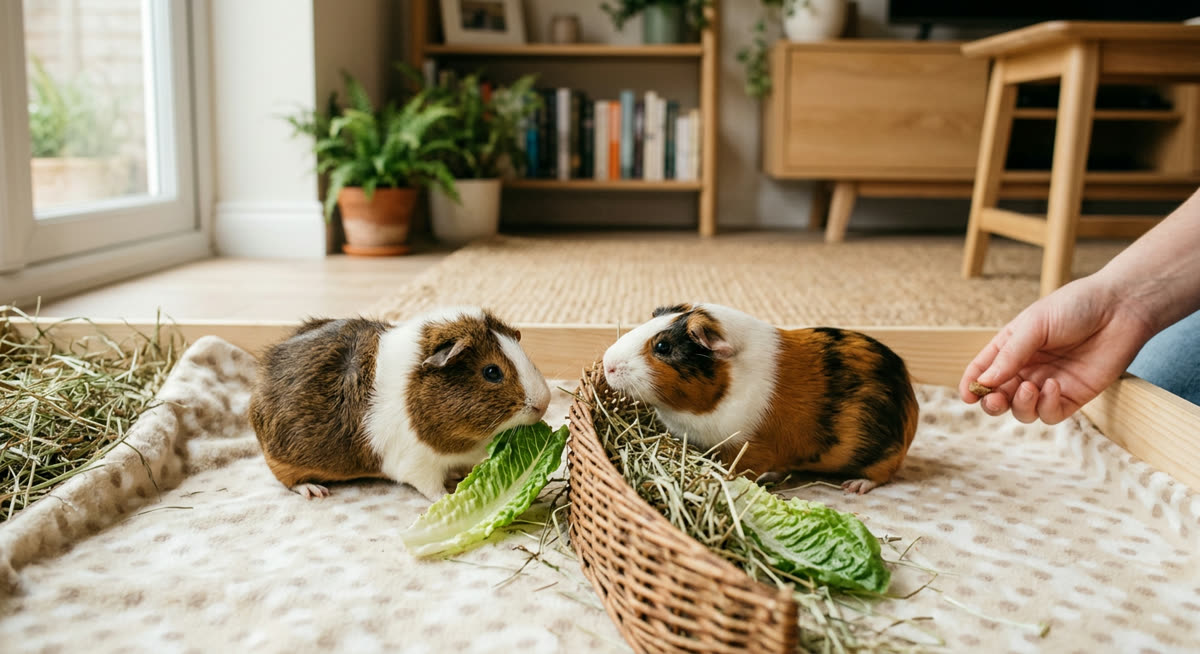
A calm, safety-first approachThis guide provides general education. Contact your veterinarian when symptoms are painful, persistent, or unusual.
- 1
1. Check that the pairing is suitable
Before arranging an introduction, ask a guinea pig-experienced vet or reputable rescue to confirm both animals’ sexes and discuss their health and backgrounds. Two females, two compatible males, or a neutered male with a female can live together, but individual temperament matters more than choosing a particular combination. Never introduce an unneutered male to a female, even briefly, because mating can happen very quickly. A recently neutered male can remain fertile for up to six weeks, so keep him away from females until the post-operative interval advised by your vet has passed. Neutering a male does not reliably prevent fighting between males, and it should not be treated as a shortcut to compatibility. If you are choosing a companion for an existing guinea pig, consider a rescue that offers supervised matching and support if the pairing does not work.
- Have both animals’ sexes confirmed
- Check health and background information
- Prevent any risk of pregnancy
- Arrange a safe backup enclosure
Good to know: Ask the rescue about each guinea pig’s behaviour with companions, rather than choosing solely by age or appearance.
- 2
2. Complete quarantine before allowing contact
Keep a newly arrived guinea pig separate from your resident animal for an initial quarantine period, commonly two to three weeks, with the exact duration guided by your vet or rescue. Use a separate room wherever possible, because neighbouring cages do not provide effective quarantine. Provide separate bedding, bowls, cleaning tools and handling cloths, and wash your hands between caring for the two animals. Each day, check that both guinea pigs are eating normally, producing their usual droppings, moving comfortably and showing no unusual discharge, scratching or hair loss. If either animal develops concerning signs, postpone the introduction and contact your vet rather than trying to identify or treat the problem yourself. A guinea pig that stops eating, becomes markedly lethargic or has difficulty breathing needs urgent veterinary attention, not a wait-and-see approach.
- Separate rooms where possible
- Separate equipment and bedding
- Handwashing between animals
- Daily appetite and dropping checks
Good to know: Care for your resident guinea pig first and the quarantined newcomer second to reduce the chance of carrying contamination between them.
- 3
3. Prepare a neutral meeting area and their future home
Set up a secure, draught-free indoor meeting pen on territory neither guinea pig normally uses, with a non-slip surface and enough room to move away from one another. Aim for a permanent enclosure with at least 180 × 90 cm of continuous floor space for two guinea pigs, preferably more, especially for males; extra levels do not replace usable floor area. In the meeting pen, place several generous piles of hay, accessible water and open-ended tunnels or shelters, avoiding narrow passages and single-entrance houses that could trap one animal. Prepare the shared enclosure in advance by thoroughly cleaning it with a pet-safe product, following the label instructions and allowing surfaces to dry, then rearranging its furnishings. Equip that enclosure with at least two water points, separate feeding areas and enough shelters with multiple exits for both animals to retreat. Keep a spare enclosure, a thick towel and a rigid divider within reach so you can separate them without putting bare hands between fighting guinea pigs.
- Secure neutral pen with non-slip flooring
- Several hay piles and accessible water
- Shelters with at least two exits
- Clean, spacious shared enclosure
- Towel, divider and backup accommodation
Good to know: Choose washable fleece over an absorbent layer or another familiar, secure-footing surface so slipping does not add stress.
- 4
4. Begin the first meeting without forcing interaction
Choose a quiet day when you can stay nearby for several hours and continue observing them after any move into shared housing. Keep dogs, cats, excited children and loud household activity away from the introduction area. Place both guinea pigs into the neutral pen at roughly the same time, supporting each animal’s chest and hindquarters as you carry them. Set them down apart, near different hay piles, and let them decide whether to approach, investigate or eat. Stay close enough to intervene safely, but avoid repeatedly picking them up, pushing them together or interrupting every squeak. Do not bathe them together, apply scents or use frightening situations to make them seek comfort from each other, as these methods add stress rather than establish compatibility.
Good to know: Have everything ready before bringing either guinea pig into the pen so you never need to leave the first meeting unattended.
- 5
5. Watch the whole interaction, not just individual noises
Expect sniffing, low rumbling, swaying movements, brief chasing and mounting as the guinea pigs investigate each other and negotiate their relationship. A short squeak or quick retreat does not automatically mean the introduction has failed, provided the animals can disengage and neither is being injured or persistently distressed. Look for breaks in the activity, such as both eating hay, exploring separately, grooming themselves or resting without being pursued. Watch more closely if teeth chattering escalates alongside a tense posture, raised head, repeated lunging or one animal blocking the other’s escape. Relentless chasing, mounting that prevents the other animal from moving or eating, and repeated cornering need intervention rather than being dismissed as dominance. Judge readiness to progress by sustained calm behaviour over several hours, not by a fixed timer or one peaceful moment.
- Both can approach and move away
- Both have opportunities to eat
- Chasing stops and activity settles
- Neither is repeatedly trapped
- No biting or physical fighting
Good to know: Quietly note who is eating, resting and retreating; a very still guinea pig may be frightened rather than relaxed.
- 6
6. Interrupt unsafe behaviour and reassess
If tension centres on a cramped tunnel or guarded food spot, use a divider to keep the animals away from your hands while you remove the bottleneck or add another hay pile. If one guinea pig remains persistently distressed or cannot escape the other’s attention, separate them into secure accommodation rather than letting the situation escalate. Separate immediately if they bite, lock together, roll in a fighting ball or repeatedly launch aggressive attacks; do not wait for blood. Slide a rigid board between them or use a thick towel to cover and separate them, keeping your hands away from their mouths. Check each animal carefully once safely apart, and seek prompt veterinary advice for any bite, wound, lameness or unusual behaviour, with urgent care for significant bleeding or obvious injury. After a serious fight, do not attempt another meeting that day; ask an experienced rescue or vet for help deciding whether a carefully planned retry or a different companion is safer.
- Never put bare hands between fighters
- Stop persistent distress or trapping
- Separate immediately for physical fighting
- Check both animals for injuries
- Seek advice before another attempt
Good to know: If separated animals remain in neighbouring pens after quarantine, use secure spacing or a double barrier so they cannot bite through the bars.
- 7
7. Move a settled pair into the shared enclosure
Once both guinea pigs have spent a sustained period eating, exploring and resting without escalating conflict, move them into the prepared shared enclosure. Transfer them in quick succession so neither has a long opportunity to claim the space before the other arrives. Keep the layout open, with several routes between hay, water and resting places, and use only shelters that allow an easy exit. Expect some renewed sniffing, rumbling or brief mounting because the change of surroundings can prompt another round of social negotiation. Continue supervising for several hours and check that each animal can reach food, water and shelter without being driven away. If chasing becomes relentless or aggression escalates, use the same separation rules as in the neutral pen rather than assuming they must now stay together.
Good to know: Move them early enough in the day to allow a long observation period in their permanent home before bedtime.
- 8
8. Monitor eating, weight and comfort during the first days
During the first few days, make frequent quiet checks, including early morning and evening, and watch each guinea pig eat rather than relying on an empty food bowl. Keep unlimited hay available in several places and continue each animal’s usual appropriate diet, avoiding sudden food changes during an already stressful transition. Weigh both guinea pigs daily at a similar time using digital scales and a stable container, recording each weight in grams. Contact your vet if you notice an ongoing downward weight trend, reduced appetite, fewer droppings or a change in activity, and seek urgent advice if either stops eating. Once the pair is genuinely settled, avoid repeatedly separating them for the night or running unnecessary short reintroductions, because repeated disruption can unsettle the relationship. Never leave a tense or actively conflicting pair together unsupervised; if safe cohabitation is not yet established, use separate secure accommodation and seek help with the next stage.
- Observe each guinea pig eating
- Record daily weights initially
- Check droppings and activity
- Keep several hay stations available
- Provide safe separate housing if needed
- 9
9. Maintain the conditions that support their friendship
Keep the enclosure spacious and retain duplicate resources even when the guinea pigs appear comfortable together. Clean wet and soiled areas daily, while keeping the overall layout predictable and avoiding unnecessary changes that create narrow routes or contested resting spots. As the pair settles, continue regular health checks and weekly weighing, or follow a different monitoring schedule if your vet recommends one. Remember that compatible guinea pigs do not have to cuddle or share a bed, and choosing separate sleeping places is not by itself a sign of trouble. If a previously settled pair suddenly starts fighting or one becomes withdrawn, separate them if safety requires it and contact your vet, because discomfort or illness can affect behaviour. If repeated, carefully managed introductions remain unsafe, work with a reputable rescue on suitable companions or secure neighbouring accommodation that provides social contact without direct conflict.
Good to know: Keep the spare enclosure available after a successful introduction so an unexpected injury, illness or relationship problem does not leave you without a safe option.

Ask about this guide
Leave a comment or a question about your own pet and the Pawlito assistant replies right away with practical next steps.